
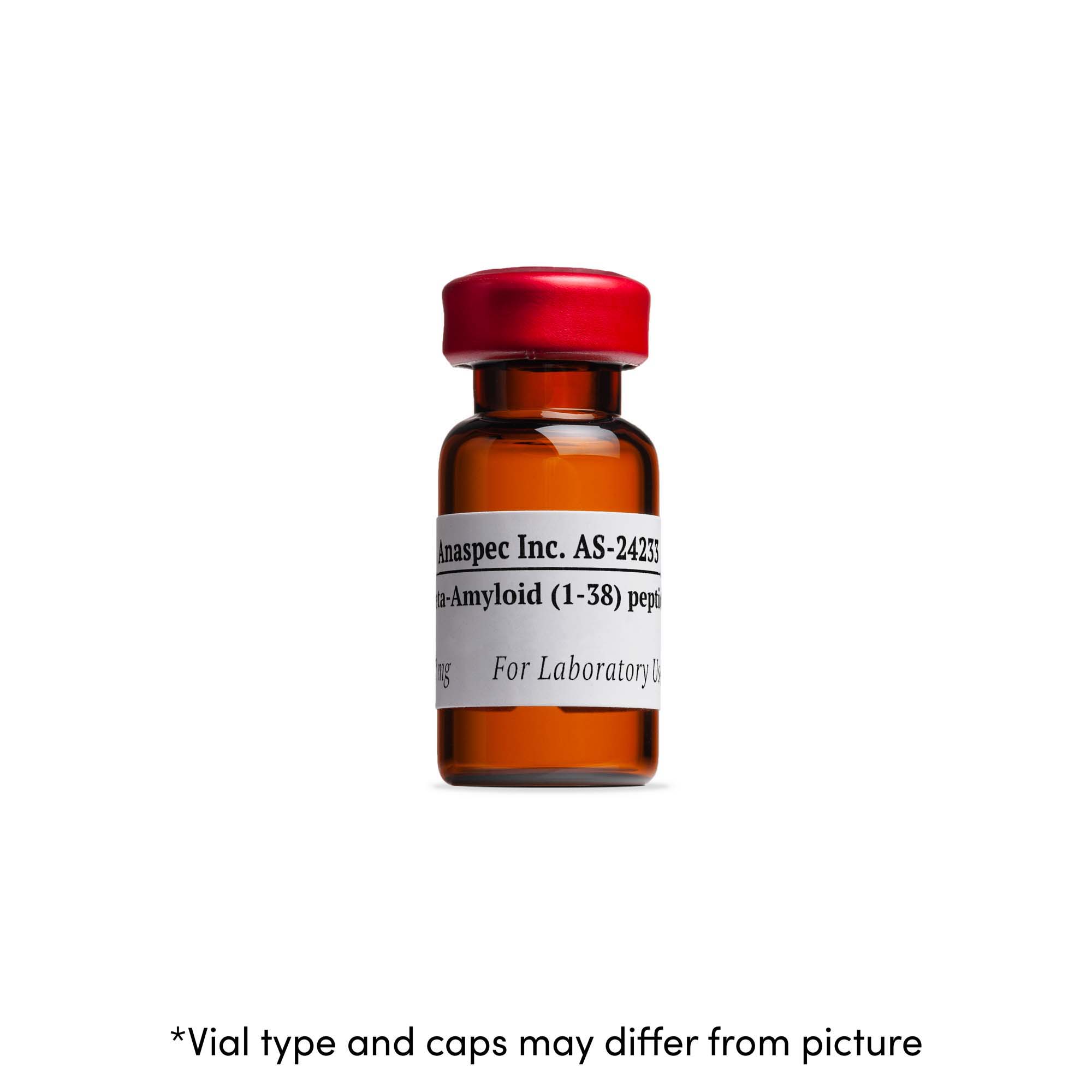
Beta-Amyloid (1-38) Peptide
Price range: $223.00 through $377.00
This is amino acids 1 to 38 fragment beta-amyloid. Minor Aß peptides such as Beta-amyloid 1-34, 1-37, 1-38 and 1-39 are normally produced in Aß.
Overview
The Beta-Amyloid (1-38) Peptide is a crucial component for research into Alzheimer’s disease and related neurological disorders. This peptide represents a fragment of the beta-amyloid protein and plays a significant role in the formation of amyloid plaques, which are characteristic of Alzheimer’s pathology. In your experiments, utilizing the Beta-Amyloid (1-38) Peptide can help you better understand the nuances of amyloid deposition and its effects on neuronal function. For further investigation, consider pairing it with our PKG Substrate for enhanced analytical results.
Key Features
- High purity Beta-Amyloid (1-38) Peptide for reliable results
- Essential for studying Alzheimer’s pathology and peptide interactions
- Supports the development of assays designed to detect amyloid-related compounds
- Compatible with a wide range of experimental protocols
- Available in various quantities to meet your research needs
Specifications
| Item | Details |
|---|---|
| Peptide Sequence | Beta-Amyloid (1-38) |
| Purity | ≥ 95% |
| Storage | -20 °C |
FAQ
What is the significance of Beta-Amyloid (1-38) in Alzheimer’s research?
Beta-Amyloid (1-38) is part of the larger beta-amyloid family and contributes to the formation of amyloid plaques, which are implicated in the neurodegeneration observed in Alzheimer’s disease.
How should I store the Beta-Amyloid (1-38) Peptide?
It is best to store the peptide at -20 °C to maintain its stability and efficacy for your future research.
Can I use this peptide for in vivo studies?
Yes, this peptide can be used in in vivo studies, but make sure to follow appropriate dosage guidelines and ethical considerations for animal research.
Discover more options in our range of peptides to complement your research. The Beta-Amyloid (1-38) Peptide is available now, so invest in the tools you need for accurate and impactful research.
Related Products
| Size | 0.5 mg, 1 mg |
|---|
Be the first to review “Beta-Amyloid (1-38) Peptide”
Related products
Peptides
Reviews
There are no reviews yet.