
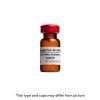
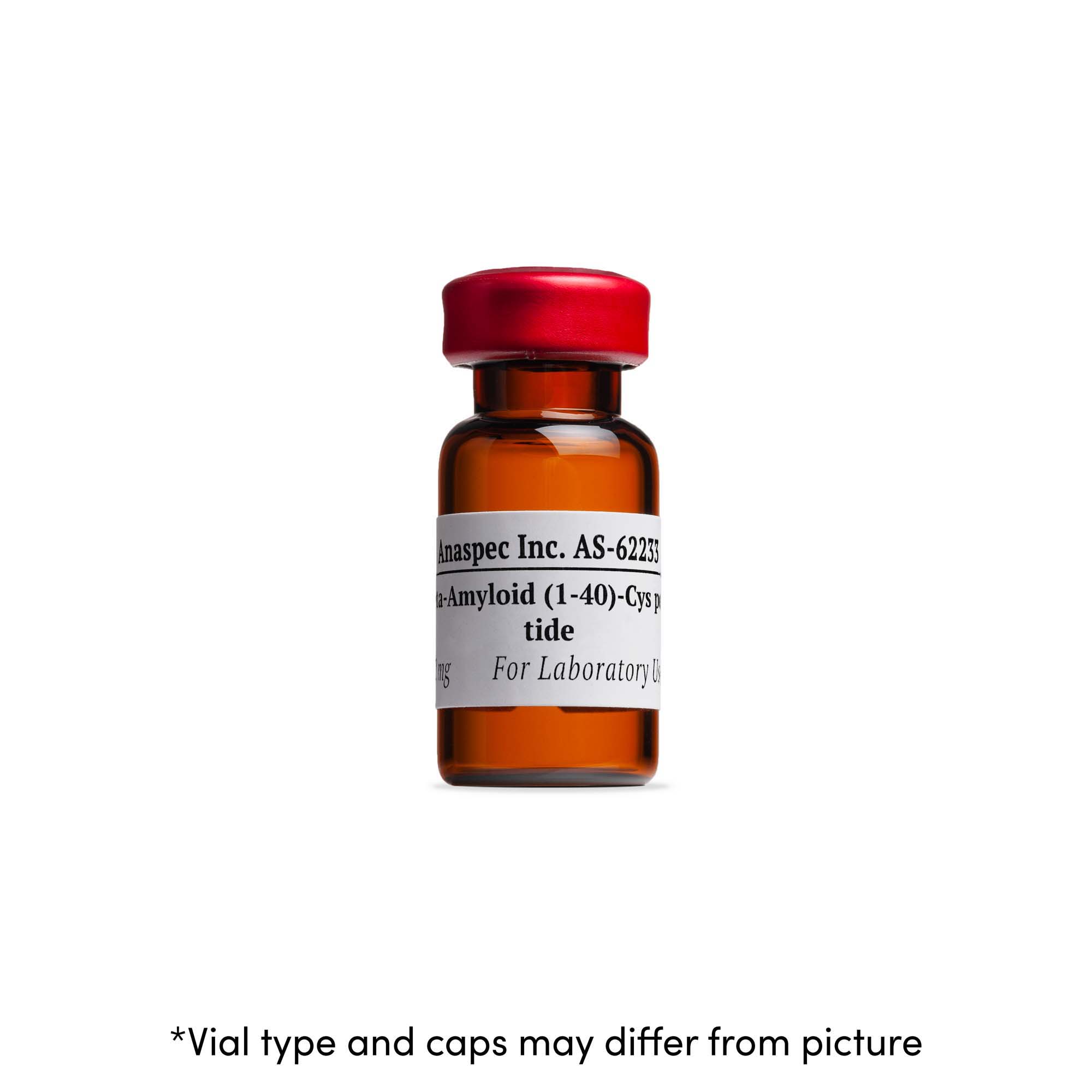
Beta-Amyloid (1-40)-Cys – 0.1 mg
$166.00
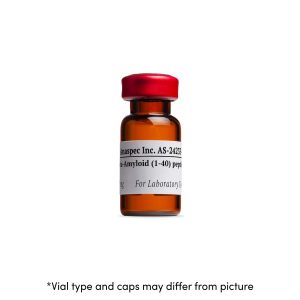
Beta-Amyloid (1-40)-Cys. This Cys-containing mutant of ß-Amyloid (1-40) can be used as a model for aggregation studies
Overview
The Beta-Amyloid (1-40)-Cys is a synthetic peptide that mirrors the structure of ß-Amyloid (1-40) with one important modification: an added cysteine at the C-terminus. This modification makes it an ideal model for aggregation studies related to Alzheimer’s disease. By incorporating this Cys-containing mutant into your research, you can better understand the aggregation processes that contribute to neurodegenerative disorders.
Key Features
- Model for Alzheimer’s aggregation studies
- Cysteine modification enhances reactivity
- High purity and quality for reliable results
- Convenient 0.1 mg format for flexible use
- Compatible with various labeling techniques
Specifications
| Product Name | Beta-Amyloid (1-40)-Cys |
| Catalog Number | Available upon request |
| Format | 0.1 mg |
| Application | Aggregation studies |
FAQ
How can I use Beta-Amyloid (1-40)-Cys in my research?
This peptide can be employed as a model to study the aggregation properties of Beta-Amyloid in various experimental setups. Its unique cysteine modification allows for further experimentation with cross-linking or conjugation with fluorescent labels, enhancing your study’s specificity.
What are the storage conditions for this peptide?
For optimal stability, it’s recommended to store Beta-Amyloid (1-40)-Cys at -20°C. Protect it from light and avoid repeated freeze-thaw cycles to maintain its integrity.
Is this peptide suitable for in vivo studies?
This peptide is primarily designed for in vitro research applications. While it may have potential for in vivo studies, please consult detailed literature and guidelines for specific uses.
This peptide is part of our range of high-quality peptideswhich include other valuable tools like Autocamtide-2 and CREBtide for various experimental applications. Ensure your research is well-equipped by checking out our comprehensive catalog.
Related Products
Be the first to review “Beta-Amyloid (1-40)-Cys – 0.1 mg”
Related products
Peptides
Peptides
Peptides
Reviews
There are no reviews yet.