
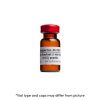
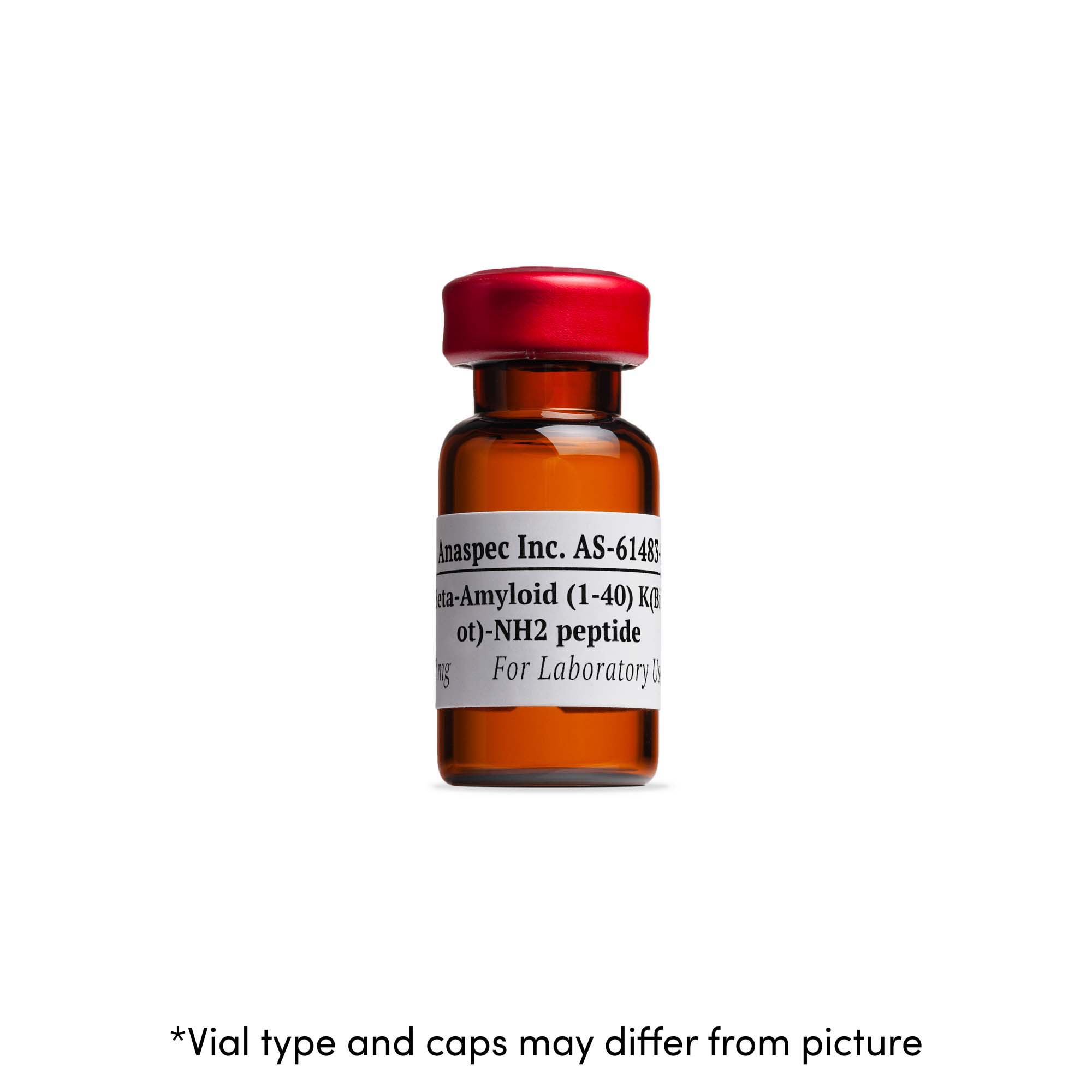
Beta-Amyloid (1-40)-Lys(Biotin)-NH2
Price range: $227.00 through $744.00
Beta-Amyloid (1-40)-Lys(Biotin)-NH2 peptides undergo post-secretory aggregation and deposition in the Alzheimer’s disease brain.
Overview
The Beta-Amyloid (1-40)-Lys(Biotin)-NH2 is a synthetic peptide that plays a crucial role in Alzheimer’s disease research. Known for its association with amyloid plaques, this biotinylated peptide allows for easy detection and quantification in experimental setups. Beta-Amyloid peptides are central to understanding the mechanisms that lead to neurodegenerative changes in patients suffering from this condition. By including a biotin tag at the C-terminus, scientists can utilize various labeling techniques to track the peptide’s behavior and aggregation in biological assays.
Key Features
- Biotinylated at the C-terminus for enhanced detection.
- Critical for studying amyloid plaque formation in Alzheimer’s disease.
- Facilitates research on the post-secretory aggregation of peptides.
- Suitable for use in ELISA, Western blot, and other assays.
- High purity and consistent quality for reliable results.
Specifications
| Product Name | Beta-Amyloid (1-40)-Lys(Biotin)-NH2 |
| Category | Peptides |
| Molecular Weight | Approx. 4,500 Daltons |
| Purity | ≥ 95% by HPLC |
| Format | Lyophilized powder |
FAQ
What is the significance of Beta-Amyloid (1-40) in Alzheimer’s research?
Beta-Amyloid (1-40) is one of the primary components of amyloid plaques found in the brains of Alzheimer’s patients. Understanding its aggregation process is key to developing potential treatments.
How can I use Beta-Amyloid (1-40)-Lys(Biotin)-NH2 in my experiments?
This biotinylated peptide can be utilized in various assays, including ELISA and Western blot, to study peptide behavior and interactions. Its biotin tag enables easy detection using streptavidin-based methods.
What are some related products I may find useful?
Consider exploring other peptides in our catalog, such as PKG Substrate and Autocamtide-2for additional research tools in your studies.
Related Products
Browse more in Peptides.
| Size | 0.1 mg, 0.5 mg |
|---|
Be the first to review “Beta-Amyloid (1-40)-Lys(Biotin)-NH2”
Related products
Peptides
Peptides
Reviews
There are no reviews yet.