
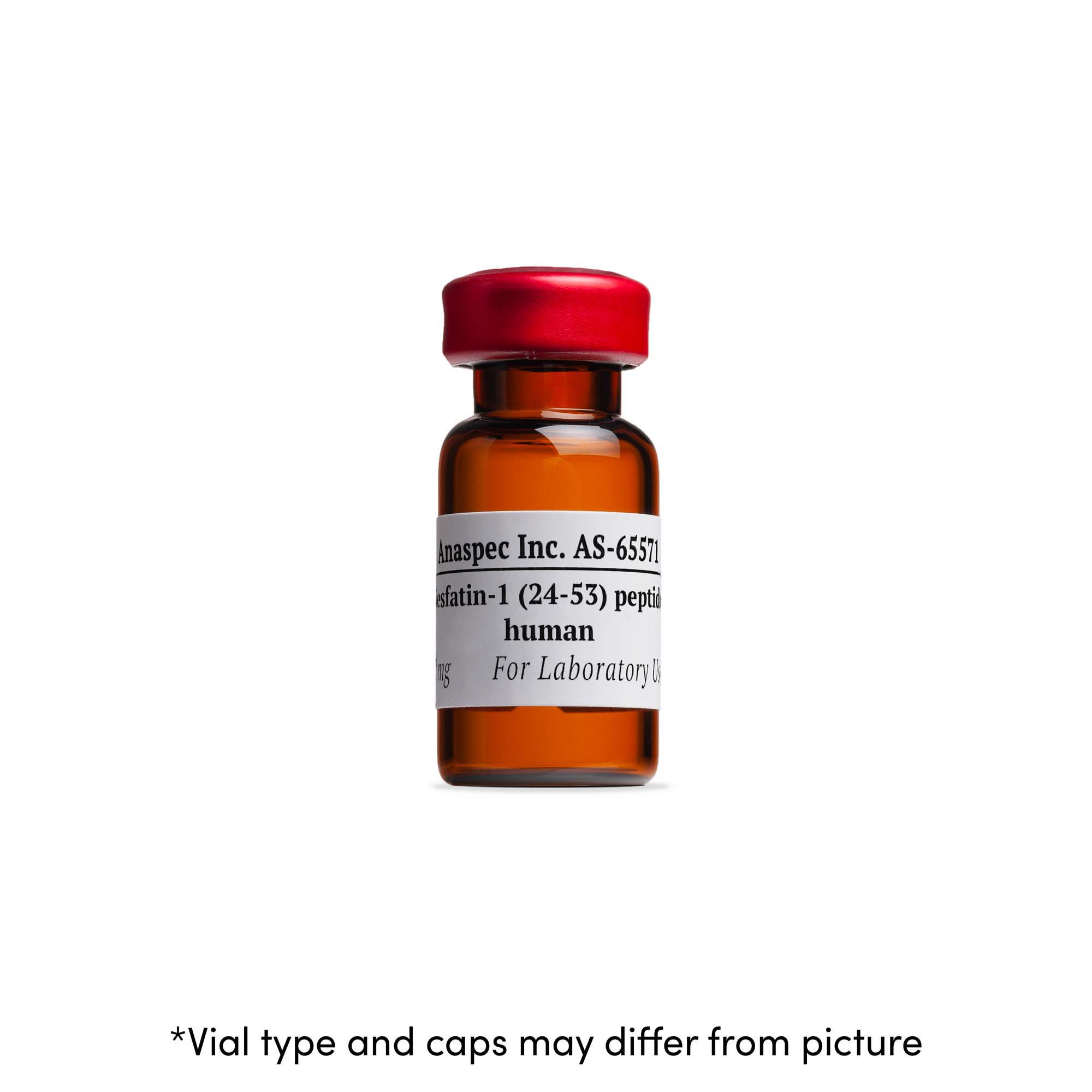
Nesfatin-1 (24-53), human – 0.5 mg
$255.00
Nesfatin-1 (24-53), human. Derived from Nucleobindin2 protein. Nesfatin-1 reduces body weight gain, food and water intake in rodents.
Overview
Nesfatin-1 (24-53), human, is a powerful peptide derived from the Nucleobindin2 protein. This peptide has garnered attention in research for its role in regulating appetite and body weight. Studies show that Nesfatin-1 can effectively reduce both food and water intake in rodent models, making it a subject of interest for those looking to understand weight management and its physiological mechanisms. Notably, high plasma levels of Nesfatin-1 have been observed in individuals with obesity, linking it to potential implications in human health.
Key Features
- Derived from the biologically significant Nucleobindin2 protein.
- Demonstrated ability to reduce body weight gain and food intake in animal studies.
- Associated with anxiety and stress responses in humans.
- Useful for researchers studying appetite regulation and metabolic health.
- Available in a convenient 0.5 mg unit, ideal for various experimental applications.
Specifications
| Product Name | Nesfatin-1 (24-53), human |
|---|---|
| Size | 0.5 mg |
| Derived From | Nucleobindin2 Protein |
FAQ
What is Nesfatin-1?
Nesfatin-1 is a peptide derived from the Nucleobindin2 protein, known for its roles in appetite regulation and body weight control.
How does Nesfatin-1 affect food intake?
Research indicates that Nesfatin-1 reduces food and water intake in rodent models, suggesting it plays a significant role in appetite suppression.
What are the potential implications of Nesfatin-1 in humans?
High levels of Nesfatin-1 in plasma have been linked to obesity and may also be associated with anxiety and stress, indicating its importance in metabolic studies.
For those exploring the fascinating world of peptides, consider our range of peptides that can complement your research. If you’re interested in further applications, check out our PKG Substrate and Autocamtide-2 for innovative solutions that support various scientific inquiries.
Related Products
Be the first to review “Nesfatin-1 (24-53), human – 0.5 mg”
Related products
Peptides
Peptides
Peptides
Peptides
Reviews
There are no reviews yet.