
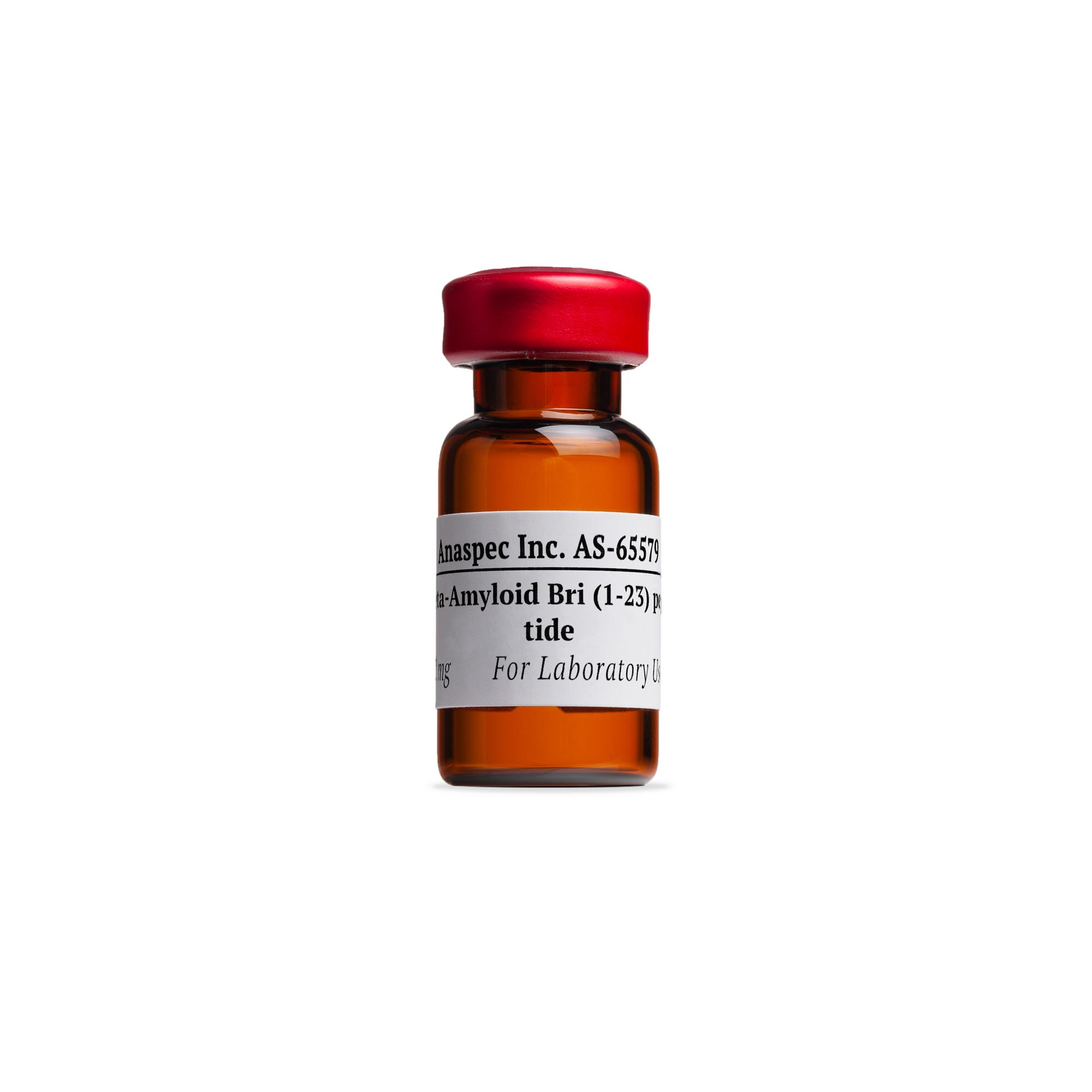
Beta-Amyloid Bri (1-23) – 1 mg
$271.00
Beta-Amyloid Bri (1-23) and Amyloid Bri (1-34) peptides are post-translational products of mutated BRI2 gene.
Overview
Beta-Amyloid Bri (1-23) – 1 mg is a crucial peptide for researchers studying neurodegenerative diseases. This peptide, derived from the mutated BRI2 gene, plays a significant role in the formation of amyloid plaques found in patients with Familial British Dementia (FBD), a condition that shares many characteristics with Alzheimer’s Disease. Understanding the properties of this peptide can help in advancing research and the development of potential treatments for these devastating conditions.
Key Features
- High purity for reliable research outcomes
- Specifically designed for studies related to Alzheimer’s Disease and Familial British Dementia
- Available in a convenient 1 mg format
- Essential for the production of amyloid plaques in vitro
- Supports the study of pyroglutamyl (pGlu) peptides and their role in neurodegeneration
Specifications
| Item | Detail |
|---|---|
| Product Name | Beta-Amyloid Bri (1-23) |
| Concentration | 1 mg |
| Category | Peptides |
FAQ
What is Beta-Amyloid Bri (1-23) used for?
This peptide is essential for research into dementia-related diseases, particularly the formation of amyloid plaques in the brain.
How is this peptide supplied?
Beta-Amyloid Bri (1-23) is available in a 1 mg vial, ensuring precise dosing for experimental needs.
Can I use this peptide for in vitro studies?
Yes, this peptide is ideal for in vitro experiments, especially those focused on neurodegeneration and plaque formation.
For optimal results, you might want to explore other products in our catalog, such as PKG Substrate and Autocamtide-2. Dive deeper into peptide research with our wide range of available options, including Peptides for various applications.
Related Products
Be the first to review “Beta-Amyloid Bri (1-23) – 1 mg”
Related products
Peptides
Peptides
Peptides
Peptides
Reviews
There are no reviews yet.