
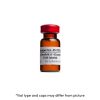
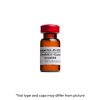
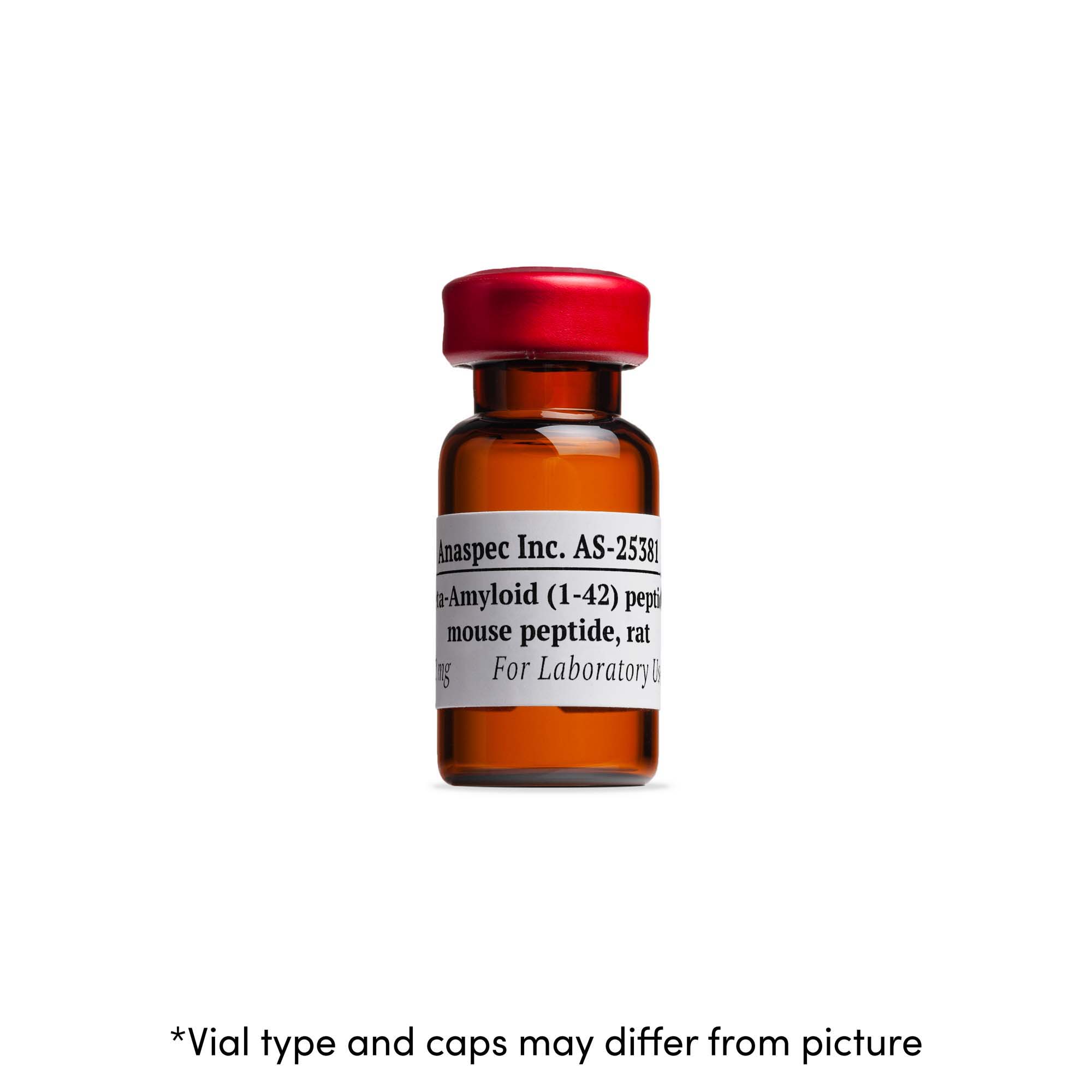
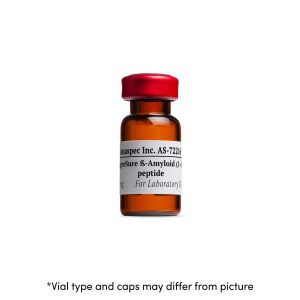
Beta-Amyloid Peptide (1-42), mouse, rat
Price range: $469.00 through $744.00
Beta-Amyloid Peptide (1-42), mouse, rat differs from human Aß: Arg5, Tyr10, His13 in human Aß correspond to Gly5, Phe10, and Arg13 in mice and rat.
Overview
The Beta-Amyloid Peptide (1-42) for mouse and rat models is a vital tool for researchers investigating neurodegenerative diseases, particularly Alzheimer’s disease. This peptide differs from human beta-amyloid by three amino acid residues, specifically, Arg5, Tyr10, and His13 in human beta-amyloid correspond to Gly5, Phe10, and Arg13 in murine sequences. By studying these differences, you can gain critical insights into the mechanisms of amyloid plaque formation and its implications in cognitive decline.
Key Features
- Specific for mouse and rat models, enhancing translational research
- Facilitates the study of Alzheimer’s disease mechanisms
- High purity, ensuring consistent and reliable results
- Available in multiple quantities to meet your research needs
Specifications
| Property | Details |
|---|---|
| Peptide Sequence | 1-42 of mouse and rat beta-amyloid |
| Purity | ≥ 95% |
| Form | Dry powder |
| Storage Conditions | -20°C |
FAQ
What are the main uses of Beta-Amyloid Peptide (1-42)?
This peptide is mainly used in research related to Alzheimer’s disease, allowing scientists to study amyloid plaques and their effect on neuronal health in mouse and rat models.
How should I store the peptide after purchase?
It is best to store the Beta-Amyloid Peptide (1-42) at -20°C in a dry environment. Ensure it is sealed well to prevent moisture exposure.
Can I conduct assays using this peptide?
Yes, this peptide can be utilized in various assays. For specific applications, you may want to explore compatible substrates like PKG Substrate or utilize probe options like CREBtide.
Enhance your research with our Beta-Amyloid Peptide (1-42) today. This unique peptide is available for purchase now, providing essential insights into amyloid pathology and offering a foundation for potential therapeutic developments.
Related Products
Browse more in Peptides.
| Size | 0.5 mg, 1 mg |
|---|
Be the first to review “Beta-Amyloid Peptide (1-42), mouse, rat”
Related products
Peptides
Reviews
There are no reviews yet.