


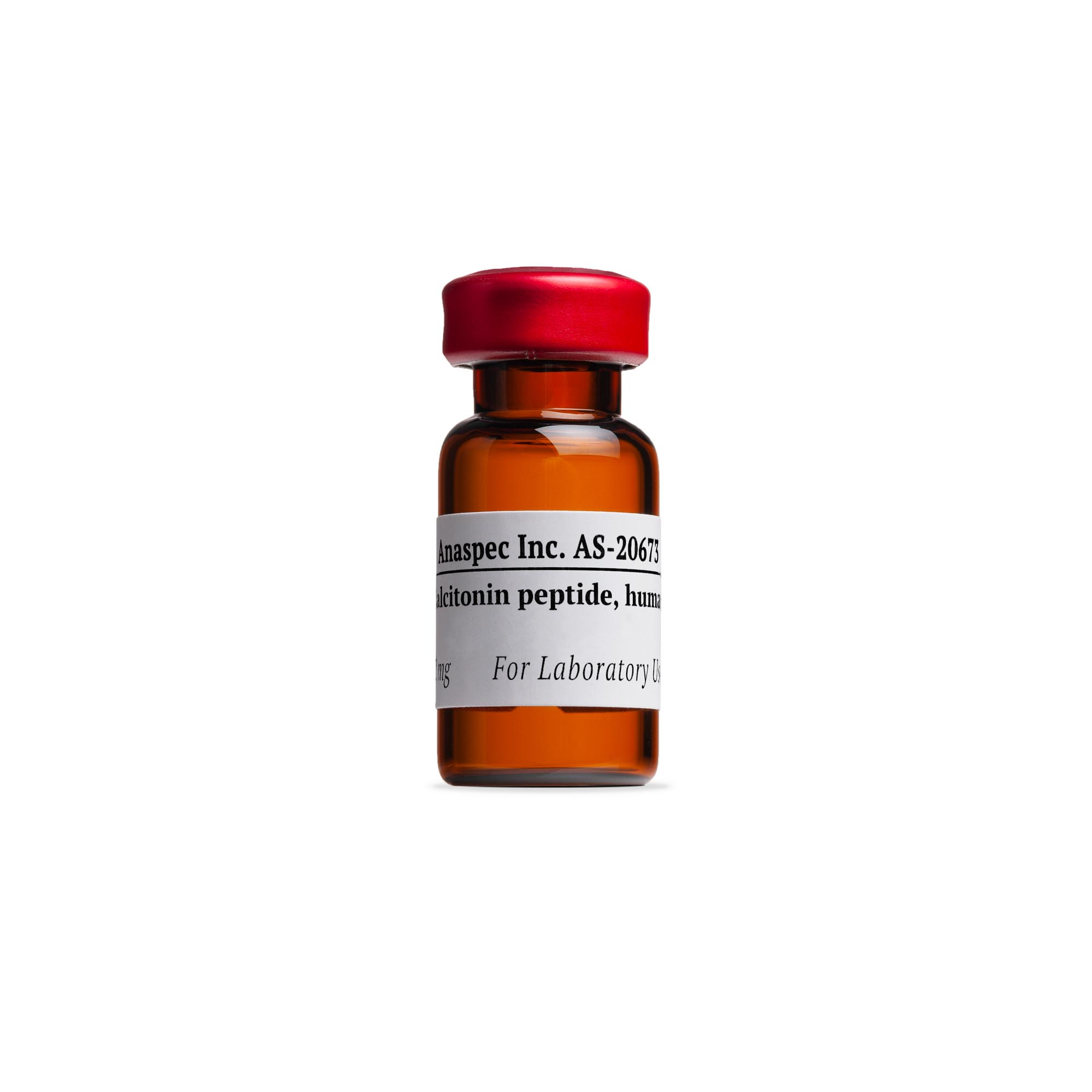
Calcitonin, human
Price range: $193.00 through $772.00
Human calcitonin reduces blood calcium, opposing the effects of parathyroid hormone (PTH). It stimulates cyclic nucleotide accumulation in human kidney.
Overview
Calcitonin is a crucial peptide hormone naturally found in humans, playing a significant role in calcium regulation. Known for its ability to lower blood calcium levels, calcitonin counteracts the effects of parathyroid hormone (PTH). This action not only promotes calcium homeostasis but also stimulates cyclic nucleotide accumulation in the cortex and medulla of the human kidney. Given its vital functions, calcitonin has garnered interest in research related to osteoporosis and Paget’s disease, conditions where calcium metabolism is disrupted.
Key Features
- Reduces blood calcium levels effectively.
- Antagonizes the effects of parathyroid hormone (PTH).
- Stimulates cyclic nucleotide accumulation in human kidney.
- Relevance in osteoporosis and Paget’s disease research.
- High-purity, research-grade peptide.
Specifications
| Product Name | Human Calcitonin |
| Category | Peptides |
| Pack Size | 1 mg |
| Purity | ≥ 95% |
FAQ
What is the primary function of calcitonin?
Calcitonin primarily helps regulate calcium levels in the bloodstream. It lowers blood calcium by inhibiting osteoclast activity in bones and decreasing renal tubular reabsorption of calcium.
How does calcitonin relate to osteoporosis?
Calcitonin may play a protective role in osteoporosis by reducing bone resorption, thereby helping to maintain bone density and strength.
Where can I find more information about related peptides?
You can explore our wide range of related peptides in our Peptide catalogincluding unique offerings such as PKG Substrate and Autocamtide-2.
For researchers studying calcium homeostasis, or those developing assays involving hormonal peptides, our human calcitonin is available and for sale now. Discover its benefits and applications in your research by purchasing today.
Related Products
| Size | 1 mg, 5 mg |
|---|
Be the first to review “Calcitonin, human”
Related products




Reviews
There are no reviews yet.