
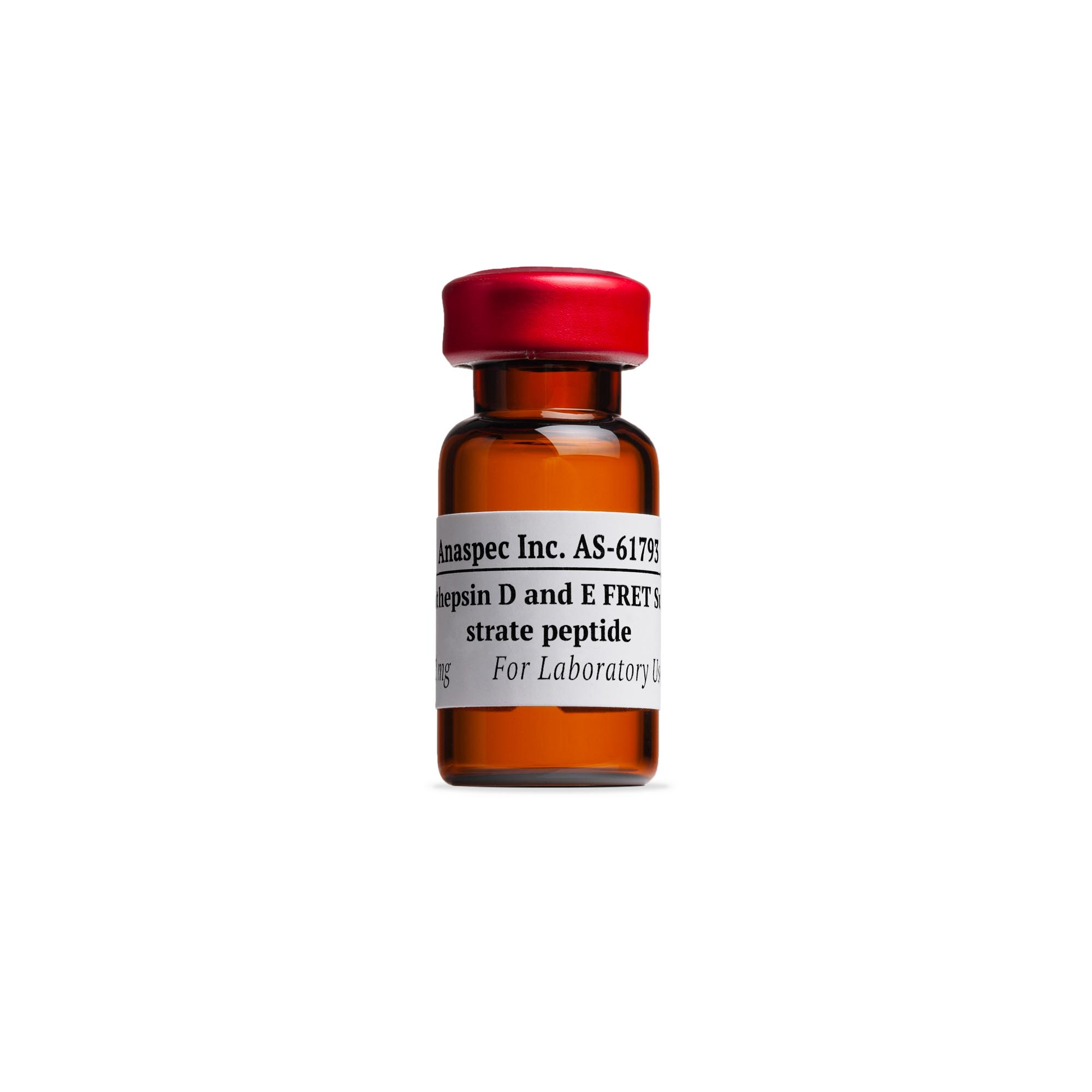
Cathepsin D and E FRET Substrate – 1 mg
$201.00
Cathepsin D and E FRET Substrate. Cathepsins are globular lysosomal proteases, playing a vital role in mammalian cellular turnover, degrade polypeptides.
Overview
The Cathepsin D and E FRET Substrate is a specialized peptide designed to facilitate the study and analysis of cathepsins, crucial lysosomal proteases involved in mammalian cellular turnover. By breaking down polypeptides, cathepsins play an essential role in various physiological processes. This FRET (Fluorescence Resonance Energy Transfer) substrate allows researchers to monitor these proteases in real-time, making it a valuable tool for investigating their roles in diseases such as breast cancer and Alzheimer’s. If you’re looking to enhance your research, consider integrating this substrate into your study.
Key Features
- Targeted for Cathepsin D and E, enabling specific enzymatic activity analysis
- Facilitates real-time observation of proteolytic processes through FRET
- Contributes to understanding disease mechanisms
- 1 mg of high-purity substrate for reliable experimental results
- Compatible with various assays and detection methods
Specifications
| Attribute | Details |
|---|---|
| Product Name | Cathepsin D and E FRET Substrate |
| Quantity | 1 mg |
| Category | Peptides |
FAQ
What are cathepsins?
Cathepsins are a group of lysosomal proteases that play a pivotal role in cellular degradation processes. They facilitate the breakdown of various proteins and polypeptides.
How does the FRET substrate work?
The FRET substrate generates a measurable fluorescent signal upon cleavage by cathepsins, allowing for real-time tracking of enzymatic activity during assay procedures.
Where can I find similar products?
For more peptide options, check out our full range of peptides designed for various applications.
Explore the potential of the Cathepsin D and E FRET Substrate in your research today. Its specific targeting of cathepsin activity offers a unique advantage in studying enzyme behavior and its implications in disease. Order now and integrate this valuable tool into your investigative work. If you’re interested in other similar substrates, consider our PKG Substrate or explore our Autocamtide-2 for additional research applications.
Related Products
Be the first to review “Cathepsin D and E FRET Substrate – 1 mg”
Related products
Peptides
Peptides
Peptides
Reviews
There are no reviews yet.