
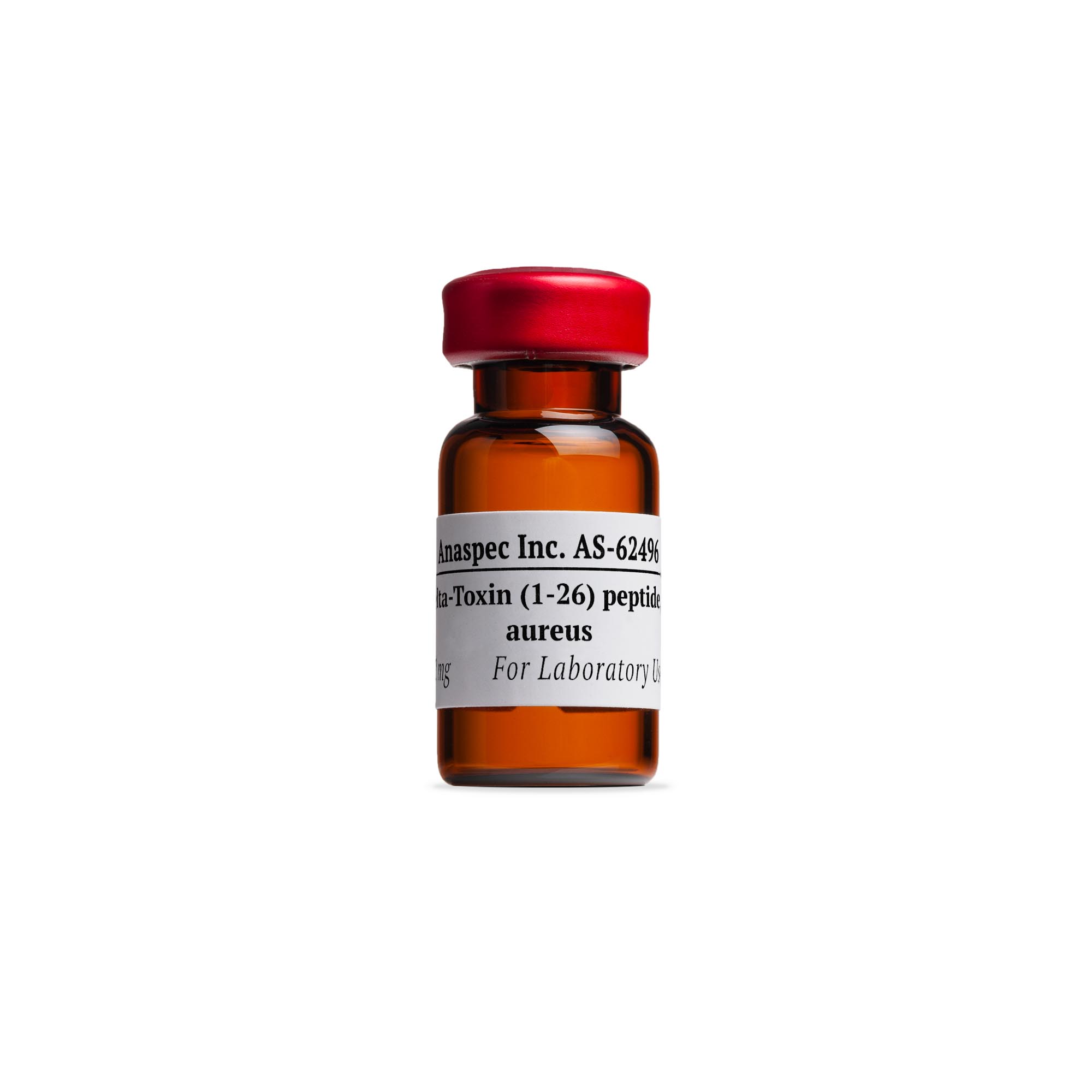
Delta-Toxin (1-26), Staphylococcus aureus – 1 mg
$273.00
Delta-Toxin (1-26), Staphylococcus aureus, This toxin is lytic to many kinds of cells by solubilization of their membranes.
Overview
Discover the Delta-Toxin (1-26) peptide derived from Staphylococcus aureus, available in a convenient 1 mg format. This peptide is known for its lytic properties, effectively solubilizing cell membranes, which makes it a valuable tool in both research and diagnostic applications. Staphylococcus aureus is notorious for its role in various infections, and studying its toxins can provide critical insights into pathogenic mechanisms.
Key Features
- Derived from Staphylococcus aureus for authentic research
- 26-residue hemolytic peptide effective in membrane solubilization
- High purity ensures reliable experimental results
- Supplied in a manageable 1 mg quantity
- Ideal for use in protein labeling kits and assays
Specifications
| Property | Details |
|---|---|
| Peptide Length | 26 residues |
| Source | Staphylococcus aureus |
| Quantity | 1 mg |
| Purity | ≥95% |
FAQ
What is Delta-Toxin (1-26)?
Delta-Toxin (1-26) is a hemolytic peptide secreted by Staphylococcus aureus, which disrupts cell membranes, making it useful in various experimental setups.
How is this peptide used in research?
This peptide is used in studies of cell lysis and membrane solubilization. It’s commonly utilized in assays and experiments involving toxicology and microbiology.
Can Delta-Toxin (1-26) be used for protein labeling?
Yes, its properties make it suitable for integration into protein labeling kits, allowing for precise tracking in various biological experiments.
At AnaSpec, we offer a range of quality peptides and research reagents, ensuring you have the tools you need for your applications. Check out our other options, including PKG Substrate and Autocamtide-2 for a comprehensive toolkit to support your research efforts. Purchase Delta-Toxin (1-26) now and advance your studies with this crucial peptide.
Related Products
Be the first to review “Delta-Toxin (1-26), Staphylococcus aureus – 1 mg”
Related products
Peptides
Peptides
Reviews
There are no reviews yet.