
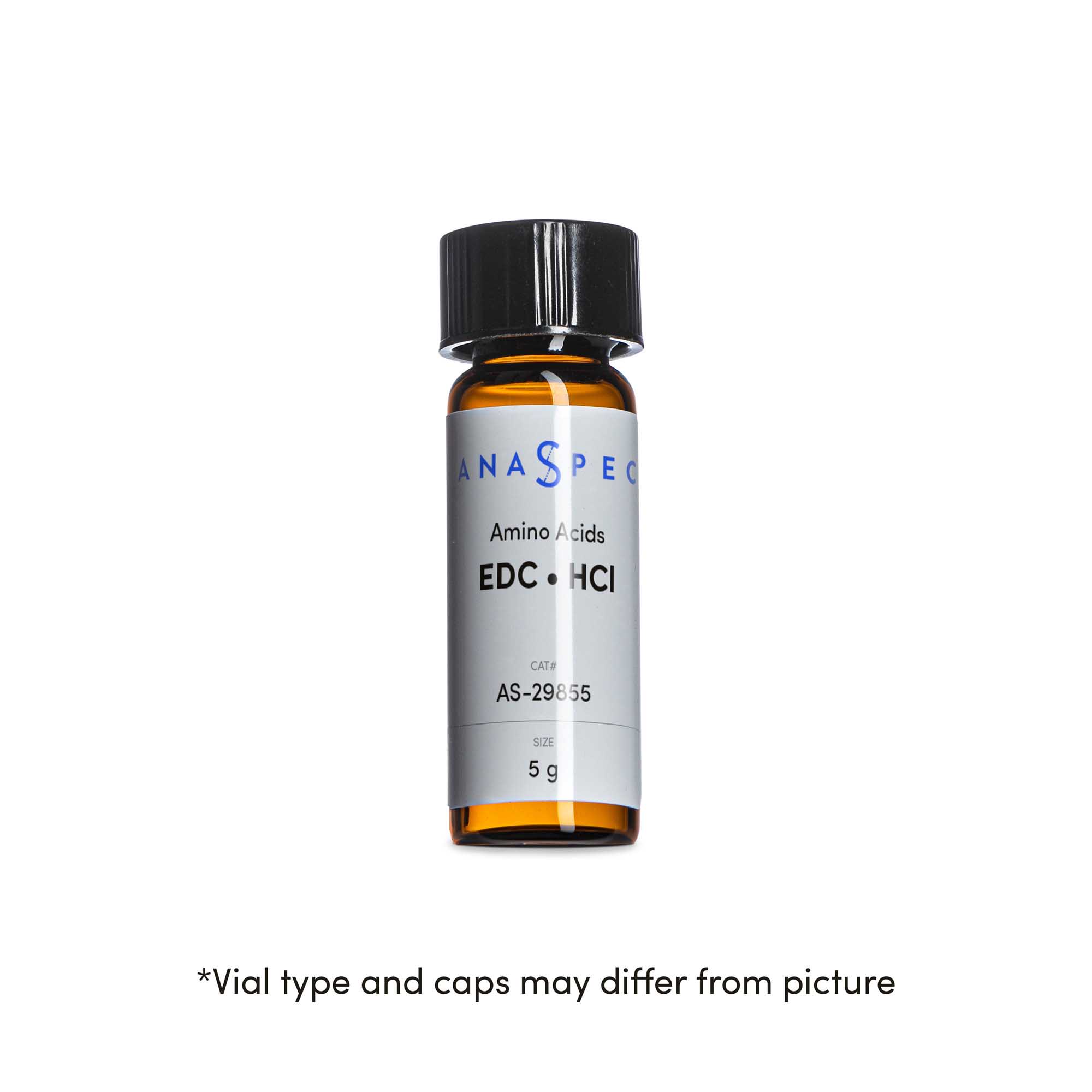
EDC • HCl
Price range: $29.00 through $1,190.00
EDC • HCl. Coupling Reagent, Peptide synthesis
Overview
EDC • HCl (N-(3-Dimethylaminopropyl)-N’-ethylcarbodiimide hydrochloride) is a widely used coupling reagent that plays a crucial role in peptide synthesis. This reagent is effective for activating carboxylic acids to form amides and is particularly indispensable for those looking to create high-purity peptides. Its ability to facilitate the formation of peptide bonds makes it a staple in the laboratory and research settings, ensuring that your synthesis processes are efficient and reliable.
Key Features
- High purity for reliable peptide synthesis
- Facilitates amide bond formation efficiently
- Ideal for a range of coupling applications
- Available in a convenient 5 g package
- Compatible with other reagents, including HATU and HCTU
Specifications
| Property | Detail |
|---|---|
| Product Name | EDC • HCl |
| Weight | 5 g |
| Category | Coupling Reagents |
FAQ
What is EDC • HCl used for?
EDC • HCl is primarily used as a coupling reagent in peptide synthesis, helping to form amide bonds between carboxylic acids and amines.
Is EDC • HCl compatible with other reagents?
Yes, EDC • HCl works well with other coupling agents such as HATU and HCTU, making it versatile for various coupling applications.
How should EDC • HCl be stored?
For optimal stability, store EDC • HCl in a cool, dry place, away from direct sunlight and moisture. Always keep the container tightly closed after use.
For researchers looking to streamline their peptide synthesis, choosing the right coupling reagent is essential. EDC • HCl is an excellent choice that combines effectiveness and reliability. With its competitive pricing, you can stock up on this vital reagent today. Elevate your peptide synthesis capability by integrating EDC • HCl into your laboratory workflow.
Related Products
Browse more in Coupling Reagents.
| Size | 1 kg, 25 g, 5 g |
|---|
Be the first to review “EDC • HCl”
Related products
Coupling Reagents
Hydrazide Resins
Coupling Reagents
Fmoc-Rink Amide MBHA Resins
Wang Resins
Protecting Reagents
Coupling Reagents
Reviews
There are no reviews yet.