
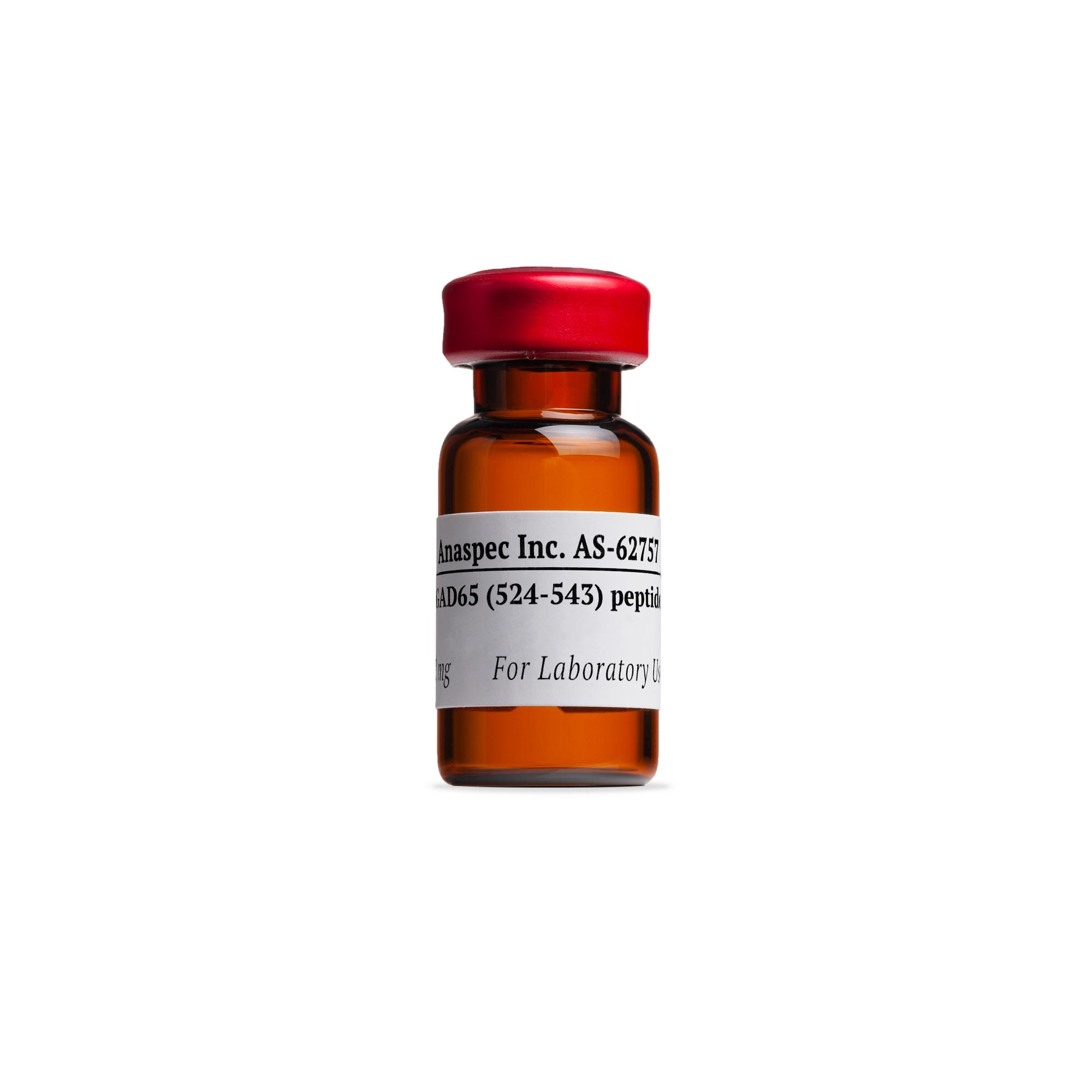
GAD65 (524-543) – 1 mg
$172.00
GAD65 (524-543) fragment of glutamic acid decarboxylase 65, specific stimulus for the spontaneously arising diabetogenic T cell clone BDC2.5.
Overview
The GAD65 (524-543) peptide, comprising amino acids 524 to 543 of glutamic acid decarboxylase 65, serves as a specific stimulus for the BDC2.5 T cell clone, which is known for its role in the pathogenesis of type 1 diabetes. This peptide is particularly significant in research involving spontaneously arising diabetogenic T cell responses, especially in the non-obese diabetic (NOD) mouse model. The relevance of this peptide extends to studies focused on autoimmune diabetes, providing insights into the mechanisms underlying T cell activation and proliferation.
Key Features
- Specifically targets the BDC2.5 T cell clone, relevant in diabetes research.
- Integral to understanding autoimmune responses associated with type 1 diabetes.
- Contributes to the study of glucose metabolism and pancreatic function.
- Ideal for immunological assays and peptide-based experiments.
Specifications
| Product | GAD65 (524-543) |
|---|---|
| Size | 1 mg |
| Category | Peptides |
FAQ
What is the significance of GAD65 in diabetes research?
GAD65 plays a crucial role in the development of type 1 diabetes by being a target for autoimmune responses. The GAD65 (524-543) fragment is significant as it stimulates T cells that can lead to disease progression.
How can I use the GAD65 (524-543) peptide in my research?
This peptide is ideal for immunological assays, allowing researchers to study T cell activation and its role in autoimmune diabetes. It can be used in various experimental setups, including those assessing T cell responses.
Are there similar products available?
Yes, AnaSpec offers a variety of peptides that can be utilized in similar experiments. Check out our extensive catalog of peptides to find additional relevant products such as Autocamtide-2 [KKALRRQETVDAL] and CREBtide [KRREILSRRPSYR], 5-FAM labeled.
Enhance your research capabilities with the GAD65 (524-543) peptide. Order now and explore its potential in understanding diabetes and autoimmune responses.
Related Products
Be the first to review “GAD65 (524-543) – 1 mg”
Related products
Peptides
Peptides
Reviews
There are no reviews yet.