
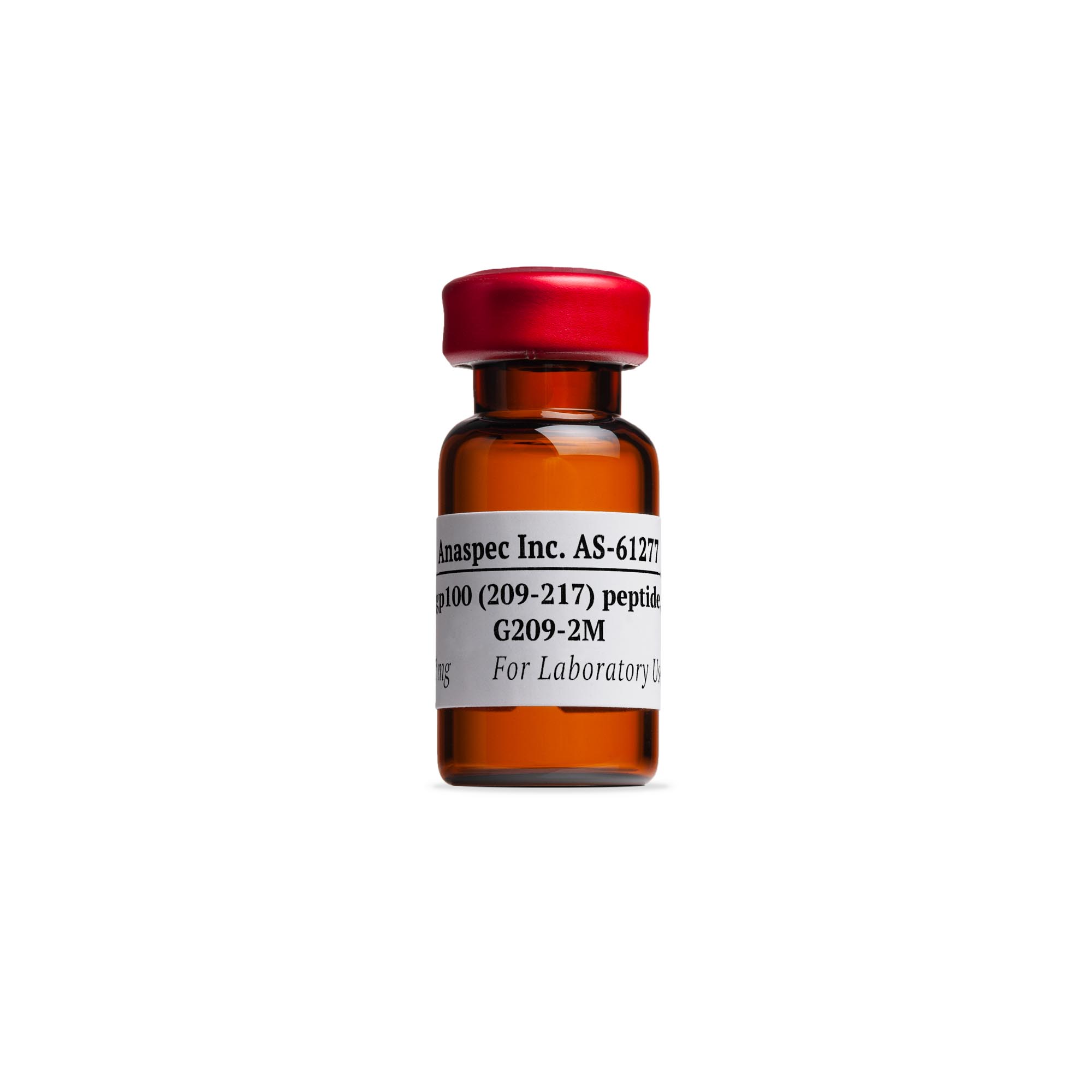
gp100 (209-217), G209-2M – 1 mg
$158.00
gp100 (209-217), G209-2M, MHC-associated HLA-A2.1-restricted epitope derived from melanoma antigene. Can be processed, presented, recognized by T cells.
Overview
The gp100 (209-217), G209-2M peptide is a critical tool in cancer research, specifically targeting melanoma. This peptide represents a vital epitope derived from the gp100 antigen, which plays an essential role in T-cell recognition. Designed for applications in immunology and oncology research, G209-2M enhances the recognition and affinity by modifying the second amino acid to methionine. As a result, this modification significantly boosts the peptide’s potential for T-cell activation, making it an invaluable asset for studies in therapeutic development and vaccine research.
Key Features
- Derived from the gp100 melanoma antigen, facilitating T-cell recognition.
- Contains a methionine modification at the second amino acid position, enhancing binding affinity to MHC HLA-A2.1.
- Available in a 1 mg vial, ideal for various research applications.
- Designed to support studies on T-cell activation and immune response against melanoma.
- Quality-assured for consistency and reliability in research settings.
Specifications
| Product Name | Quantity | Modification |
|---|---|---|
| gp100 (209-217), G209-2M | 1 mg | Threonine to Methionine |
FAQ
What is the significance of the G209-2M modification?
The G209-2M modification enhances the binding affinity for the MHC HLA-A2.1 molecule, leading to improved T-cell activation against melanoma. This is crucial for developing effective immunotherapies.
How can I use this peptide in my research?
You can utilize the gp100 (209-217), G209-2M peptide for T-cell assays, vaccine development, and other immunological studies where T-cell recognition of melanoma antigens is relevant.
Where can I find more peptides for similar applications?
Explore our extensive catalog of peptides to discover additional options that suit your research needs. Products like PKG Substrate and Autocamtide-2 complement the gp100 peptide in various assays and applications.
Related Products
Be the first to review “gp100 (209-217), G209-2M – 1 mg”
Related products
Peptides
Peptides
Reviews
There are no reviews yet.