


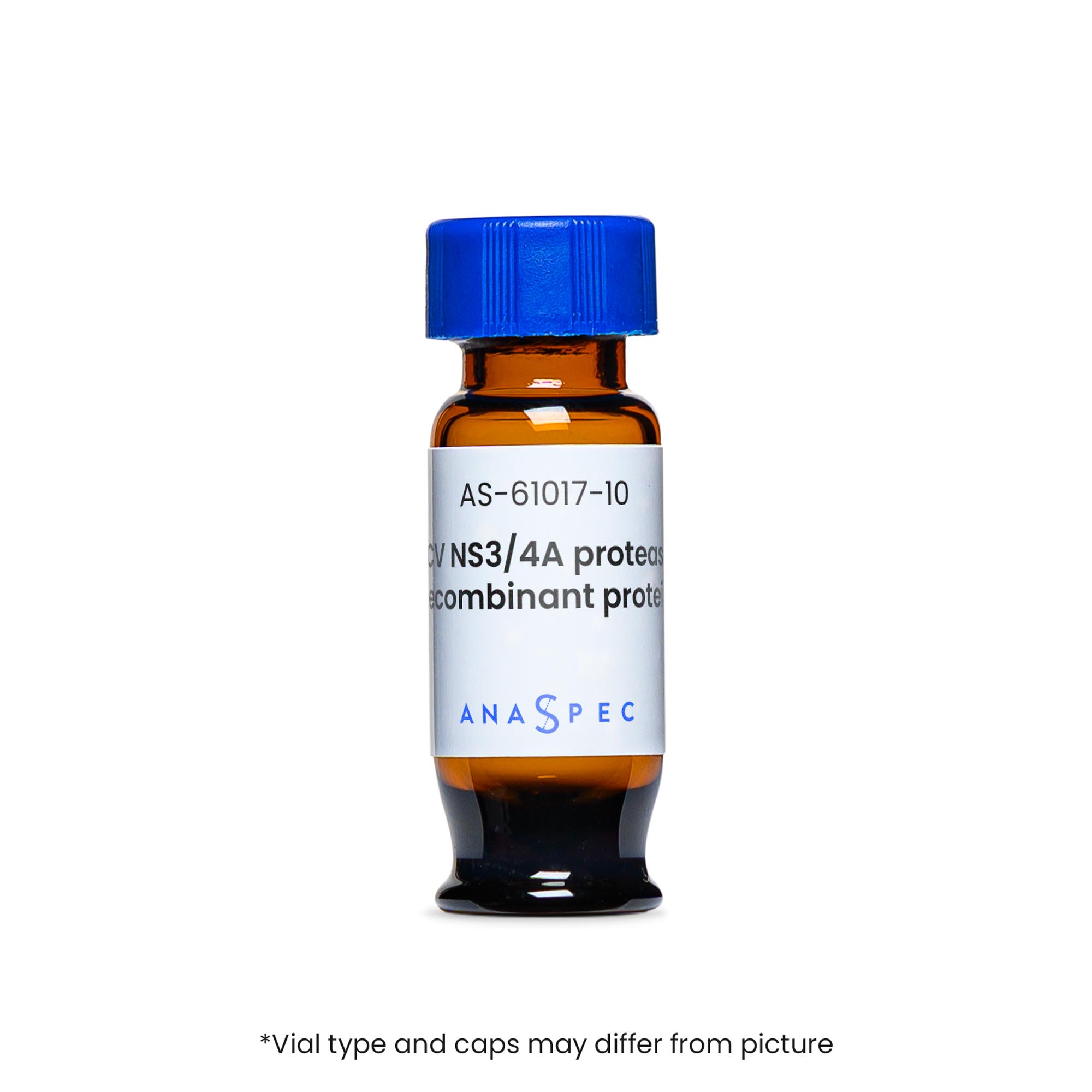
HCV NS3/4A protease genotype 1b, recombinant
Price range: $299.00 through $460.00
HCV NS3/4A protease genotype 1b, responsible for the cleavage at NS3/NS4A, NS4A/NS4B sites, is essential for viral replication,formation viral particles.
Overview
The HCV NS3/4A protease genotype 1b is a recombinant protein vital for studying the hepatitis C virus’s replication mechanisms. This protease is responsible for critical cleavages at the NS3/NS4A and NS4A/NS4B sites, which are essential for forming viral particles. With its chymotrypsin-like activity, the NS3 protease requires the cofactor NS4 for optimal function, making it a key player in HCV biology.
Key Features
- Recombinant HCV NS3/4A protease genotype 1b
- Facilitates the study of viral replication
- Enables cleavage at vital nonstructural protein sites
- Derived from high-quality recombinant technology
- Essential for the formation of viral particles
Specifications
| Property | Details |
|---|---|
| Protein Source | Recombinant |
| Genotype | 1b |
| Activity | Chymotrypsin-like serine protease |
| Cofactor | NS4 protein |
FAQ
What is the importance of the NS3/4A protease?
The NS3/4A protease is crucial for the cleavage of nonstructural protein sites essential for HCV replication and assembly.
How is the recombinant NS3/4A protease produced?
Our recombinant NS3/4A protease is produced using advanced recombinant technology, ensuring high purity and activity.
Can this protease be used for therapeutic research?
Yes, the HCV NS3/4A protease is regularly utilized in research aimed at developing antiviral therapies for hepatitis C.
Explore our full range of catalog recombinant proteins, including options like the recombinant human MOG (1-125) and the recombinant mouse MOG (1-125). These products support a wide array of applications in biomedical research.
Related Products
| Size | 10 µg, 5 µg |
|---|
Be the first to review “HCV NS3/4A protease genotype 1b, recombinant”
Related products



Catalog recombinant

Catalog recombinant

Catalog recombinant

Reviews
There are no reviews yet.