
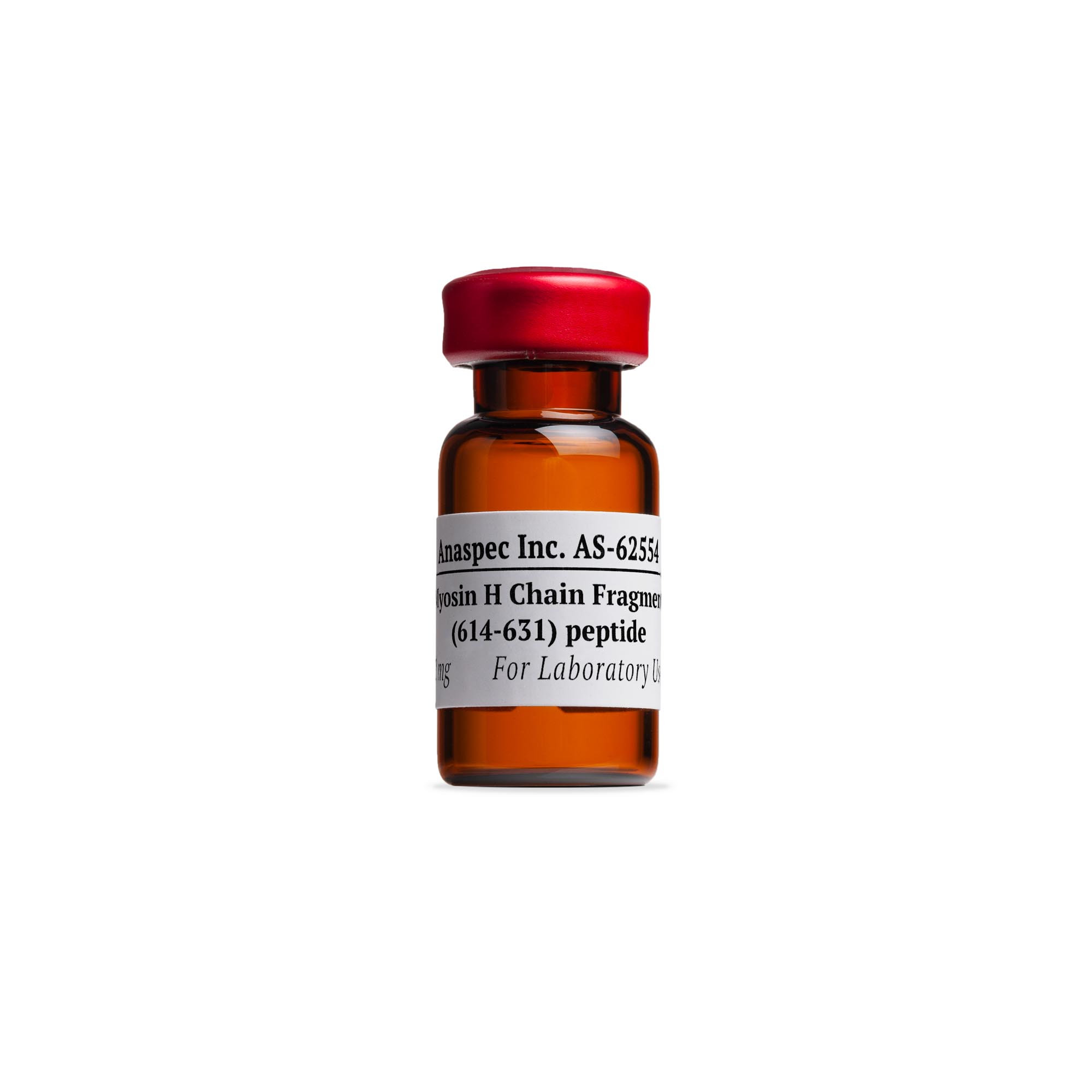
Myosin H Chain Fragment (614-631), mouse – 1 mg
$151.00
Myosin H Chain Fragment (614-631), mouse, a fragment of the murine heart muscle specific peptide derived from a-myosin H chain.
Overview
The Myosin H Chain Fragment (614-631), mouse, is a specific peptide fragment derived from the murine heart muscle. This peptide plays a significant role in research related to autoimmune myocarditis, making it essential for scientists and researchers focused on cardiac health and disease mechanisms. With a concentration of 1 mg, it’s perfect for various laboratory applications and investigations.
Key Features
- Derived from the a-myosin H chain, specifically targeting murine heart tissue.
- Useful in the study and induction of autoimmune myocarditis.
- High-quality peptide for reliable results in experimental setups.
- 1 mg concentration suitable for a range of applications.
- Facilitates research in cardiac physiology and pathology.
Specifications
| Attribute | Details |
|---|---|
| Name | Myosin H Chain Fragment (614-631), mouse |
| Category | Peptides |
| Concentration | 1 mg |
FAQ
What is the source of the Myosin H Chain Fragment?
This peptide is derived from the a-myosin H chain, which is specific to murine heart muscle, making it vital for studies related to heart function and diseases.
How is this peptide used in research?
The Myosin H Chain Fragment is primarily used in the induction of autoimmune myocarditis, allowing researchers to explore the mechanisms of heart-related autoimmune diseases.
Where can I find additional peptide products?
For further research needs, check out our comprehensive list of peptides. We offer a variety of high-quality peptides suited for numerous scientific applications.
For your upcoming research, consider adding the Myosin H Chain Fragment (614-631), mouse, to your collection. This peptide is invaluable for advancing your studies in cardiac health and autoimmune disorders. You can find this and more in our peptide section, ensuring you have the best tools for your research needs.
Related Products
Be the first to review “Myosin H Chain Fragment (614-631), mouse – 1 mg”
Related products
Peptides
Peptides
Reviews
There are no reviews yet.