
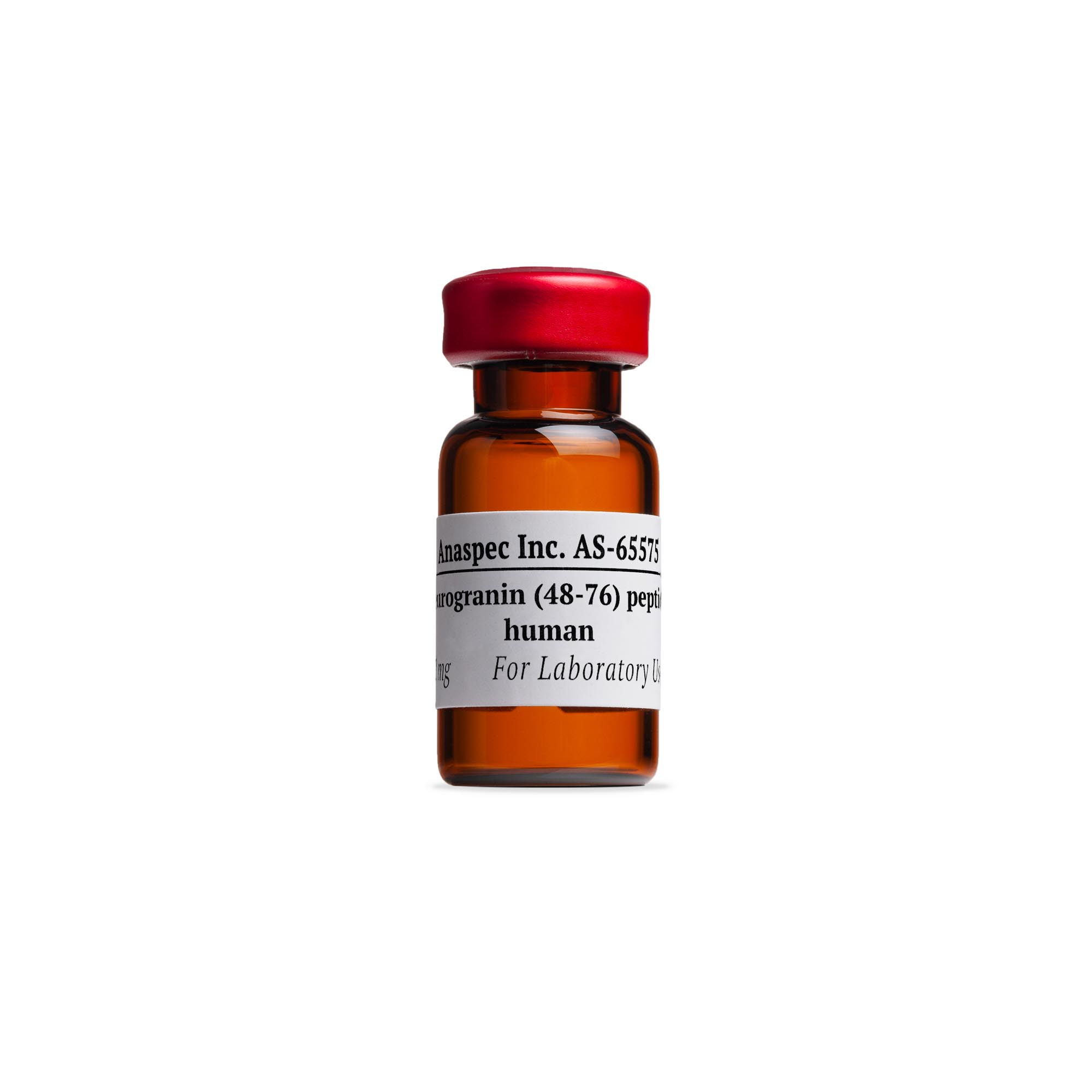
Neurogranin (48-76), human – 1 mg
$461.00
Neurogranin (48-76), is a post synaptic protein that is expressed in dendritic cytoplasm. It modulates calcium-mediated signaling pathways.
Overview
Neurogranin (48-76) is a critical post-synaptic protein found in the dendritic cytoplasm, playing a significant role in modulating calcium-mediated signaling pathways. This peptide fragment has garnered attention for its involvement in synaptic plasticity, a key factor in memory and learning processes. Recent studies have revealed that individuals with Alzheimer’s Disease exhibit elevated levels of Neurogranin (48-76) in their cerebrospinal fluid, making it a valuable marker for research in neurodegenerative diseases.
Key Features
- 1 mg of high-purity Neurogranin (48-76) for research applications
- Modulates calcium signaling, crucial for neuronal communication
- Identified as a significant fragment in human brain health studies
- Potential biomarker for Alzheimer’s Disease assessment
- Supports investigations into synaptic function and neurological disorders
Specifications
| Product Name | Neurogranin (48-76), human |
| Category | Peptides |
| Quantity | 1 mg |
| Application | Research, Diagnostic |
FAQ
What is Neurogranin (48-76) used for?
Neurogranin (48-76) is primarily used in research to investigate its role in synaptic plasticity and as a potential biomarker for Alzheimer’s Disease. It helps researchers understand neuronal communication and calcium signaling mechanisms.
How does Neurogranin (48-76) relate to Alzheimer’s Disease?
Elevated levels of Neurogranin (48-76) have been found in the cerebrospinal fluid of Alzheimer’s patients, suggesting its potential as a biomarker for early diagnosis and understanding disease progression.
Where can I find more peptides for my research?
For a comprehensive selection of peptides, browse our complete peptides collectionincluding various substrates and labeling options.
Get your Neurogranin (48-76) today and enhance your research into neurological conditions. Understanding the role of this specific peptide can provide insights into synaptic behavior and potential therapeutic approaches for Alzheimer’s Disease.
Related Products
Be the first to review “Neurogranin (48-76), human – 1 mg”
Related products
Peptides
Peptides
Reviews
There are no reviews yet.