
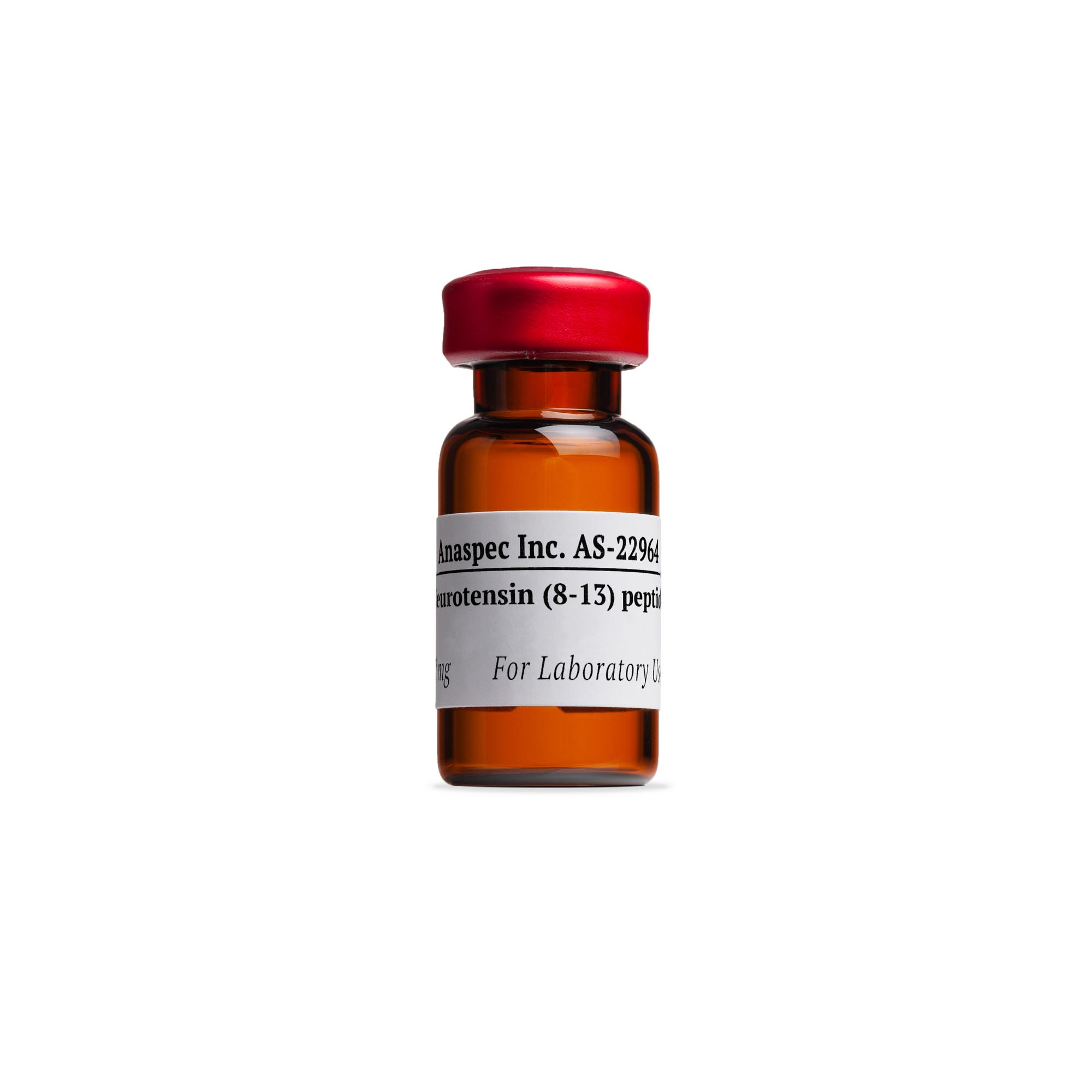
Neurotensin (8-13) – 5 mg
$172.00
This is a fragment of neurotensin neuropeptide detected in the central nervous system (CNS) and peripheral tissues mainly in the gastrointestinal tract.
Overview
Neurotensin (8-13) is a sophisticated fragment of the neuropeptide neurotensin, primarily identified in the central nervous system (CNS) and peripheral tissues, especially within the gastrointestinal tract. This peptide plays a crucial role in several physiological functions, including modulation of smooth muscle contraction and neurotransmitter regulation.
Key Features
- Derived from neurotensin, a key neuromodulator.
- Influences dopamine transmission in the CNS.
- Contributes to gastrointestinal function by inducing smooth muscle contractions.
- Exhibits analgesic and hypothermic effects in the brain.
- Offered in a convenient 5 mg package for easy use in research applications.
Specifications
| Property | Details |
|---|---|
| Product Name | Neurotensin (8-13) |
| Quantity | 5 mg |
| Category | Peptides |
| Function | Neuromodulator |
| Application | Research |
FAQ
What is neurotensin (8-13) used for?
Neurotensin (8-13) is primarily used in research to study its role in neuropeptide signaling, particularly its effects on dopamine regulation and gastrointestinal functions.
How is neurotensin (8-13) administered?
This peptide is typically used in laboratory settings, where it can be administered in various experimental applications, often via injection or cellular assays.
What other related peptides can I find?
You can explore our comprehensive collection of peptides, including options like Autocamtide-2 and CREBtide, which are available for sale on our site.
For precise applications in neurological research, consider purchasing Neurotensin (8-13) today. Enhance your studies with this vital peptide and discover its benefits for understanding neurophysiological mechanisms.
Related Products
- PKG Substrate [RKRSRAE], Glasstide
- Autocamtide-2 [KKALRRQETVDAL]
- CREBtide [KRREILSRRPSYR], 5-FAM labeled
Browse more in Peptides.
Be the first to review “Neurotensin (8-13) – 5 mg”
Related products
Peptides
Peptides
Reviews
There are no reviews yet.