
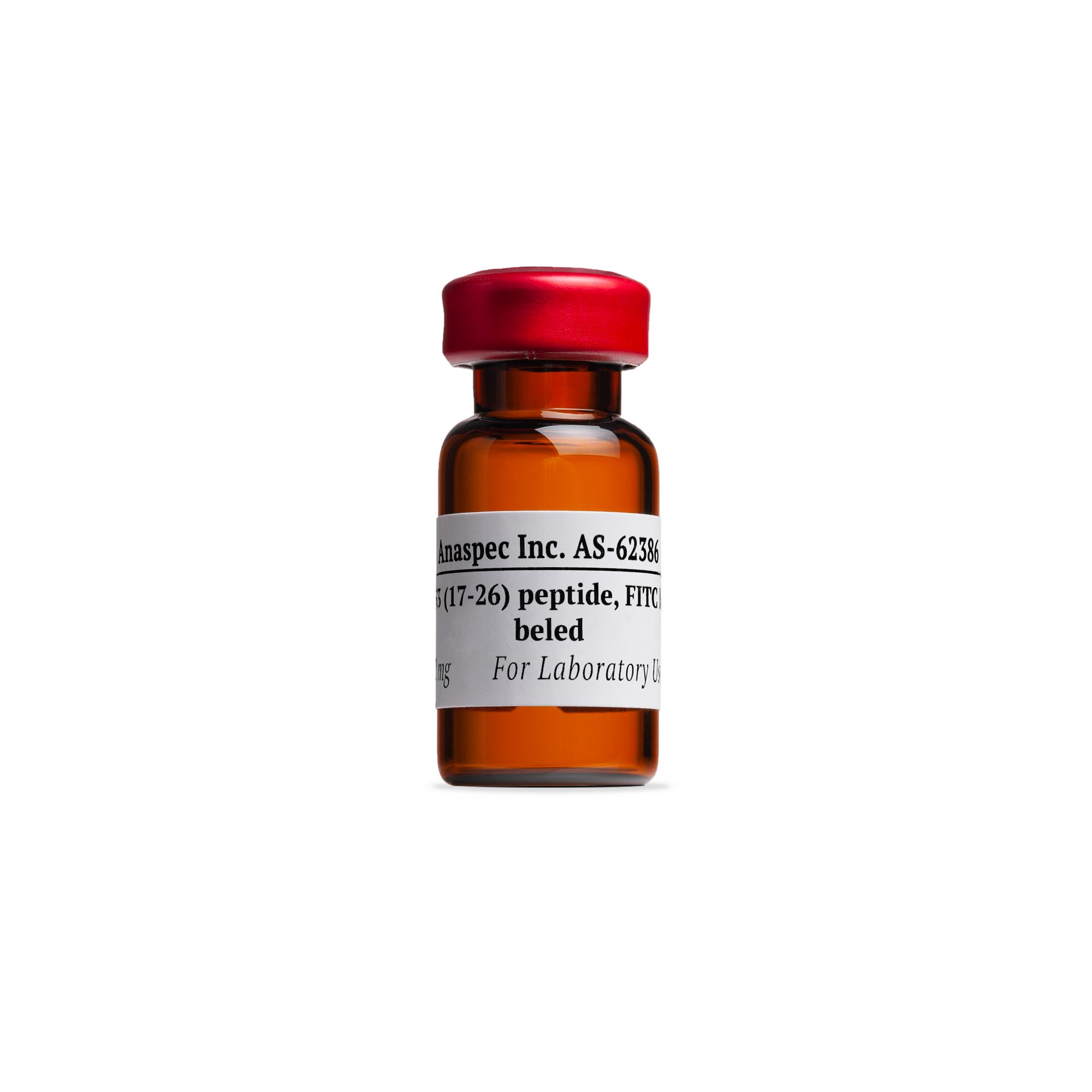
p53 (17-26), FITC labeled – 1 mg
$305.00
p53 (17-26), FITC labeled. Mdm-2 binding domain of p53 known also as p53N. The tumor suppressor protein p53 is important in preventing cancer.
Overview
Enhance your research with our p53 (17-26), FITC labeled peptide. This specific peptide represents amino acids 17 to 26 of the tumor suppressor protein p53, also known as the Mdm-2 binding domain or p53N. It’s critically involved in cancer prevention by maintaining genome stability, making it a valuable addition to cancer research studies.
Key Features
- FITC labeled for easy fluorescence detection with absorption/emission at 493 nm/517 nm.
- Contains the complete residue sequence that interacts with the Mdm-2 binding domain.
- Essential tool for studying the role of p53 in cancer biology.
- Suitable for various assays, including cell-based assays and fluorescence microscopy.
- High purity ensures reliable performance in your experiments.
Specifications
| Property | Details |
|---|---|
| Peptide Sequence | p53 (17-26) |
| Labeling | FITC |
| Size | 1 mg |
FAQ
What is the significance of the p53 protein?
The p53 protein plays a vital role in regulating the cell cycle and ensuring the integrity of the genome. Its dysfunction can lead to cancer development.
How can I use the p53 (17-26) peptide in my experiments?
This peptide can be utilized in various assays, including studying protein-protein interactions and dynamics in cellular environments. Its fluorescent labeling facilitates easy detection.
Is the p53 (17-26) peptide suitable for in vivo studies?
While this peptide is primarily designed for in vitro applications, its fluorescent tagging allows you to visualize interactions in live-cell imaging under specific conditions.
To explore more options, consider our other peptides like Autocamtide-2 or the CREBtide for comprehensive studies in your lab. Don’t miss out on enhancing your research capabilities, shop for our p53 (17-26), FITC labeled peptide now!
Related Products
Browse more in Peptides.
Be the first to review “p53 (17-26), FITC labeled – 1 mg”
Related products
Peptides
Peptides
Peptides
Reviews
There are no reviews yet.