
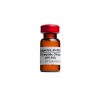
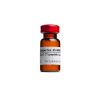
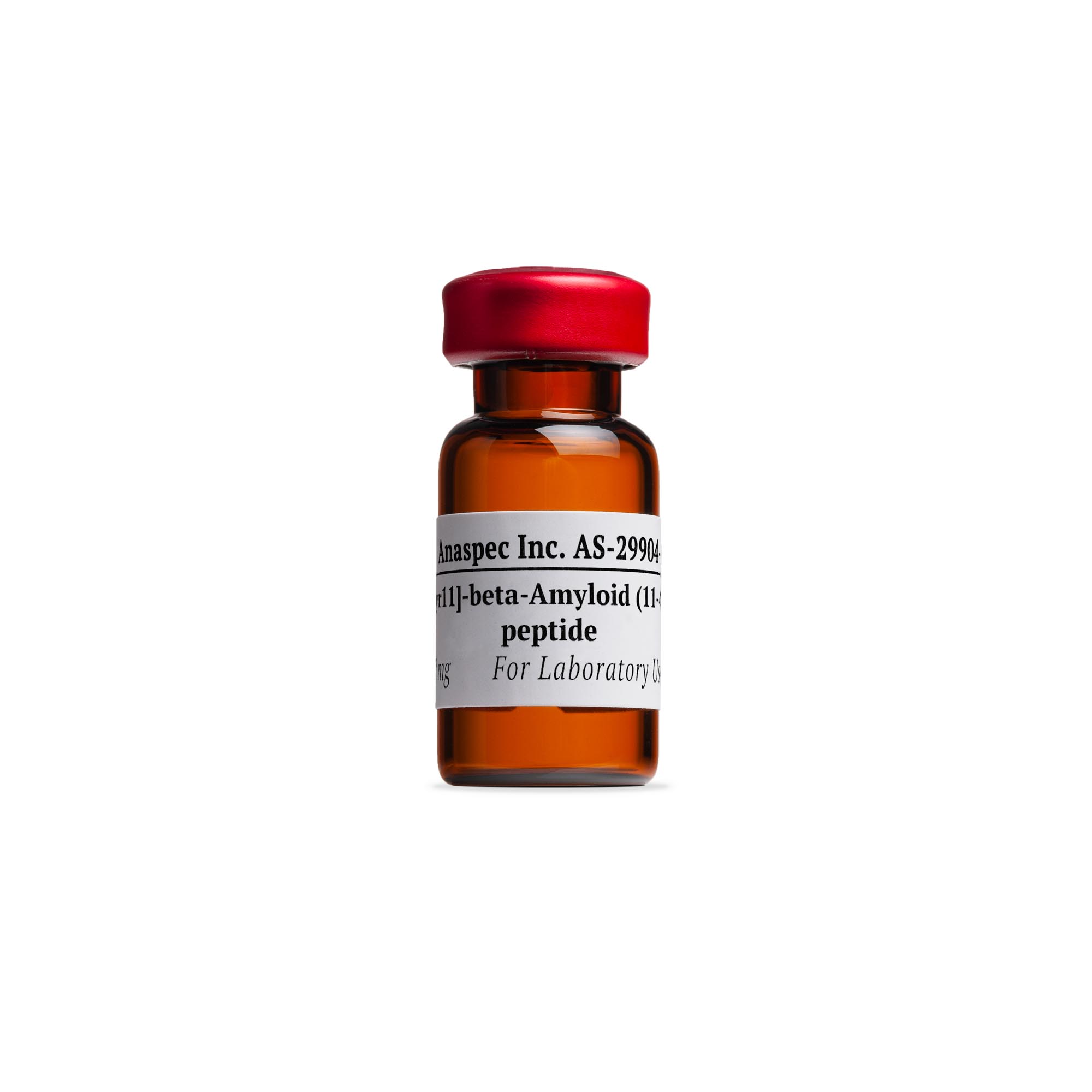
[Pyr11]-beta-Amyloid (11-40) – 1 mg
$522.00
This is [Pyr11]-beta-Amyloid (11-40). N-term. truncated pyroglutamate-modified Aß forms Aß(3-40) and Aß (11- 40) are major compounds in senile plaques.
Overview
The [Pyr11]-beta-Amyloid (11-40) peptide is a critical compound in Alzheimer’s disease research, specifically related to the formation of senile plaques. This N-terminally truncated pyroglutamate-modified beta-Amyloid is of particular interest as it includes forms such as Aß(3-40) and Aß(11-40). These forms are significantly more resistant to degradation and are characterized by a higher aggregation propensity compared to their non-modified counterparts. With the growing emphasis on early detection and understanding of Alzheimer’s pathology, this peptide plays a pivotal role in advancing research and potential therapeutic strategies.
Key Features
- Highly relevant for Alzheimer’s disease research
- N-terminally truncated forms contribute to plaque formation
- Greater resistance to degradation enhances study reliability
- Increased toxicity and aggregation propensity observed
- Perfect for use in assays alongside our available PKG substrates
Specifications
| Property | Details |
|---|---|
| Product Name | [Pyr11]-beta-Amyloid (11-40) |
| Quantity | 1 mg |
| Category | Peptides |
FAQ
What is the significance of [Pyr11]-beta-Amyloid?
This peptide is crucial for understanding the mechanisms of Alzheimer’s disease, particularly in the study of senile plaques.
How does [Pyr11]-beta-Amyloid differ from other beta-Amyloid forms?
N-terminal truncation and pyroglutamate modification make it more stable, toxic, and prone to aggregation.
Can [Pyr11]-beta-Amyloid be used in diagnostic assays?
Yes, it is ideal for various assays, especially when combined with our other products like Autocamtide-2 and CREBtide.
Get your [Pyr11]-beta-Amyloid (11-40) now to enhance your research on Alzheimer’s disease. Explore our complete selection of peptides for your study needs.
Be the first to review “[Pyr11]-beta-Amyloid (11-40) – 1 mg”
Related products
Peptides
Peptides
Peptides
Peptides
Reviews
There are no reviews yet.