
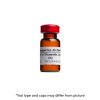
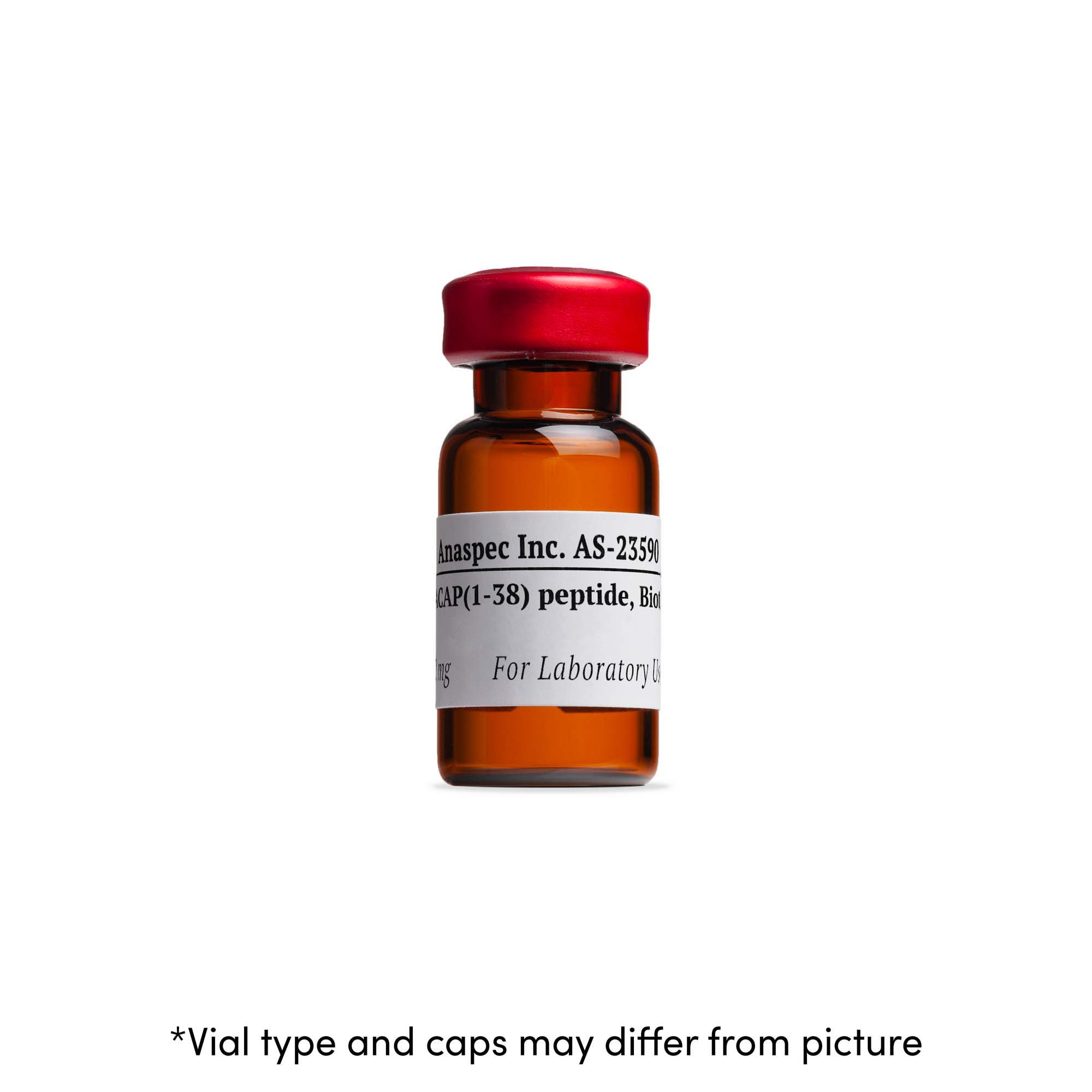
PACAP (1-38), amide, human, ovine, rat, Biotin-labeled – 0.5 mg
$394.00
Pituitary adenylate cyclase-activating polypeptide (PACAP) with a Biotin label is a member of the vasoactive intestinal peptide/secretin/glucagon family.
Overview
Pituitary adenylate cyclase-activating polypeptide (PACAP) (1-38), amide, human, ovine, rat, Biotin-labeled is a versatile peptide widely recognized for its essential role in various physiological processes. This Biotin-labeled variant allows for easy detection and analysis, making it an invaluable tool for researchers delving into neurobiology and endocrinology. PACAP, a member of the vasoactive intestinal peptide/secretin/glucagon family, is crucial for numerous cellular signaling pathways. Its amino acid sequence is consistently identical across all mammals, ensuring robust applicability in diverse studies.
Key Features
- Biotin label on the N-terminus for easy detection
- Compatible with a range of assays and labeling techniques
- Identical amino acid sequence in all mammals
- Derived from a 176-amino acid precursor (preproPACAP)
- Important for research on neurological and physiological indicators
Specifications
| Item | Description |
|---|---|
| Peptide Name | PACAP (1-38), amide, human, ovine, rat |
| Labeling | Biotin |
| Quantity | 0.5 mg |
FAQ
What is PACAP used for?
PACAP is pivotal in research focusing on brain function, endocrine regulation, and cellular signaling. Its biotin label allows for straightforward detection in various assays.
How does the Biotin label benefit my research?
The Biotin label enhances assay sensitivity and specificity, allowing researchers to easily track and quantify PACAP in experimental setups, such as those utilizing our PKG Substrate.
Can I use PACAP (1-38) in vivo?
Yes, PACAP (1-38) has been documented for use in in vivo studies, contributing to a deeper understanding of its physiological roles across different species.
For your next project, consider exploring related products like our Autocamtide-2 or check out our extensive selection of peptides to complement your research needs. Invest in PACAP (1-38), amide with a Biotin label today and enhance your experiments with this critical peptide.
Related Products
Be the first to review “PACAP (1-38), amide, human, ovine, rat, Biotin-labeled – 0.5 mg”
Related products
Peptides
Peptides
Peptides
Peptides
Reviews
There are no reviews yet.