
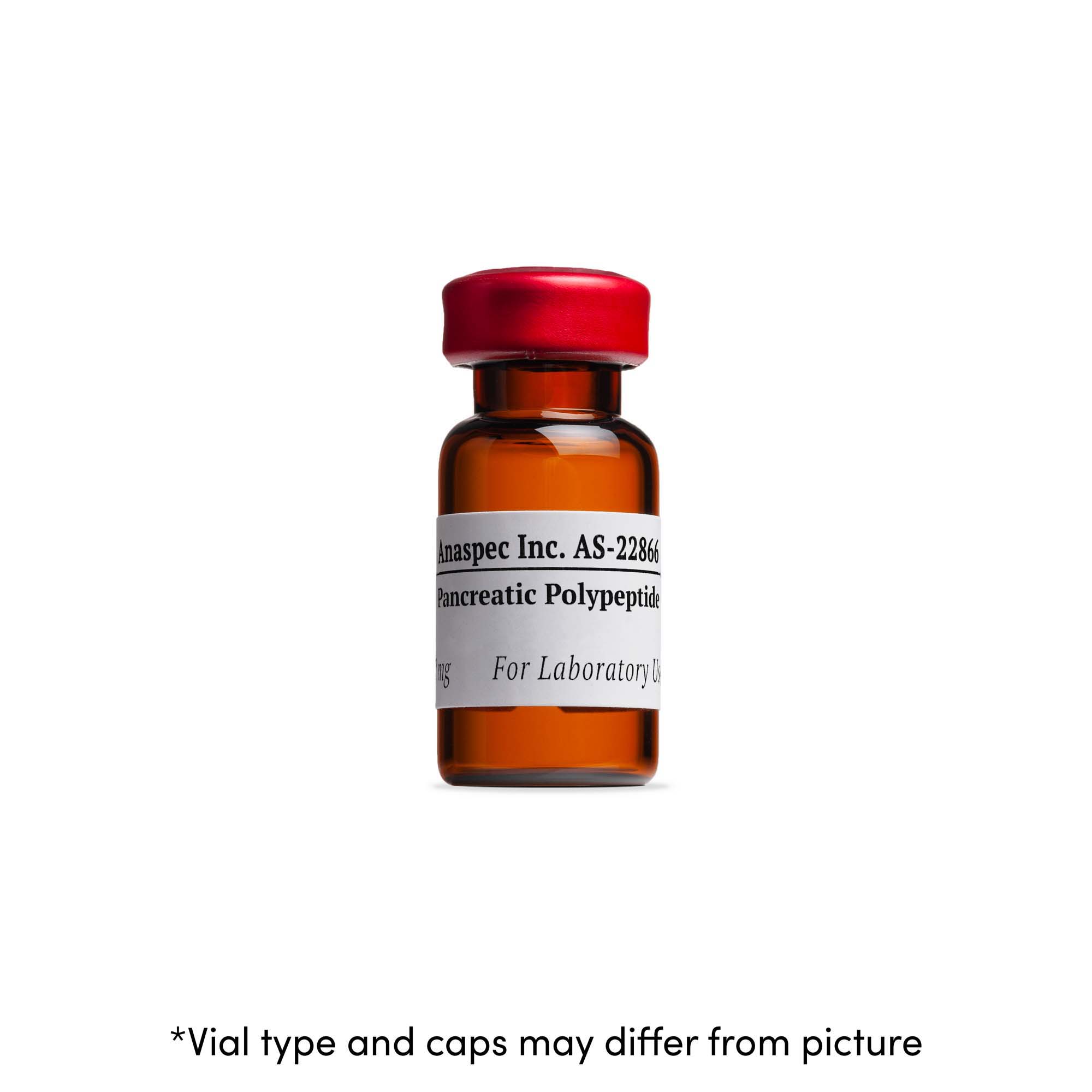
Pancreatic Polypeptide, human
Price range: $172.00 through $290.00
Pancreatic Polypeptide (PP) is a 36-amino acid anorexigenic peptide hormone secreted by the PP cells of pancreas. PP modulates food intake.
Overview
Pancreatic Polypeptide (PP) is a crucial 36-amino acid anorexigenic peptide hormone secreted by the PP cells of the pancreas. This peptide plays a vital role in regulating food intake and is particularly interesting for researchers studying appetite control and metabolic disorders. When investigating the mechanisms behind eating behavior, the secretion of PP following meals provides important insights into how our bodies manage hunger and satiety.
Key Features
- Encourages research into appetite regulation
- Contributes to studies on metabolic disorders
- Essential for understanding neuroendocrine function
- Has applications in pharmacological research
- Available in high purity for reliable results
Specifications
| Product Name | Pancreatic Polypeptide, human |
| Sequence | 36 amino acids |
| Origin | Human |
| Purity | High |
FAQ
What is the role of Pancreatic Polypeptide?
Pancreatic Polypeptide modulates food intake and is released after eating. It increases after meals and helps signal fullness, making it an important focus in research on obesity and eating disorders.
How is Pancreatic Polypeptide used in research?
This peptide is used to study appetite regulation and its potential involvement in metabolic conditions, including Prader-Willi syndrome, where its secretion is absent.
What are the benefits of using high purity Pancreatic Polypeptide?
High purity ensures reliable and reproducible results in experimental work, making it suitable for both in vitro and in vivo studies, enhancing the reliability of your research findings.
You can buy Pancreatic Polypeptide at AnaSpec to support your research into neurological and physiological indicators. It’s a vital component for anyone investigating appetite control and related metabolic functions. Explore our peptide collection for more products that can aid your research.
Related Products
| Size | 0.5 mg, 1 mg |
|---|
Be the first to review “Pancreatic Polypeptide, human”
Related products
Peptides
Peptides
Reviews
There are no reviews yet.