
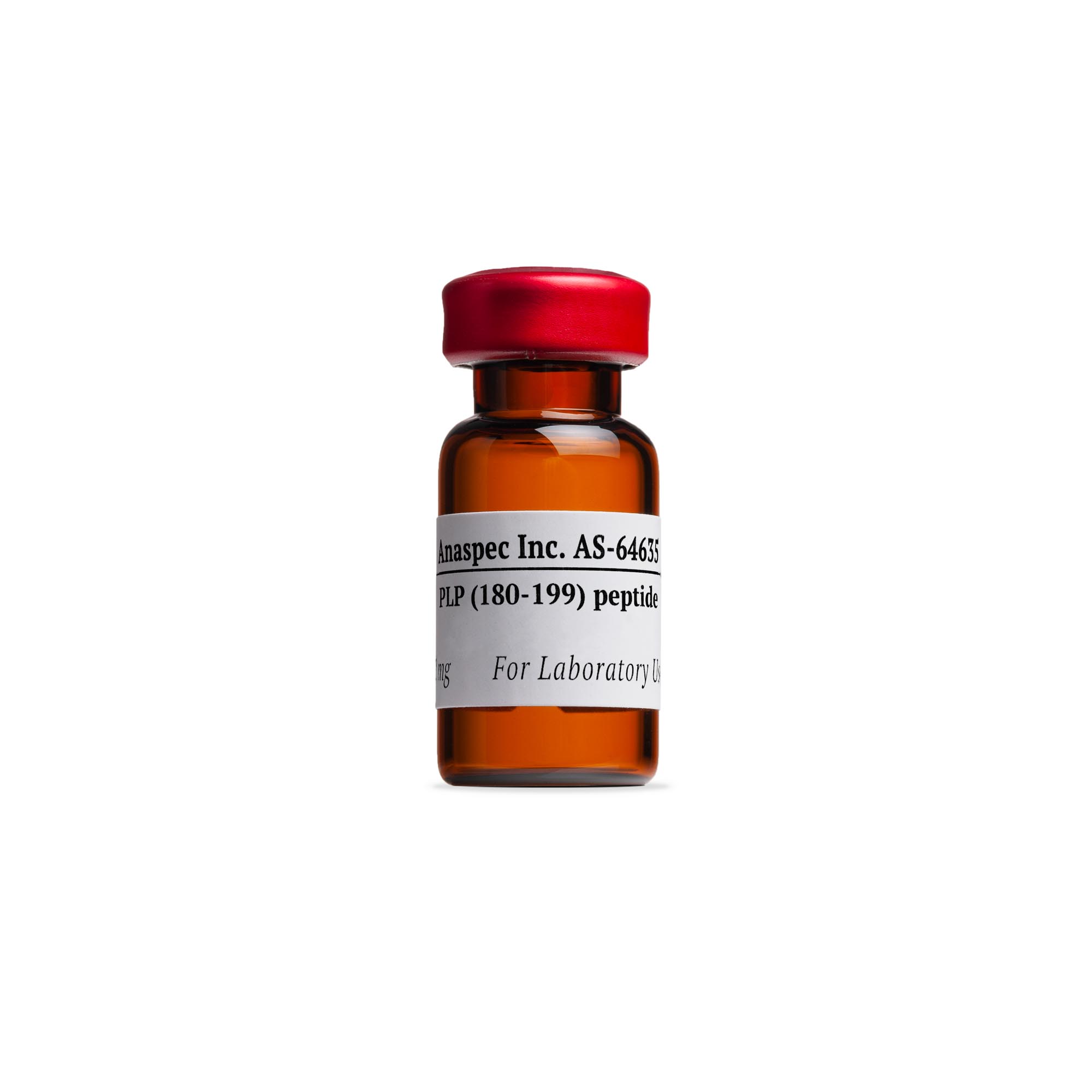
PLP (180-199) – 1 mg
$155.00
PLP (180-199), fragment of myelin proteolipid protein, most abundant myelin protein of central nervous system, used in multiple sclerosis (MS) studies.
Overview
PLP (180-199) is a crucial peptide fragment derived from the myelin proteolipid protein, which is the most abundant myelin protein found in the central nervous system (CNS). This specific fragment plays an essential role in research related to multiple sclerosis (MS), a chronic condition characterized by inflammation and demyelination of the CNS. The fragment comprises amino acids 180-199, making it a valuable asset for studies aimed at understanding the underlying mechanisms of MS and developing potential therapeutic approaches.
Key Features
- Derived from the prominent myelin proteolipid protein (PLP)
- Supports research in multiple sclerosis (MS) studies
- High purity and quality for reliable results
- Available in a 1 mg quantity
- Ideal for neurobiology and immunology applications
Specifications
| Property | Details |
|---|---|
| Product Name | PLP (180-199) |
| Category | Peptides |
| Weight | 1 mg |
| Purity | High purity |
FAQ
What applications can PLP (180-199) be used for?
PLP (180-199) is primarily used in research focused on multiple sclerosis (MS). It can help in studying the immunological aspects of MS and testing therapeutic agents.
How should PLP (180-199) be stored?
To maintain its integrity and effectiveness, it is recommended to store PLP (180-199) in a cool, dry place and protect it from light. Follow any specific storage instructions provided with the product.
Is PLP (180-199) suitable for in vivo studies?
While PLP (180-199) is widely used in vitro, its application in in vivo studies should be guided by specific research protocols. It’s essential to consult your research guidelines and team when considering its use in living organisms.
If you’re looking to purchase high-quality peptides for your research needs, consider exploring our full range of peptidesincluding options like PKG substrate and Autocamtide-2. Make the most out of your research projects with our reliable products that support your findings.
Related Products
Be the first to review “PLP (180-199) – 1 mg”
Related products
Peptides
Peptides
Peptides
Reviews
There are no reviews yet.