
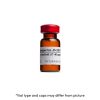
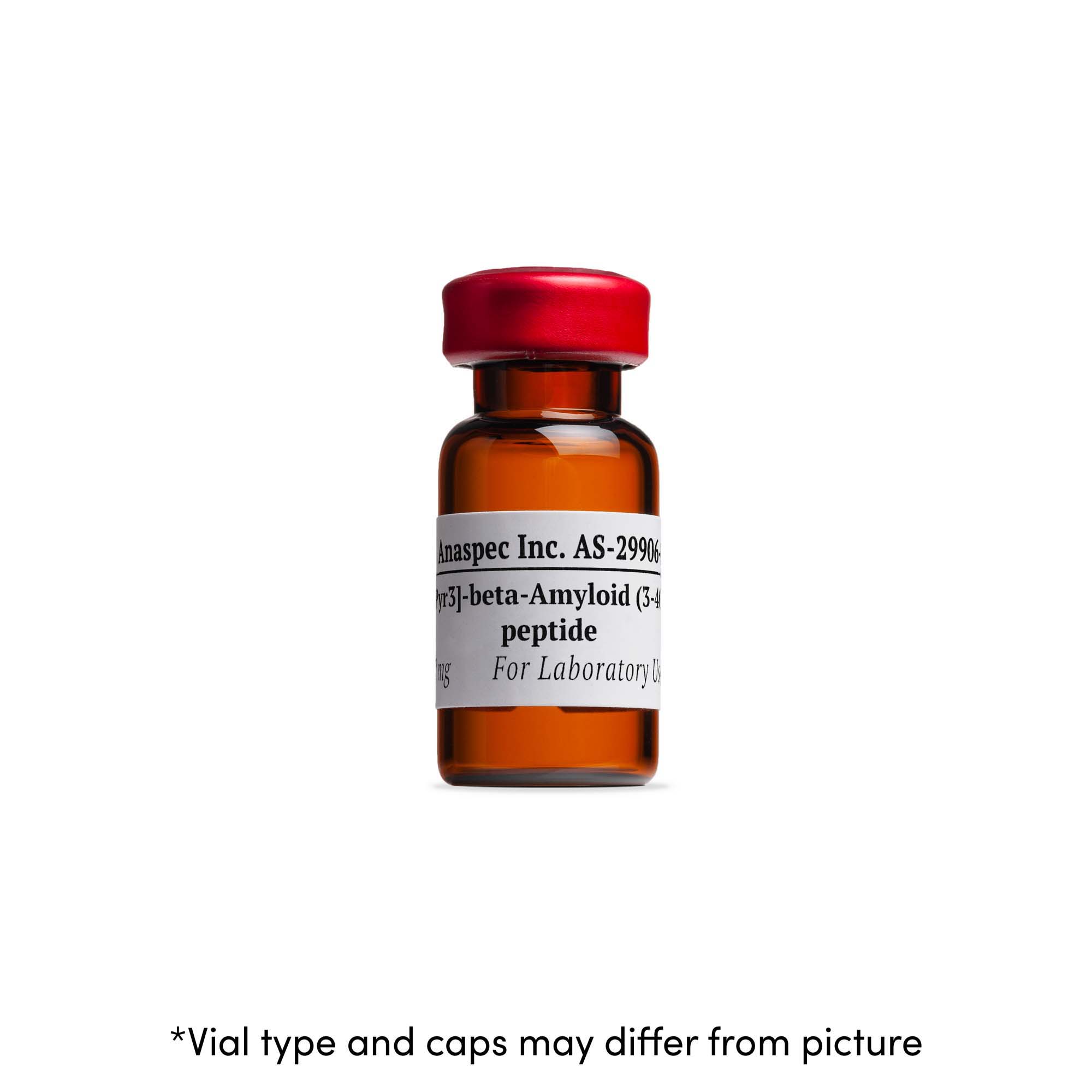
[Pyr3]-beta-Amyloid (3-40)
Price range: $113.00 through $522.00
This is [Pyr3]-beta-Amyloid (3-40). N-terminally truncated pyroglutamate-modified Aß, Aß(3-40) and Aß (11- 40), are major compounds in the senile plaques.
Overview
[Pyr3]-beta-Amyloid (3-40) is a crucial peptide in Alzheimer’s disease research, representing a N-terminally truncated and pyroglutamate-modified form of beta-Amyloid. This specific peptide is significant because it contributes to the formation of senile plaques, which are characteristic of Alzheimer’s pathology. The modified forms, namely Aß(3-40) and Aß(11-40), have shown increased toxicity and a greater tendency to aggregate compared to their non-modified counterparts. Understanding the role of these peptides can enhance your research into Alzheimer’s disease and its underlying mechanisms.Key Features
- N-terminally truncated structure enhances stability.
- Pyroglutamate modification leads to increased aggregation.
- Higher toxicity levels compared to non-modified beta-Amyloid.
- Essential for models of Alzheimer’s disease.
- Ideal for use in various assay kits.
Specifications
| Property | Details |
|---|---|
| Synonyms | [Pyr3]-Aβ(3-40) |
| MW | 3,000 Da |
| Purity | ≥95% |
| Format | Lyophilized powder |
| Storage | −20°C |
FAQ
What is [Pyr3]-beta-Amyloid (3-40) used for?
This peptide is primarily used in research related to Alzheimer’s disease. It helps scientists study the aggregation of beta-Amyloid and its role in plaque formation.
How should I store [Pyr3]-beta-Amyloid (3-40)?
For optimal stability and longevity, store the peptide at −20°C. Make sure it is kept in a dry environment to prevent degradation.
Can I use this peptide in my assay kits?
Yes, [Pyr3]-beta-Amyloid (3-40) is compatible with various assay kits, making it a valuable component for your Alzheimer’s research projects. You might also find our range of PKG Substrate and other related products suitable for your experiments.
Related Products
Browse more in Peptides.
| Size | 0.1 mg, 1 mg |
|---|
Be the first to review “[Pyr3]-beta-Amyloid (3-40)”
Related products
Peptides
Reviews
There are no reviews yet.