
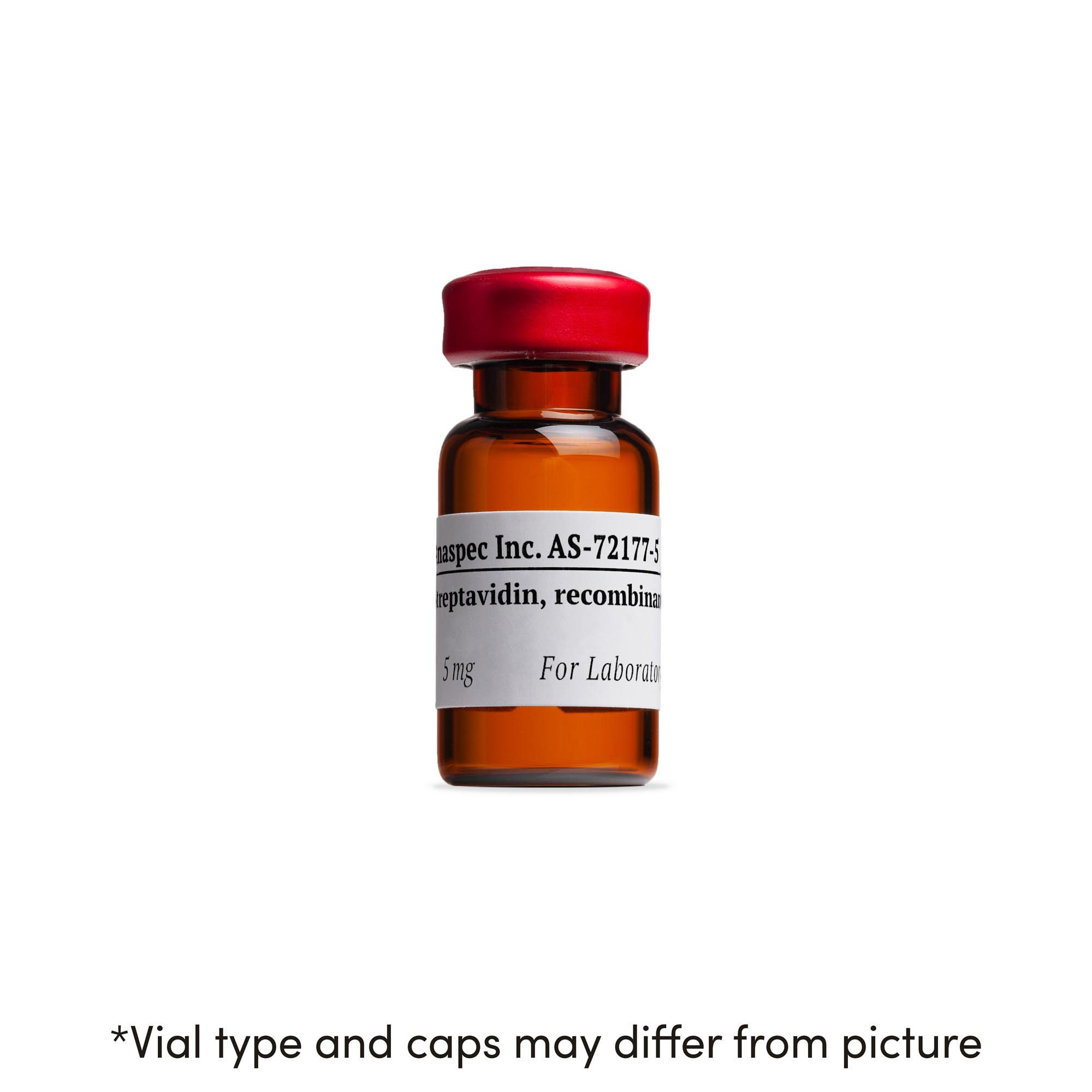
Streptavidin, recombinant
Price range: $193.00 through $4,643.00
Streptavidin, recombinant. Streptavidin is a nonglycosylated, tetrameric protein, with each subunit able to bind a single molecule of the vitamin biotin.
Overview
When you need a reliable and effective solution for biotin-binding applications, recombinant streptavidin from AnaSpec is the choice to make. This nonglycosylated tetrameric protein is designed for optimal performance, with each subunit capable of binding a single molecule of biotin. The extraordinary strength of the streptavidin-biotin bond, with a Kd of approximately 10-15 M, makes it the strongest known non-covalent interaction, making it ideal for various applications in molecular biology and biochemistry.
Key Features
- Nonglycosylated and tetrameric structure for reliable binding
- Each subunit binds one biotin molecule
- Minimal nonspecific binding due to lack of carbohydrate modifications
- Near-neutral pI reduces background interference
- Suitable for immunoassays, histochemistry, and FISH
Specifications
| Product Name | Recombinant Streptavidin |
| Binding Strength | Kd ~ 10-15 M |
| Modification | Nonglycosylated |
| Use Cases | Immunoassays, histochemistry, FISH |
FAQ
What applications is recombinant streptavidin suitable for?
This protein is widely used for various applications including immunoassays, histochemistry, and fluorescence in situ hybridization (FISH).
How does streptavidin binding compare to avidin?
Streptavidin has lower nonspecific binding compared to avidin, making it a better choice for applications where background interference is a concern.
Can I use recombinant streptavidin with biotin-labeled probes?
Yes, the strong binding affinity of recombinant streptavidin for biotin makes it ideal for use with biotin-labeled probes in various assays.
For detailed information or to purchase now, visit our streptavidin pageor explore our biotin options for enhanced labeling solutions.
Related Products
Browse more in Non-fluorescent.
| Size | 1 g, 100 mg, 5 mg, 500 mg |
|---|
Be the first to review “Streptavidin, recombinant”
Related products
Reviews
There are no reviews yet.