
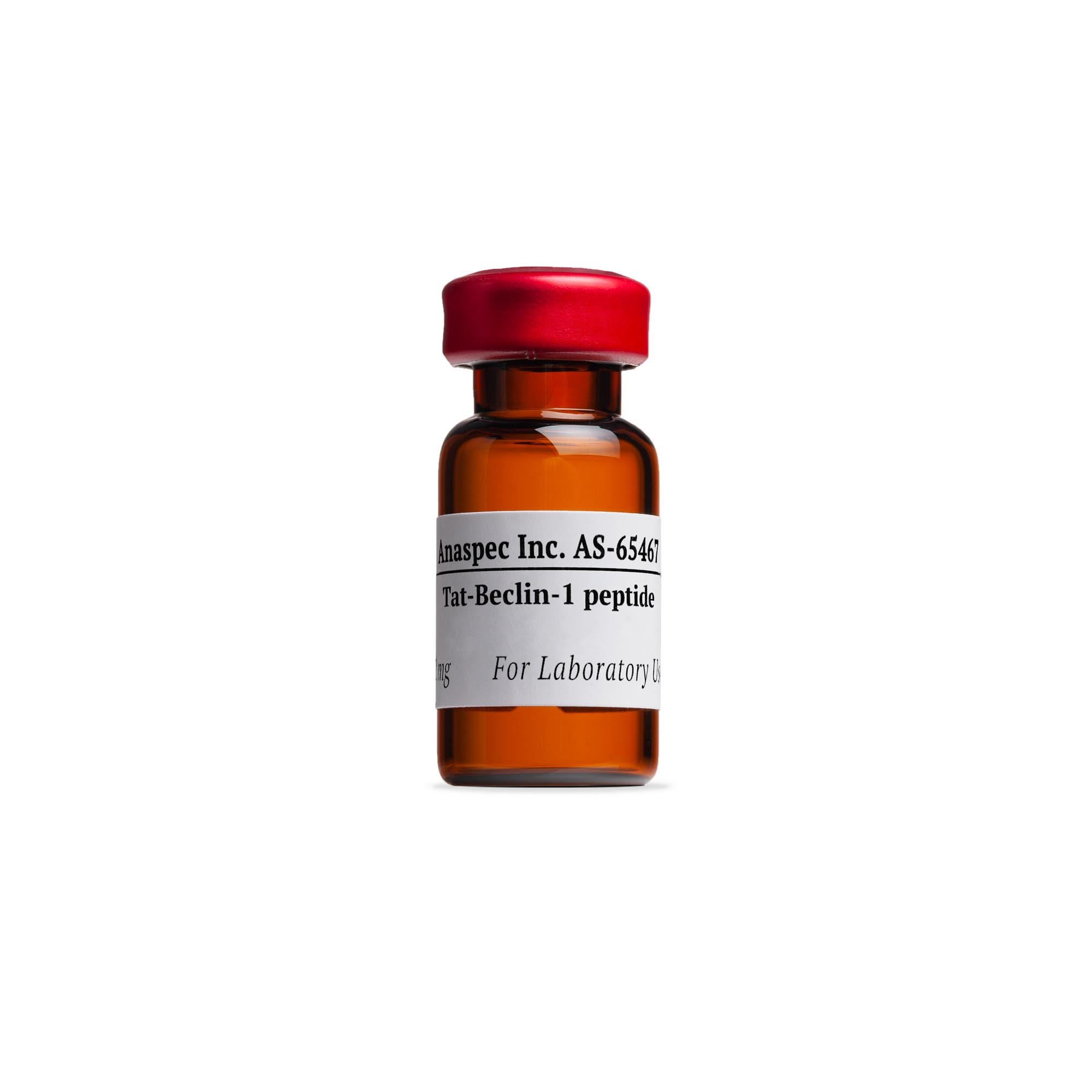
Tat-Beclin-1 – 1 mg
$264.00
Tat-Beclin-1 is HIV-1 Nef binding portion of full-length human Beclin-1 protein (amino acids 267-299). Beclin-1 protein is an autophagy inducing agent.
Overview
Tat-Beclin-1 is an essential peptide derived from the HIV-1 Nef binding portion of the full-length human Beclin-1 protein, consisting of amino acids 267-299. This peptide plays a crucial role in autophagy, acting as an agent that can trigger cellular adaptation, survival, or even cell death. When combined with a cell-permeable peptide, Tat-Beclin-1 effectively penetrates cell membranes to promote autophagy within cells, making it a powerful tool for researchers focused on cellular processes. If you’re working on autophagy studies or related research, you can find additional resources among our selection of peptides.
Key Features
- Derived from the human Beclin-1 protein
- Induces autophagy, influencing cellular dynamics
- Cell-permeable when conjugated with specific peptides
- Useful for studies in neurobiology and cell survival
- Available in 1 mg packaging
Specifications
| Property | Details |
|---|---|
| Catalog Number | TAT-BECLIN-1 |
| Size | 1 mg |
| Sequence | HIV-1 Nef binding segment (aa 267-299) |
FAQ
What is the primary function of Tat-Beclin-1?
Tat-Beclin-1 primarily functions to induce autophagy, which is critical for cellular homeostasis, adaptation, and survival mechanisms.
How does Tat-Beclin-1 enter cells?
This peptide is designed to be cell-permeable, allowing it to efficiently enter cells and trigger autophagic processes.
Which applications can benefit from Tat-Beclin-1?
Tat-Beclin-1 is particularly useful in research areas focused on cell biology, neurobiology, and autophagy-related studies. For similar products, explore PKG Substrate and Autocamtide-2.
Related Products
Be the first to review “Tat-Beclin-1 – 1 mg”
Related products
Peptides
Peptides
Peptides
Reviews
There are no reviews yet.