
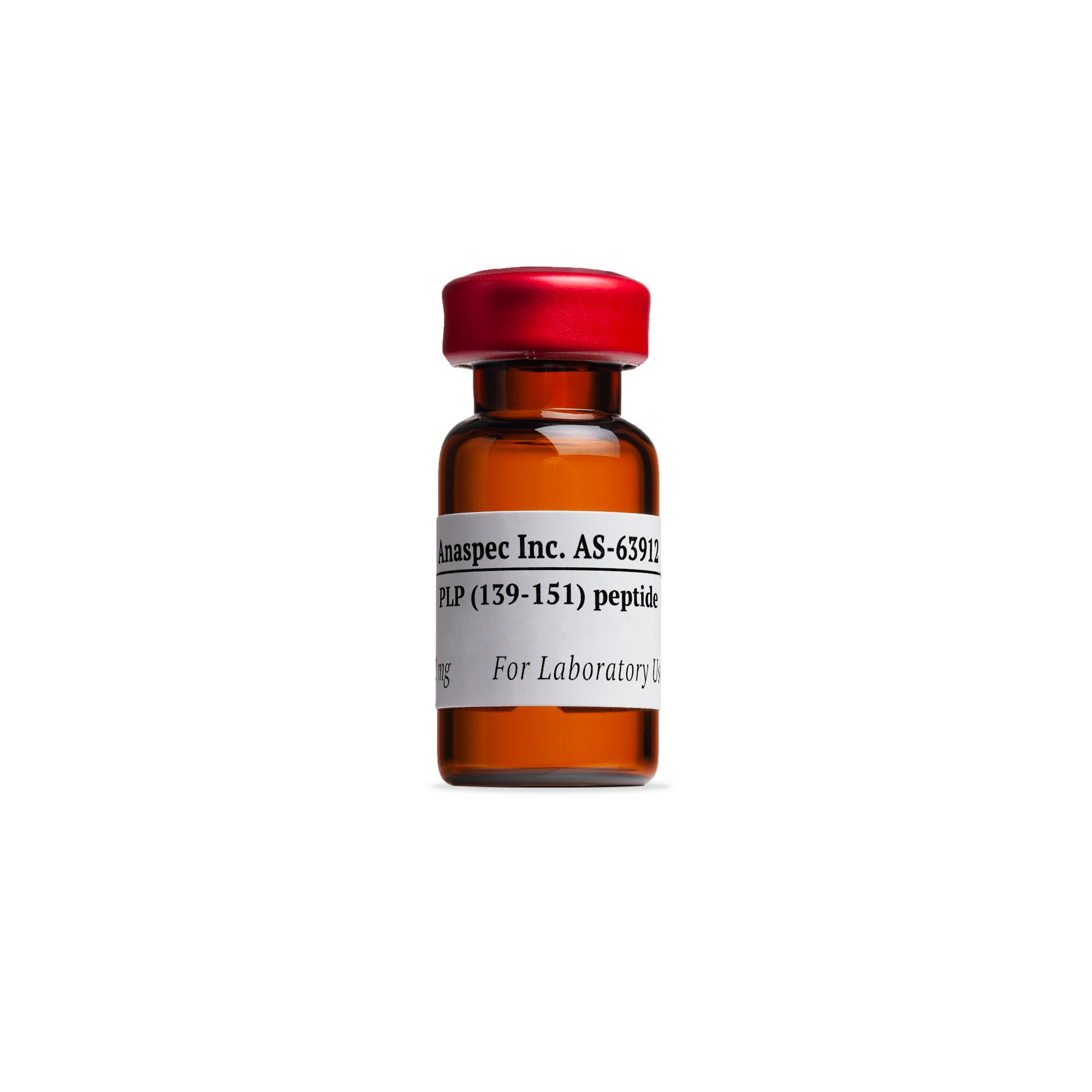
PLP (139-151) – 1 mg
$137.00
PLP (139-151) myelin proteolipid protein used to induce relapsing-remitting (RR)-experimental autoimmune encephalomyelitis (EAE) model.
Overview
PLP (139-151) is a critical peptide that represents amino acid residues 139 to 151 of myelin proteolipid protein (PLP). This particular peptide is widely utilized in research to induce a relapsing-remitting experimental autoimmune encephalomyelitis (RR-EAE) model, making it invaluable for studies focused on multiple sclerosis and related neurological conditions. By simulating autoimmune processes in a controlled environment, PLP (139-151) enables researchers to investigate potential therapeutic interventions and their underlying mechanisms. For those looking to explore the role of myelin in neurodegeneration, PLP is an essential tool.
Key Features
- Derived from myelin proteolipid protein (PLP)
- Facilitates induction of RR-EAE model for research
- 1 mg of peptide per unit for precise experiments
- Supports neurological and physiological studies
- Easy to handle and store for consistent results
Specifications
| Category | Peptides |
| Quantity | 1 mg |
| Application | Experimental autoimmune encephalomyelitis model |
| Storage | Store at -20°C |
FAQ
What is PLP (139-151) used for?
PLP (139-151) is primarily used to induce relapsing-remitting EAE models, which help in studying autoimmune responses in multiple sclerosis.
How should I store PLP (139-151)?
This peptide should be stored at -20°C to maintain its integrity and effectiveness for future experiments.
Can I use this for other neurological studies?
Yes, while PLP (139-151) is targeted for EAE, its role in myelin dynamics makes it relevant for broader neurological research.
If you need additional labeling solutions, consider exploring our other peptides like PKG substrate or Autocamtide-2 for your experiments. Our extensive catalog of peptides ensures you find what you need to enhance your research.
Related Products
Be the first to review “PLP (139-151) – 1 mg”
Related products
Peptides
Peptides
Peptides
Reviews
There are no reviews yet.