
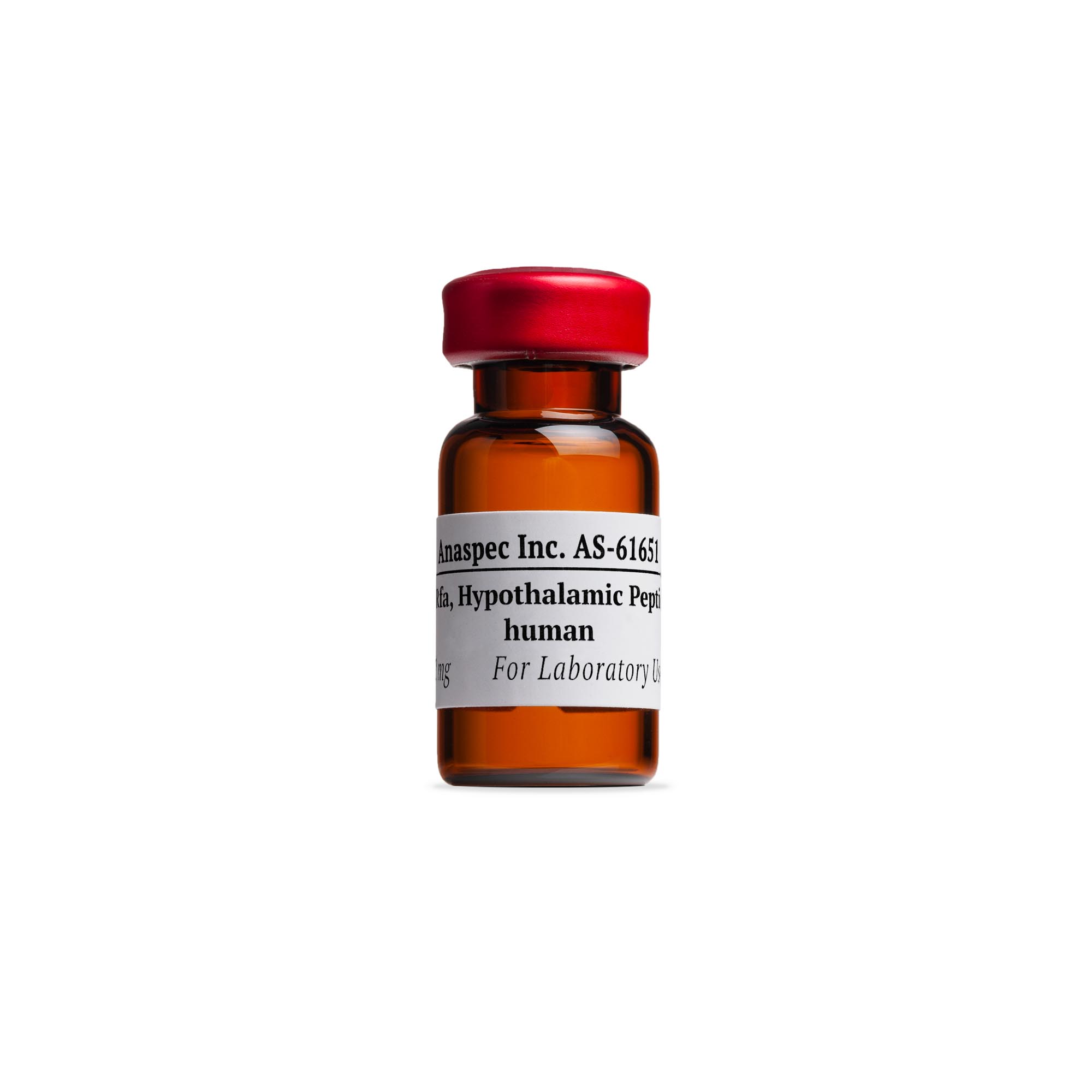
26Rfa, Hypothalamic Peptide, human – 1 mg
$290.00
26Rfa, Hypothalamic Peptide, human neuropeptide of the RFamide peptide family. It exhibits orexigenic activity and has been associated to obesity.
Overview
Discover the advantages of 26Rfa, a human hypothalamic peptide that plays a crucial role in regulating appetite and body weight. This neuropeptide from the RFamide family shows significant orexigenic activity, which means it promotes food intake and is linked to obesity. With a remarkable 80% identity in its primary structure across species such as humans, rats, and even frogs, 26Rfa’s C-terminal octapeptide remains conserved, making it a vital component in research on metabolic disorders.
Key Features
- Human neuropeptide from the RFamide peptide family
- Exhibits orexigenic activity
- Linked to obesity research
- 80% identity in structure among various species
- C-terminal octapeptide conserved across amphibians to mammals
Specifications
| Property | Details |
|---|---|
| Product Name | 26Rfa, Hypothalamic Peptide |
| Origin | Human |
| Weight | 1 mg |
FAQ
What is the role of 26Rfa in the body?
26Rfa acts as a signaling molecule in the hypothalamus, influencing appetite and energy balance. Its orexigenic effects make it significant in studying obesity and related metabolic conditions.
How does 26Rfa compare to other neuropeptides?
26Rfa is unique among neuropeptides, particularly due to its specific activity in promoting food intake. Its structural similarity across different species is also noteworthy, indicating its evolutionary significance.
Can 26Rfa be used for research purposes?
Yes, 26Rfa is ideal for research applications focusing on appetite regulation and metabolic disorders. For related studies, consider our other peptides, such as Autocamtide-2 or CREBtide.
Whether you’re conducting academic research or developing therapeutic strategies, adding 26Rfa to your toolkit can enhance your work on obesity and appetite regulation. Shop our selection of high-quality peptides today and make a difference in your research.
Related Products
Browse more in Peptides.
Be the first to review “26Rfa, Hypothalamic Peptide, human – 1 mg”
Related products
Peptides
Peptides
Peptides
Reviews
There are no reviews yet.