
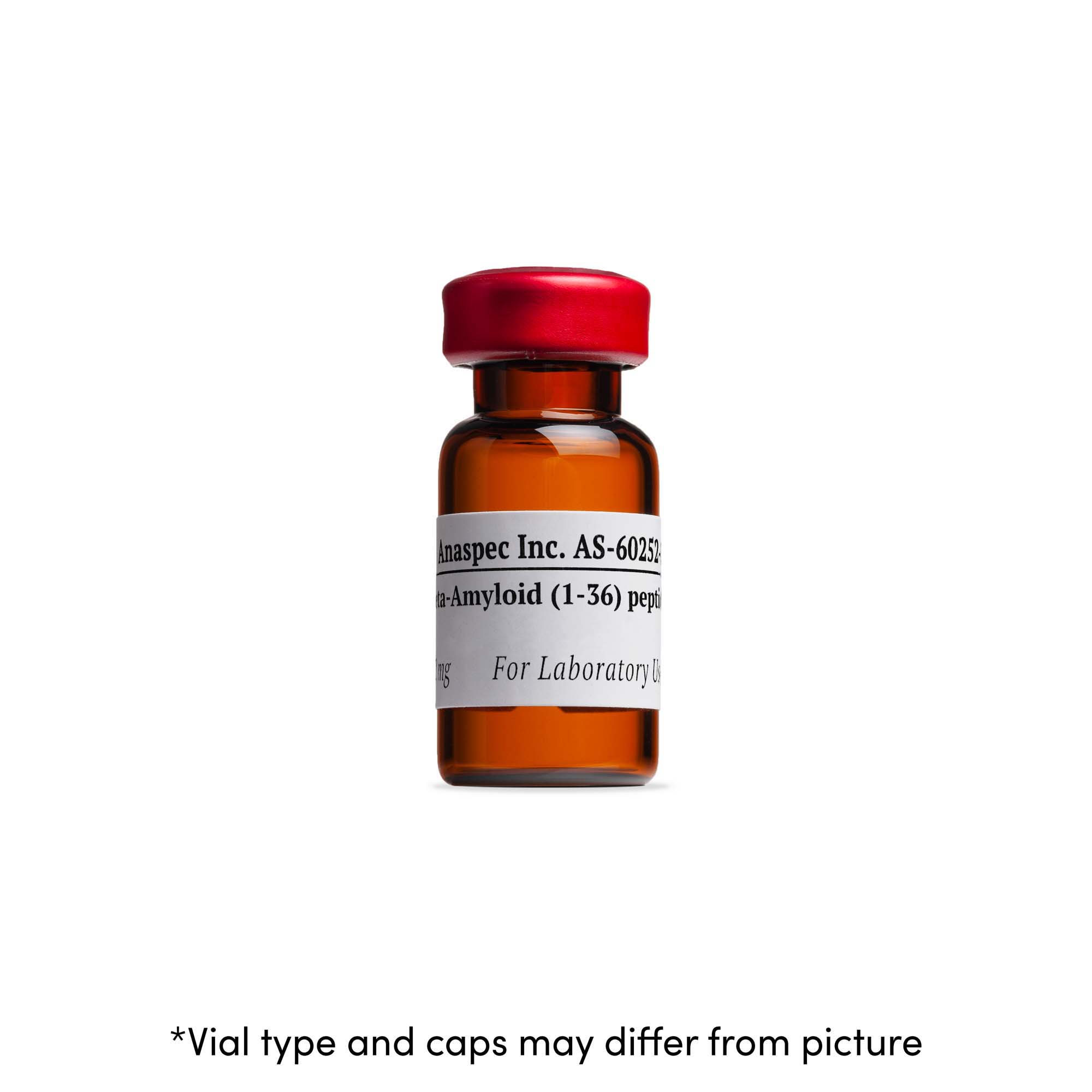
Beta-Amyloid (1-36) – 0.5 mg
$357.00
Beta-Amyloid (1-36). Beta-amyloid is the main component of amyloid deposits in the AD brain. Beta-amyloid peptides have a heterogeneous C-terminus .
Overview
Beta-Amyloid (1-36) is a crucial peptide for researchers studying Alzheimer’s Disease (AD) and its associated amyloid deposits in the brain. This peptide, known for its role in the pathogenesis of AD, is a fragment of the larger beta-amyloid precursor protein. It features a heterogeneous C-terminus, which is essential for mimicking the natural conditions of amyloid aggregation and deposition. With a concentration of 0.5 mg, this product offers the precise quantity needed for in-depth research and experimentation.
Key Features
- High purity Beta-Amyloid (1-36) for reliable results
- Critical component in Alzheimer’s disease research
- Facilitates understanding of amyloid deposition mechanisms
- Ideal for use in various biochemical assays and studies
- Available in a convenient 0.5 mg quantity
Specifications
| Property | Details |
|---|---|
| Catalog Number | Beta-Amyloid (1-36) |
| Weight | 0.5 mg |
| Form | Lyophilized powder |
| Purity | ≥95% |
| Storage | -20°C |
FAQ
What is the significance of Beta-Amyloid (1-36)?
Beta-Amyloid (1-36) is a fragment that plays an important role in Alzheimer’s disease research. Understanding its properties and interactions can help in developing therapies to combat amyloid-related disorders.
How is this peptide typically used in research?
This peptide is often used in assays related to amyloid aggregation studies, helping researchers explore the mechanisms of amyloid deposition and potential therapeutic interventions.
What are the recommended storage conditions?
To maintain the integrity of Beta-Amyloid (1-36), it should be stored at -20°C. Proper storage ensures that the peptide maintains its quality and efficacy for your experiments.
For additional background on related peptides, explore our catalog of peptides. If you’re interested in specific applications, consider our PKG Substrate or the versatile Autocamtide-2. Each product is designed to support your research needs effectively.
Related Products
Be the first to review “Beta-Amyloid (1-36) – 0.5 mg”
Related products
Peptides
Peptides
Peptides
Peptides
Reviews
There are no reviews yet.