
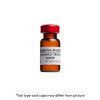
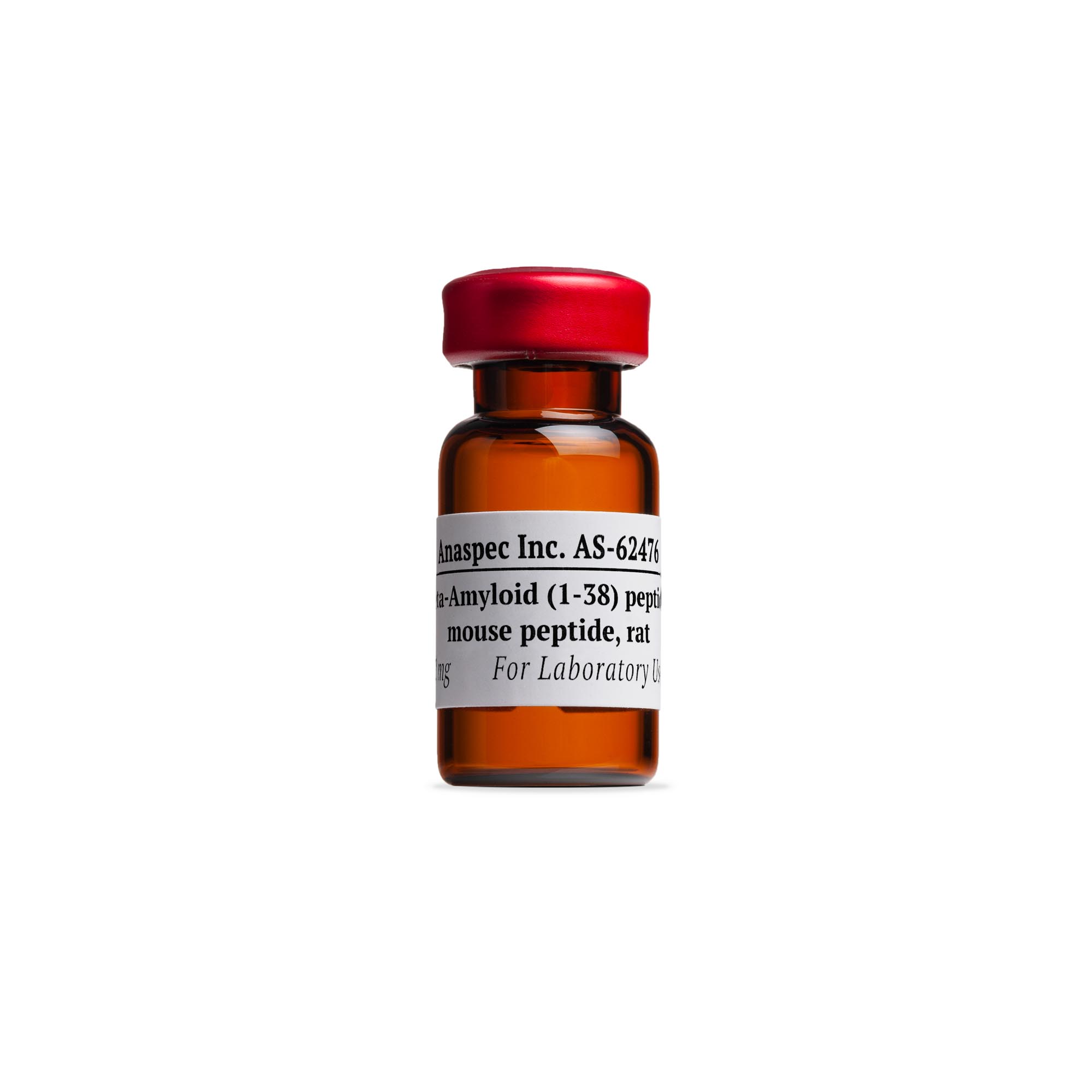
Beta-Amyloid (1-38), mouse, rat – 1 mg
$576.00
Beta-Amyloid (1-38), mouse, rat, differs from human Aß: Arg5, Tyr10, His13 in human correspond to Gly5, Phe10, Arg13 in mice and rat sequence.
Overview
Discover our Beta-Amyloid (1-38) for mouse and rat models, an essential peptide for your research on neurodegenerative diseases. This specific fragment consists of the first 38 amino acids of beta-amyloid and plays a critical role in understanding Alzheimer’s disease mechanisms. Unlike human beta-amyloid, which contains Arg5, Tyr10, and His13, the mouse and rat version features Gly5, Phe10, and Arg13. This distinction is crucial for accurate experimental results and therapeutic developments.
Key Features
- Research-grade peptide, ideal for neurobiology studies.
- Specifically designed for mouse and rat models.
- Distinct amino acid sequence highlighted for differentiation.
- High purity and reliable performance in assays.
- Available in 1 mg quantities for convenient use.
Specifications
| Attribute | Details |
|---|---|
| Product Name | Beta-Amyloid (1-38), Mouse, Rat |
| Quantity | 1 mg |
| Amino Acid Sequence | Mouse/Rat: Gly5, Phe10, Arg13 |
| Research Application | Neurodegenerative disease studies |
FAQ
What applications is Beta-Amyloid (1-38) used for?
This peptide is primarily utilized in research concerning Alzheimer’s disease, focusing on understanding amyloid plaque formation and related neurodegenerative processes.
How does the sequence differ from human beta-amyloid?
The mouse and rat version features three key differences in amino acids: Arg5, Tyr10, and His13 are replaced by Gly5, Phe10, and Arg13, which is crucial for accurate modeling of disease mechanisms in these animals.
Can I combine this peptide with other reagents?
Absolutely. Our PKG Substrate and Autocamtide-2 can complement your assays for enhanced results. Make sure to check compatibility and concentration requirements.
This Beta-Amyloid (1-38) peptide is not just a product, it’s a vital tool in your scientific arsenal. Invest in your research today and elevate your understanding of complex neurological conditions.
Related Products
Browse more in Peptides.
Be the first to review “Beta-Amyloid (1-38), mouse, rat – 1 mg”
Related products
Peptides
Peptides
Reviews
There are no reviews yet.