
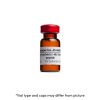
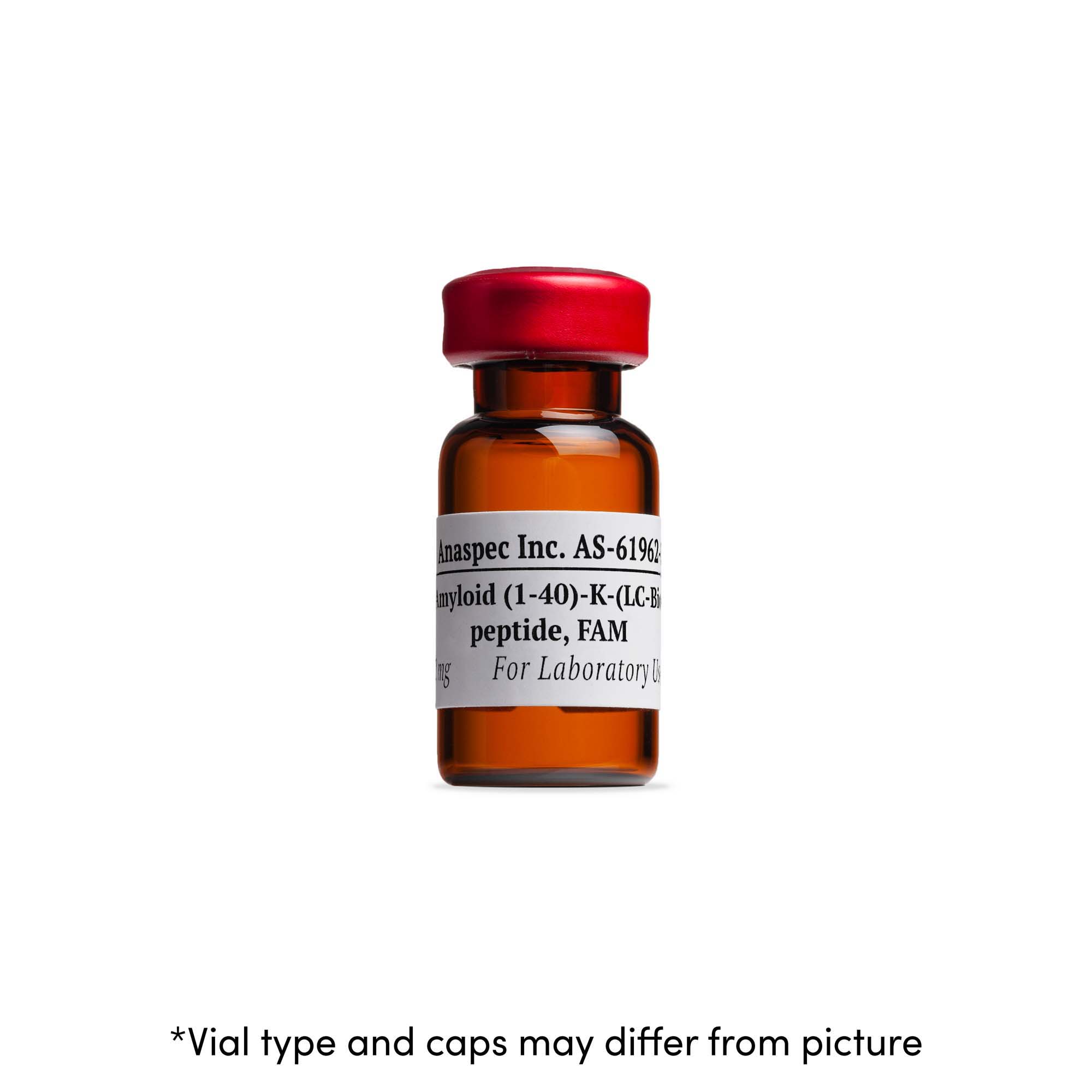
Beta-Amyloid (1-40)-Lys(LC-biotin)-NH2, FAM-labeled – 0.1 mg
$327.00
Beta-Amyloid (1-40)-Lys(LC-biotin)-NH2, FAM-labeled, biotinylated on the lysine side chain with 6-aminohexanoate (LC) as a spacer, Ex/Em=490 nm/ 520 nm.
Overview
The Beta-Amyloid (1-40)-Lys(LC-biotin)-NH2, FAM-labeled peptide is an essential tool for researchers studying Alzheimer’s disease and related neurodegenerative conditions. This high-quality peptide is biotinylated at the lysine side chain with a 6-aminohexanoate spacer, allowing for flexible and efficient binding in various assays. With its excitation and emission maxima of 490 nm and 520 nm, respectively, this labeled peptide aids in the detection and quantification of beta-amyloid aggregates in experimental models.
Key Features
- 5-FAM labeled for convenient fluorescence detection
- Biotinylated for enhanced assay versatility
- Amidated peptide structure for stability and functionality
- Excitation/Emission: 490 nm / 520 nm for optimal sensitivity
- Ideal for Alzheimer’s research applications
Specifications
| Product Name | Beta-Amyloid (1-40)-Lys(LC-biotin)-NH2, FAM-labeled |
|---|---|
| Size | 0.1 mg |
| Biotinylation | Yes |
| Fluorescent Label | 5-FAM |
| Excitation/Emission (nm) | 490 / 520 |
FAQ
What applications can I use this peptide for?
This peptide is primarily used in research related to Alzheimer’s disease, helping in the detection of beta-amyloid plaques. It works well in assays where fluorescent detection is required.
How should I store the Beta-Amyloid peptide?
For optimal stability, store this peptide at -20°C. Ensure it is kept away from moisture and light to maintain its label integrity.
Can I use this peptide in conjunction with other assays?
Yes, this peptide can be effectively combined with other assay substrates, like our PKG Substrate, enhancing your experimental design. Explore our range of options for a comprehensive approach.
Enhance your research with the Beta-Amyloid (1-40)-Lys(LC-biotin)-NH2, FAM-labeled peptide today. It’s available for purchase now, ensuring you have the right tools for your studies on neurodegenerative diseases.
Related Products
- PKG Substrate [RKRSRAE], Glasstide
- Autocamtide-2 [KKALRRQETVDAL]
- CREBtide [KRREILSRRPSYR], 5-FAM labeled
Browse more in Peptides.
Be the first to review “Beta-Amyloid (1-40)-Lys(LC-biotin)-NH2, FAM-labeled – 0.1 mg”
Related products
Peptides
Peptides
Reviews
There are no reviews yet.