
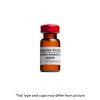
Beta-Amyloid (1-42), sodium salt
Price range: $158.00 through $500.00
Beta-Amyloid (1-42), sodium salt prepared by neutralizing the TFA salt form of Aß (1-42), has superior solubility, fibrillogenesis properties, neurotoxic.
Overview
Beta-Amyloid (1-42), sodium salt, is a critical tool for researchers studying Alzheimer’s disease. This peptide, known for its contribution to amyloid plaques, plays a significant role in the pathology of Alzheimer’s. By utilizing our sodium salt form, you benefit from enhanced solubility and optimal fibrillogenesis characteristics, making it an essential component in neurobiological assays and studies. Understanding the behavior of Aß (1-42) is crucial for unraveling the complexities of Alzheimer’s, and our product is designed to meet these essential research needs.
Key Features
- Superior solubility compared to TFA salt form
- Optimized for fibrillogenesis studies
- Supports research on Alzheimer’s disease mechanisms
- High purity and quality assurance
Specifications
| Property | Details |
|---|---|
| Product Name | Beta-Amyloid (1-42), sodium salt |
| Category | Peptides |
| Form | Sodium salt |
| Solubility | High |
| Application | Neurobiology research |
FAQ
What is Beta-Amyloid (1-42) used for?
Beta-Amyloid (1-42) is primarily used in research focused on Alzheimer’s disease and related neurological studies. It helps in understanding the formation of amyloid plaques and neurotoxicity.
How does the sodium salt form compare to the TFA salt form?
The sodium salt form of Beta-Amyloid (1-42) offers superior solubility and is better suited for fibrillogenesis. This enhances its usability in various assays and experimental setups.
Is this peptide suitable for in vivo studies?
While Beta-Amyloid (1-42) is often used in vitro, its applications in in vivo studies depend on specific experimental conditions and protocols established within the research community.
Choose Beta-Amyloid (1-42), sodium salt for your next Alzheimer’s research project. With its enhanced properties, it’s your go-to peptide for accurate and effective assay results. To explore more about related products, check out our collection of peptides or consider our PKG Substrate for additional assays.
Related Products
| Size | 0.1 mg, 1 mg |
|---|
Be the first to review “Beta-Amyloid (1-42), sodium salt”
Related products
Peptides
Peptides
Reviews
There are no reviews yet.