
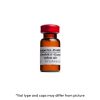
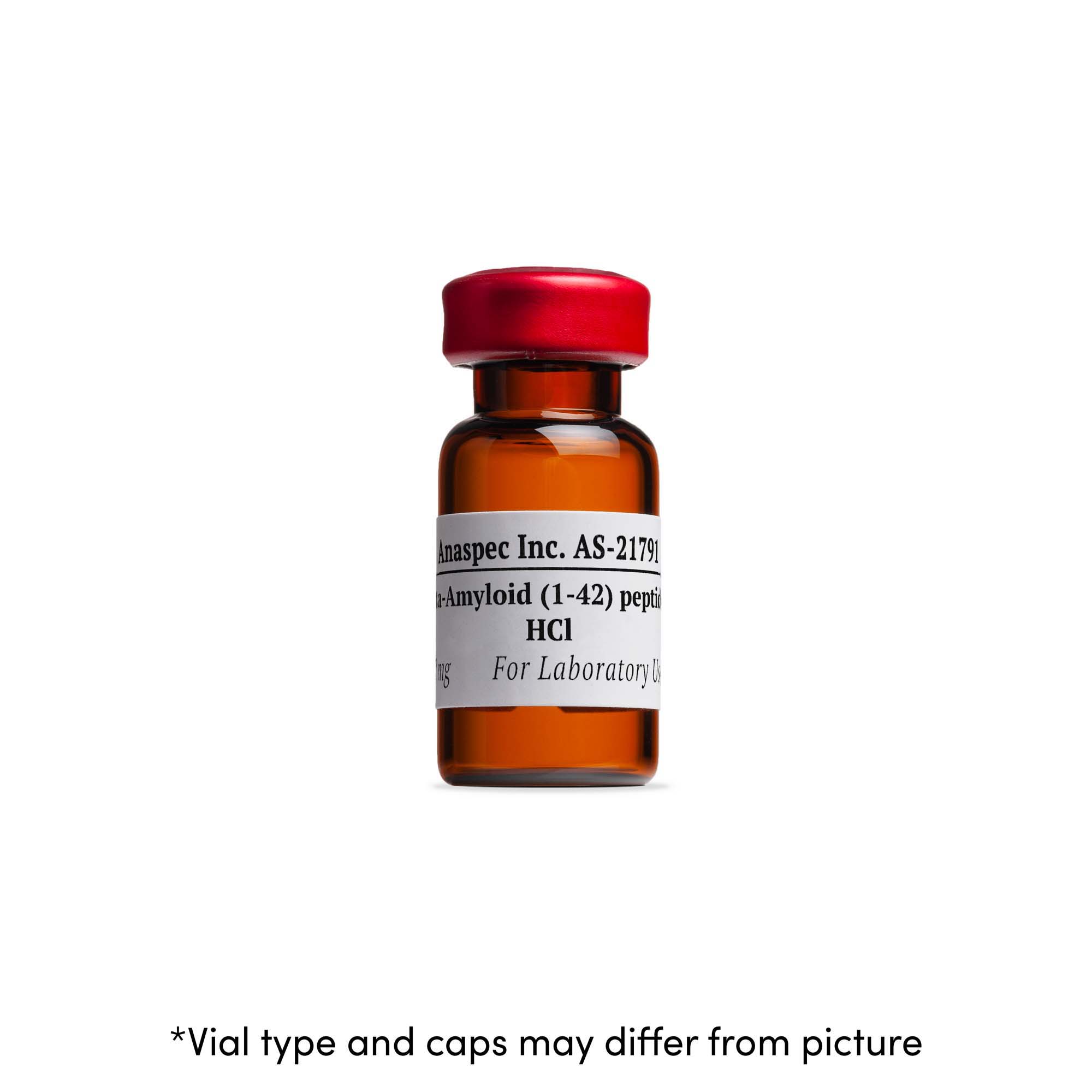
Beta-Amyloid (1-42) Peptide HCl salt
Price range: $364.00 through $576.00
Beta-Amyloid (1-42) is a major component of amyloid plaques. The HCl salt form takes the ß-structure within a few hours in PBS and aggregates.
Overview
Discover the significance of Beta-Amyloid (1-42) Peptide HCl salt, a crucial peptide linked to the pathology of Alzheimer’s disease. This peptide forms a major component of amyloid plaques, which are characteristic deposits formed in the brains of individuals with Alzheimer’s. The HCl salt variant demonstrates a rapid transition to a β-sheet structure when mixed with PBS, leading to aggregation in just a few hours.
Key Features
- Highly pure Beta-Amyloid (1-42) peptide available as HCl salt
- Essential for studying Alzheimer’s disease and related neurodegenerative conditions
- Rapidly adopts β-structure, facilitating research on aggregation behavior
- Ideal for assays targeting amyloid plaque formation
- High-quality peptide for reliable experimental results
Specifications
| Property | Details |
|---|---|
| Form | HCl salt |
| Peptide Sequence | 1-42 |
| Purity | ≥95% |
FAQ
What is Beta-Amyloid (1-42) used for?
Beta-Amyloid (1-42) is primarily used in research to study its role in Alzheimer’s disease. It helps scientists understand the mechanisms of amyloid plaque formation and neurodegeneration.
How long does it take for the peptide to aggregate?
The HCl salt form of Beta-Amyloid (1-42) can adopt a β-structure and begin aggregating within just a few hours in PBS.
Is the peptide suitable for in vitro assays?
Yes, this peptide is ideal for in vitro assays targeting amyloid plaques and provides reliable data for biochemical studies related to Alzheimer’s disease.
Enhance your research with our high-quality Beta-Amyloid (1-42) Peptide HCl salt. Given its essential role in understanding Alzheimer’s disease, adding this peptide to your scientific toolkit can lead to significant insights. Make your purchase today and dive deeper into your research with confidence!
Related Products
- PKG Substrate [RKRSRAE], Glasstide
- Autocamtide-2 [KKALRRQETVDAL]
- CREBtide [KRREILSRRPSYR], 5-FAM labeled
Browse more in Peptides.
| Size | 0.5 mg, 1 mg |
|---|
Be the first to review “Beta-Amyloid (1-42) Peptide HCl salt”
Related products
Peptides
Reviews
There are no reviews yet.