
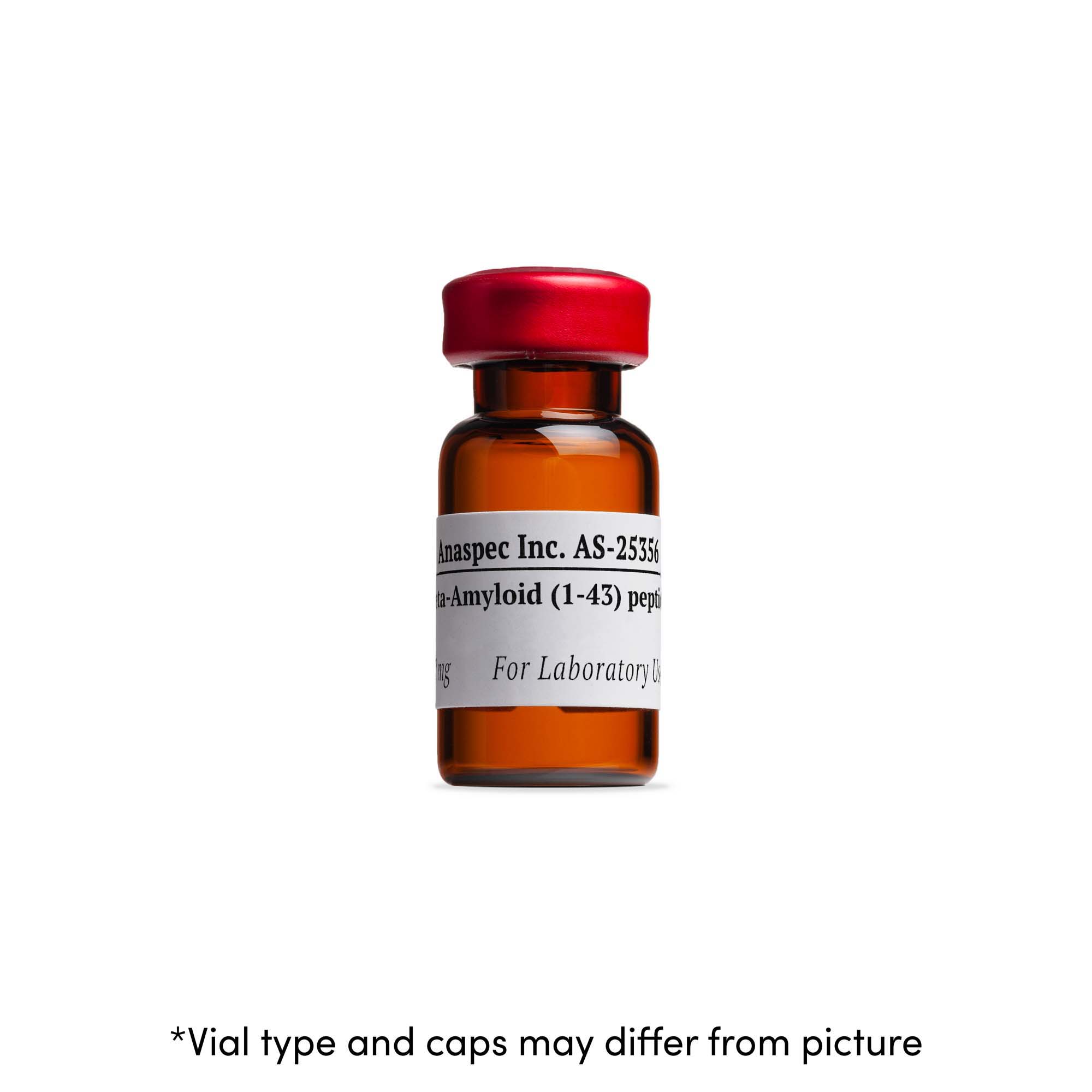
Beta-Amyloid (1-43)
Price range: $462.00 through $789.00
Solid Beta-Amyloid (1-43) fibril is the most fibrillogenic of all the Aß peptides known
Overview
The solid Beta-Amyloid (1-43) fibril is known as the most fibrillogenic among all Aß peptides, making it a crucial reagent in Alzheimer’s research. Its role in the formation of amyloid plaques is central to the study of neurodegenerative diseases, particularly in the context of Alzheimer’s. If you are seeking high-quality peptides for your research, our Beta-Amyloid (1-43) is a reliable choice, designed to facilitate your studies into amyloid formation and aggregation.
Key Features
- Superior quality solid Beta-Amyloid (1-43) designed for research.
- Highly fibrillogenic, essential for Alzheimer’s disease studies.
- Available in various quantities to meet your specific research needs.
- Manufactured under strict quality control measures.
- Compatible with a range of detection methods and assays.
Specifications
| Property | Details |
|---|---|
| Product Type | Peptide |
| Research Application | Alzheimer’s research |
| Fibril Type | Solid Aß (1-43) |
| Purity | High purity for optimum results |
FAQ
What is the significance of Beta-Amyloid (1-43) in Alzheimer’s research?
Beta-Amyloid (1-43) is crucial for studying amyloid plaque formation, which is directly linked to the pathology of Alzheimer’s disease. Understanding its properties helps researchers explore potential treatments.
How should I store the Beta-Amyloid (1-43) peptide?
It’s recommended to store the peptide at -20°C to maintain its stability and integrity over time. Always ensure it is tightly sealed and protected from moisture.
Can Beta-Amyloid (1-43) be used in various assays?
Yes, our Beta-Amyloid (1-43) is compatible with a range of assays and detection methods, supporting diverse applications in your research. You can also explore related substrates like the PKG Substrate or the Autocamtide-2 for comprehensive studies.
Related Products
Browse more in Peptides.
| Size | 0.5 mg, 1 mg |
|---|
Be the first to review “Beta-Amyloid (1-43)”
Related products
Peptides
Peptides
Peptides
Peptides
Peptides
Reviews
There are no reviews yet.