
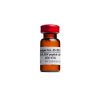
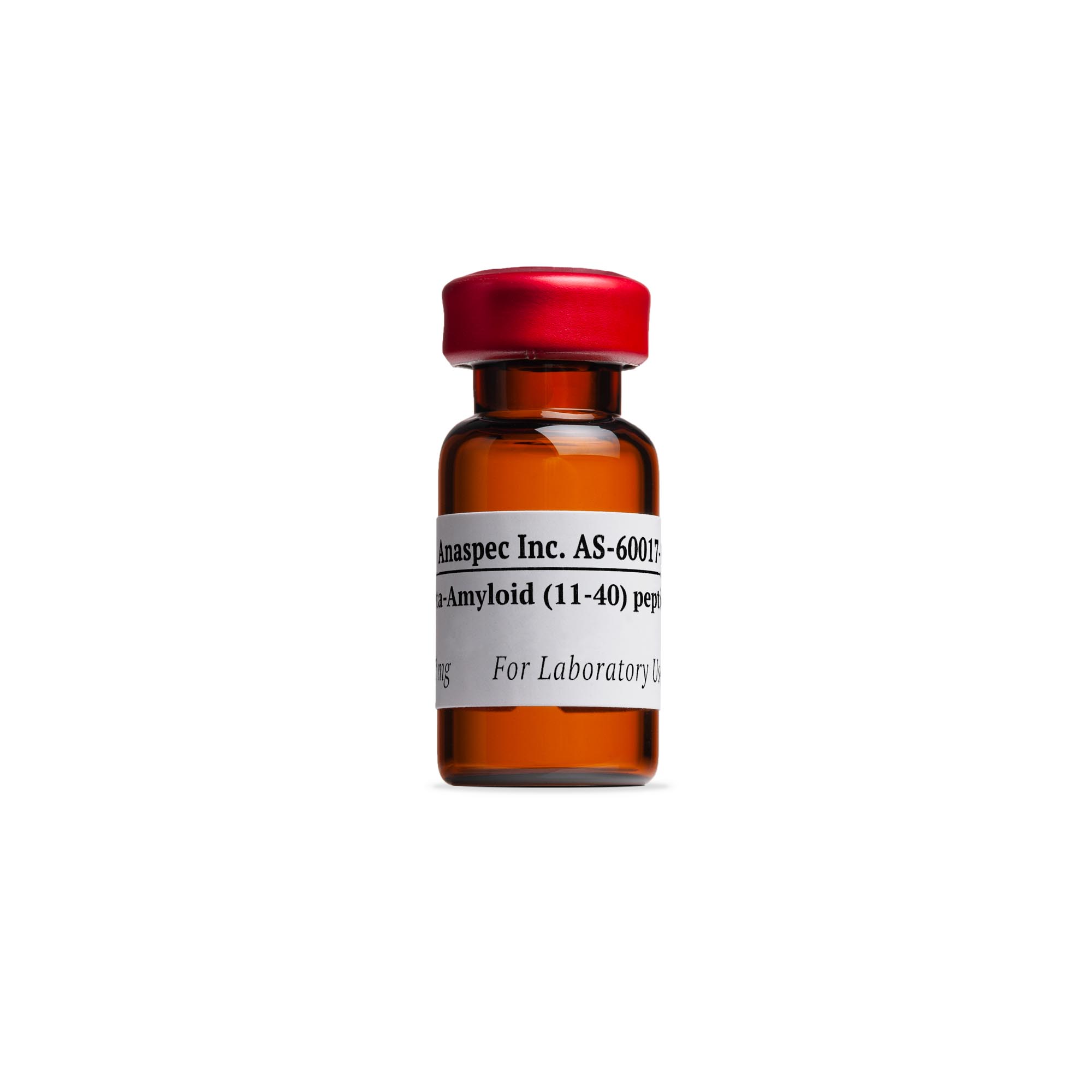
Beta-Amyloid (11-40) – 1 mg
$522.00
Beta-Amyloid (11-40). The abundance of Aß (11-40/42) produced by BACE suggests that their roles in Alzheimers Disease pathogenesis may be important.
Overview
If you’re looking to advance your research in Alzheimer’s disease, consider our Beta-Amyloid (11-40) peptide. This 1 mg sample provides you with crucial insights into the pathogenesis of Alzheimer’s disease, as it has been shown that high levels of Aß (11-40/42) are produced by the ß-secretase enzyme, also known as BACE. Research indicates that these truncated forms of beta-amyloid could play significant roles in disease mechanisms, making them essential for any serious study into Alzheimer’s pathology.
Key Features
- High-purity Beta-Amyloid (11-40) for reliable experimental results
- 1 mg of peptide offered for versatile research applications
- Supports studies aimed at understanding Alzheimer’s disease mechanisms
- Compatible with various labeling and detection assays
- Manufactured under strict quality controls for consistency
Specifications
| Peptide Name | Beta-Amyloid (11-40) |
|---|---|
| Quantity | 1 mg |
| Application | Research on Alzheimer’s disease |
FAQ
What is the significance of Beta-Amyloid (11-40) in Alzheimer’s research?
Beta-Amyloid (11-40) is a truncated form of the full-length beta-amyloid protein. Studies have shown that it plays a critical role in the aggregation and formation of amyloid plaques, which are characteristic of Alzheimer’s disease. Understanding its behavior is vital for developing new therapeutic strategies.
How should I store Beta-Amyloid (11-40)?
We recommend storing Beta-Amyloid (11-40) at -20°C to maintain its integrity. Avoid repeated freeze-thaw cycles to ensure the peptide remains functional for your experiments.
Can this peptide be used in labeling studies?
Absolutely! Our Beta-Amyloid (11-40) peptide can be used in various labeling applications. If you are looking for labeling options, consider exploring our PKG Substrate or Autocamtide-2 for complementary research tools.
Explore our range of peptides to find more options that fit your research needs.
Get Yours Today
Don’t miss out on the opportunity to advance your research. Buy the Beta-Amyloid (11-40) peptide today and take a step closer to groundbreaking findings in Alzheimer’s disease research.
Related Products
Be the first to review “Beta-Amyloid (11-40) – 1 mg”
Related products
Peptides
Reviews
There are no reviews yet.