
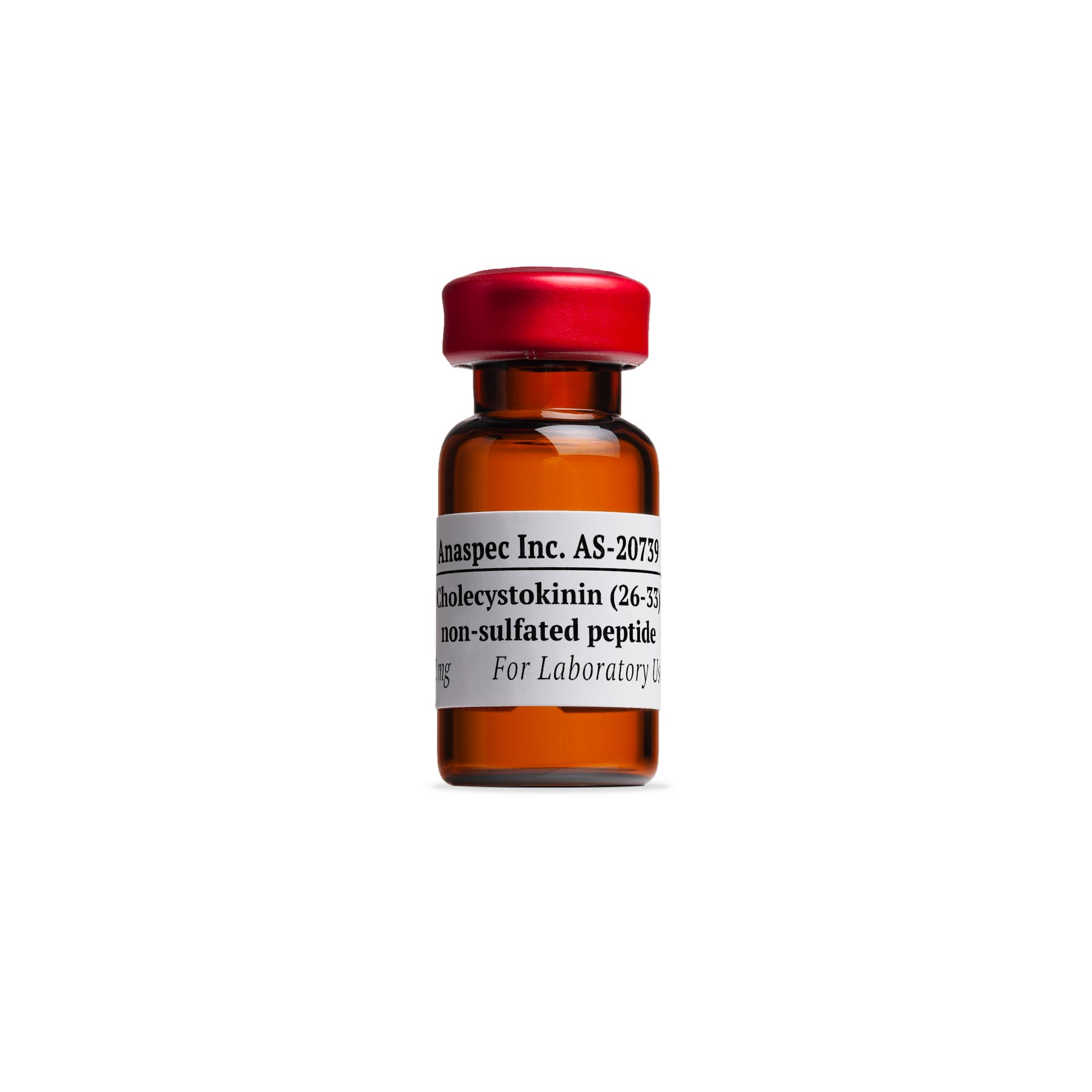
Cholecystokinin (26-33), CCK8, Non-Sulfated CCK-8 – 1 mg
$140.00
A non-sulfated CCK Octapeptide. Cholecystokinin (CCK) is found in the GI system and the CNS and it acts both as a hormone and a neurotransmitter.
Overview
If you’re looking for a powerful peptide that plays a crucial role in both the gastrointestinal system and the central nervous system, consider our Cholecystokinin (26-33), CCK8, Non-Sulfated CCK-8. This non-sulfated octapeptide is instrumental in regulating hunger and satiety. Acting as both a hormone and a neurotransmitter, it can help you understand appetite control and its impact on feeding behavior. With this peptide, you can explore its physiological significance in various research applications.
Key Features
- Non-sulfated CCK-8 octapeptide formulation
- Critical for studying gastrointestinal hormones and neuropeptide signaling
- Plays a role in appetite regulation and satiety
- Suitable for laboratory research and assay development
- Available in a convenient 1 mg quantity
Specifications
| Property | Details |
|---|---|
| Product Name | Cholecystokinin (26-33), CCK8, Non-Sulfated CCK-8 |
| Quantity | 1 mg |
| Category | Peptides |
FAQ
What is Cholecystokinin used for?
Cholecystokinin (CCK) is primarily used in research to study its role in digestion, appetite regulation, and neuropeptide functions in the brain.
How should I store the CCK8 peptide?
This peptide should be stored in a cool, dry place, ideally at -20°C to maintain its stability and potency over time.
Can CCK8 be used for in vivo studies?
Yes, CCK8 can be utilized in various biological studies, particularly those focused on gastrointestinal physiology and neurobiology.
When you purchase Cholecystokinin (26-33), CCK8, Non-Sulfated CCK-8, you’re investing in a valuable tool for understanding the intricate mechanisms of hunger and satiety. For those working on related assays, explore our PKG substrate and Autocamtide-2 for complementary studies. Check out our complete collection of peptides to find other substances that might support your research needs.
Related Products
Be the first to review “Cholecystokinin (26-33), CCK8, Non-Sulfated CCK-8 – 1 mg”
Related products
Peptides
Reviews
There are no reviews yet.