
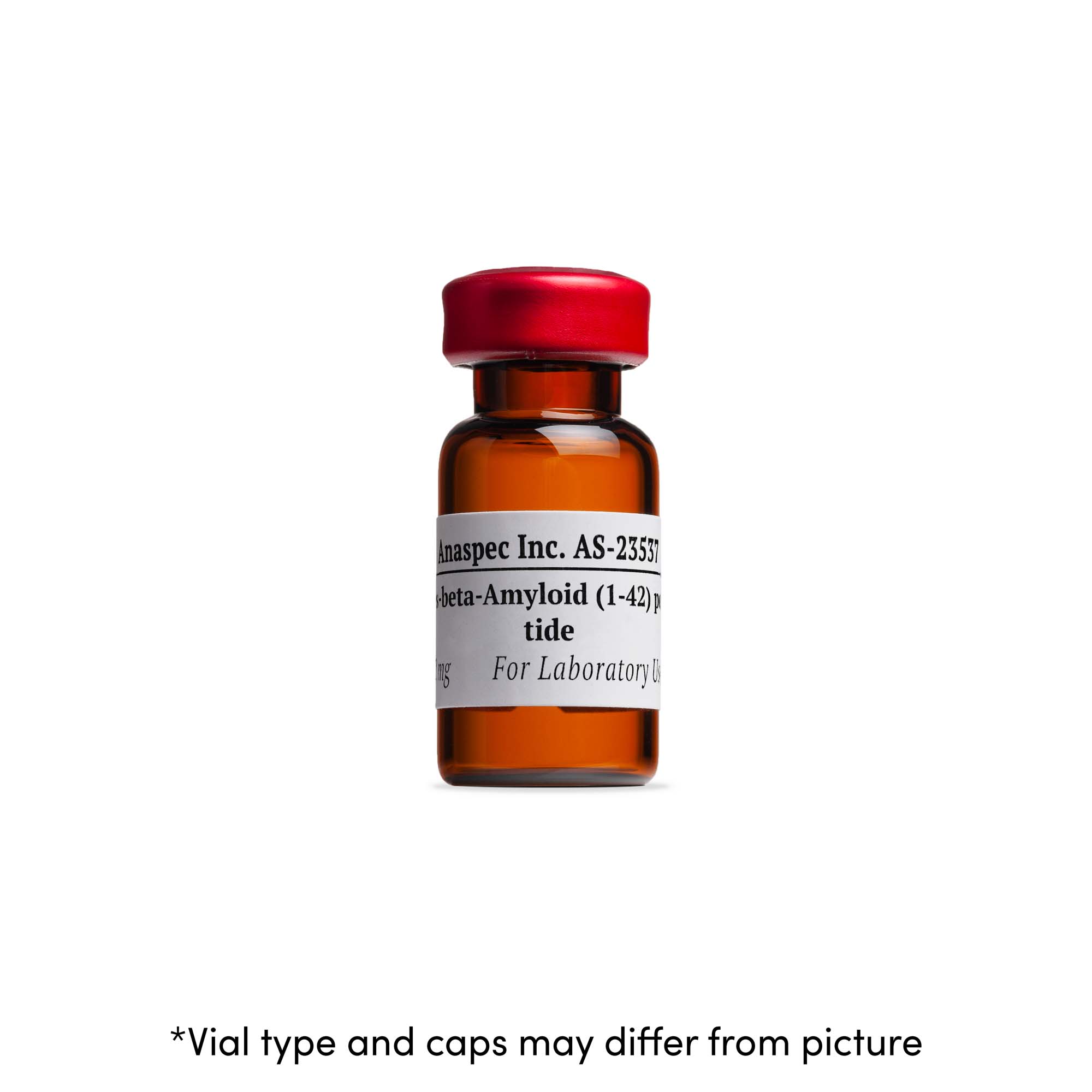
Cys-beta-Amyloid (1-42)
Price range: $817.00 through $1,308.00
ABeta (1-42), a major component of amyloid plaques, accumulates in neurons of Alzheimer’s disease brains. This is Cys containing mutant.
Overview
Cys-beta-Amyloid (1-42) is a peptide that plays a significant role in Alzheimer’s disease research. As a key component of amyloid plaques, it accumulates in neurons of affected brains, making it an essential tool for scientists studying the pathological mechanisms behind this neurodegenerative disorder. The Cys-containing mutant version of beta-amyloid offers a unique model for aggregation studies, allowing researchers to explore the properties and behaviors of amyloid peptides more effectively. With its critical relevance, this peptide is ideal for any laboratory engaged in neurological and physiological research.
Key Features
- Major component of amyloid plaques linked to Alzheimer’s disease
- Serves as a model for aggregation studies
- Cys-containing mutant facilitates unique research opportunities
- High purity and quality for reliable results
- Compatible with various detection and labeling techniques
Specifications
| Property | Details |
|---|---|
| Peptide Sequence | Aß (1-42) + Cys |
| Application | Research and diagnostic use |
| Source | Synthetic |
FAQ
What is Cys-beta-Amyloid (1-42) used for?
This peptide is primarily used in Alzheimer’s disease research to study amyloid plaque formation and aggregation processes.
How should Cys-beta-Amyloid (1-42) be stored?
Store it at -20°C for long-term preservation, and avoid repeated freeze-thaw cycles to maintain its stability.
Can I use Cys-beta-Amyloid (1-42) with fluorescence labeling techniques?
Yes, it is compatible with various labeling techniques, including fluorescent dyes, which can enhance your assays.
Explore our catalog for additional peptides and proteins that can complement your research needs. For a specific labeling substrate, check out our PKG Substrate or our Autocamtide-2 options. Equip yourself with the right tools to advance your Alzheimer’s research today.
Related Products
Browse more in Peptides.
| Size | 0.5 mg, 1 mg |
|---|
Be the first to review “Cys-beta-Amyloid (1-42)”
Related products
Peptides
Reviews
There are no reviews yet.