
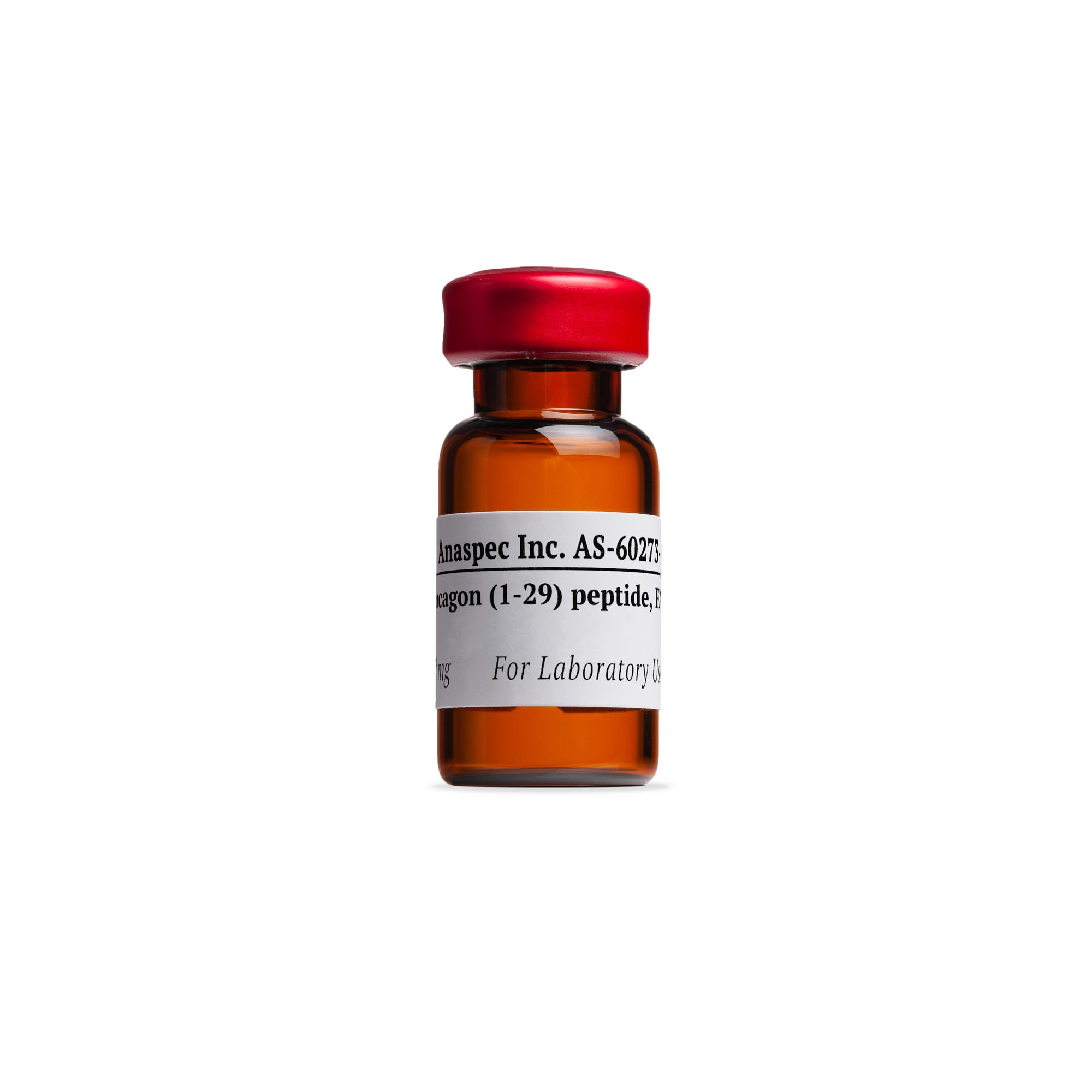
Glucagon (1-29), bovine, human, rat, porcine, FAM-labeled – 1 mg
$397.00
Glucagon (1-29) FAM-labeled. Glucagon is hormone secreted from the pancreatic Islet of Langerhans alpha-cells at low circulating blood glucose levels
Overview
Introducing our Glucagon (1-29) FAM-labeled peptide, a crucial tool for researchers working in the fields of endocrinology and diabetes research. Glucagon is a peptide hormone produced by the alpha-cells in the pancreatic Islet of Langerhans, and it plays a vital role in glucose metabolism by signaling the liver to release stored glucose during low blood sugar levels. Our FAM-labeled variant allows for precise detection and monitoring in various assays, making it an essential component for your laboratory needs.
Key Features
- FAM-labeled for easy fluorescence detection
- Designed for studying glucose metabolism
- Supports research on Type 2 diabetes
- Available in a 1 mg package
- Suitable for various assay applications
Specifications
| Product Name | Glucagon (1-29), FAM-labeled |
| Source | Bovine, human, rat, porcine |
| Fluorescence Abs/Em | 494/521 nm |
| Quantity | 1 mg |
FAQ
What is the role of Glucagon in the body?
Glucagon raises blood glucose levels by promoting gluconeogenesis and glycogenolysis in the liver. It is particularly important in responding to hypoglycemic conditions.
How can I use FAM-labeled Glucagon in my research?
You can utilize our FAM-labeled Glucagon in various assays to study its physiological role and its implications in metabolic disorders such as Type 2 diabetes. This fluorescent labeling enhances the visualization and quantification of Glucagon interactions.
Is this product suitable for in vivo studies?
While primarily optimized for in vitro applications, you should assess the specific requirements of your in vivo studies to determine compatibility.
Explore more about our peptide offerings by visiting our Peptides category. Enhance your research with related products, like the PKG Substrate or delve into the potential of Autocamtide-2 for your experiments. Optimize your research capabilities with AnaSpec today!
Related Products
Be the first to review “Glucagon (1-29), bovine, human, rat, porcine, FAM-labeled – 1 mg”
Related products
Peptides
Peptides
Peptides
Reviews
There are no reviews yet.