
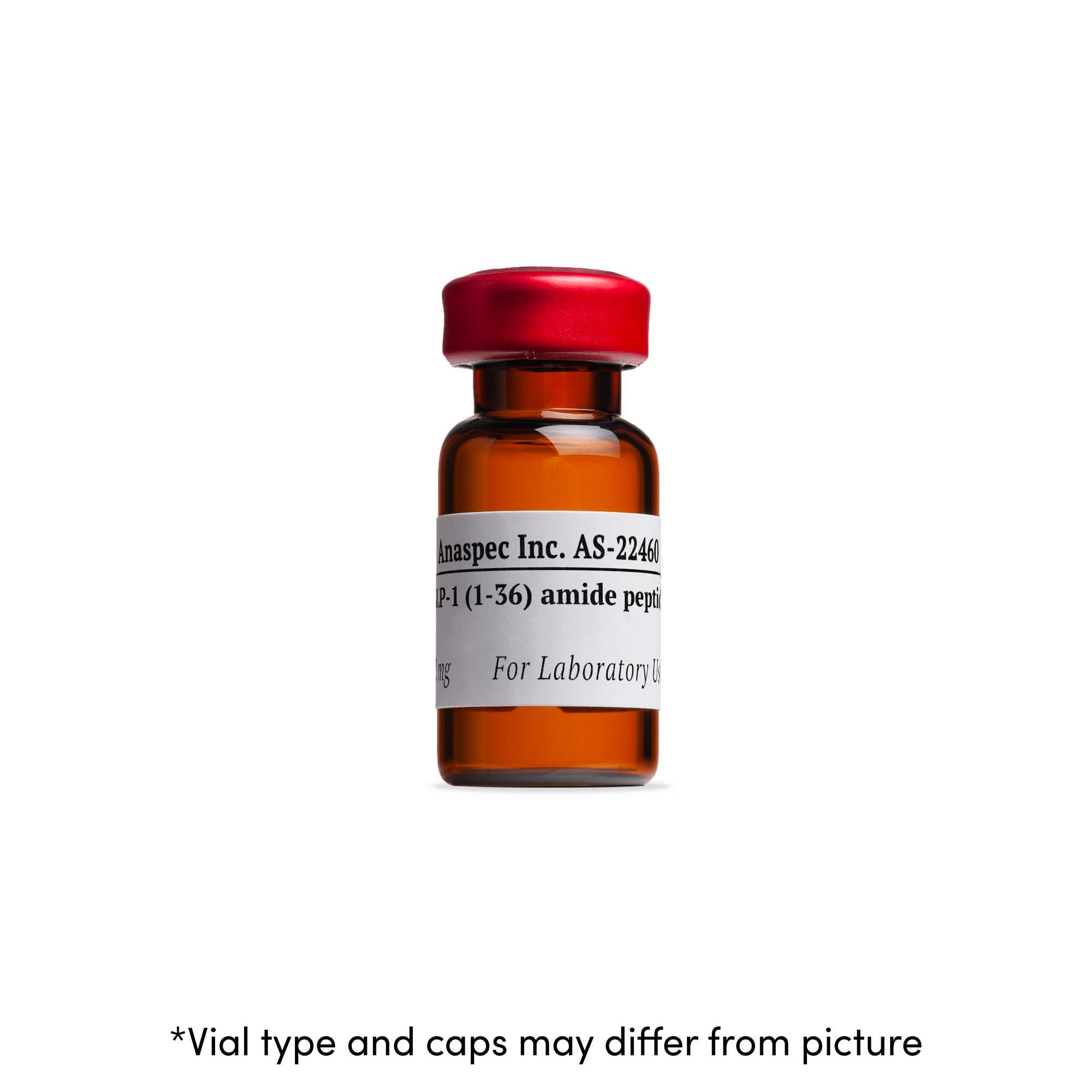
Glucagon-Like Peptide 1, GLP-1 (1-36) amide, human, mouse, rat, bovine, guinea pig – 0.5 mg
$276.00
In response to Glucose ingestion, proglucagon in the intestinal L cells is cleaved into GLP-1 (1-36). GLP-1 is also produced in the central nervous system.
Overview
Introducing our Glucagon-Like Peptide 1, GLP-1 (1-36) amide, available in a 0.5 mg format, specifically designed for human, mouse, rat, bovine, and guinea pig research. GLP-1 is a vital component in glucose metabolism and is produced in both the intestinal L cells and the central nervous system. This peptide serves as a key player in regulating insulin release, impacting glucose-dependent functions in the body.
Key Features
- High-quality peptide for accurate research results
- Versatile use in various animal models
- Supports glucose-dependent insulin release
- Contributes to research in metabolic diseases
- Available in a convenient 0.5 mg quantity
Specifications
| Product Name | GLP-1 (1-36) amide |
| Species | Human, Mouse, Rat, Bovine, Guinea Pig |
| Quantity | 0.5 mg |
FAQ
What is the role of GLP-1 in the body?
GLP-1 plays a critical role in glucose metabolism by stimulating insulin secretion from pancreatic beta cells and suppressing glucagon release, thereby regulating blood sugar levels effectively.
How should GLP-1 (1-36) amide be stored?
The peptide should be stored at -20°C to maintain its stability and efficacy. Proper storage ensures the longevity of the peptide for your experiments.
Can I use GLP-1 in animal studies?
Yes, GLP-1 (1-36) amide is suitable for various animal models, including mice, rats, and other species specified, making it a versatile choice for your research needs.
By choosing our GLP-1 (1-36) amide, you invest in quality and reliability for your research applications. Explore our range of peptides for more options that suit your study requirements. Don’t miss out; shop now and optimize your lab’s research efficiency with top-tier products.
Related Products
Be the first to review “Glucagon-Like Peptide 1, GLP-1 (1-36) amide, human, mouse, rat, bovine, guinea pig – 0.5 mg”
Related products
Peptides
Peptides
Peptides
Peptides
Reviews
There are no reviews yet.