
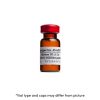
[Lys(Me3)4]-Histone H3 (1-21)
Price range: $162.00 through $401.00
[Lys(Me3)4]-Histone H3 (1-21), histone H3 trimethylated at lysine 4 is associated with transcription.
Overview
[Lys(Me3)4]-Histone H3 (1-21) is a specially modified peptide that plays a crucial role in gene transcription. The trimethylation of lysine 4 on histone H3 serves as a significant epigenetic marker associated with active transcription. This modification indicates the transcription start site of genes that are currently being expressed. Understanding how histone modifications influence gene expression is essential for many fields of research, from developmental biology to cancer studies.Key Features
- Trimethylated lysine 4 on histone H3
- Associated with the transcription start site of actively transcribed genes
- Can be demethylated by Jumonji AT-rich interactive domain 1 (JARID1) or the KDM5 family of demethylases
- Ideal for studying transcriptional regulation and epigenetics
- Available in high purity suitable for various research applications
Specifications
| Property | Details |
|---|---|
| Catalog Number | XXXXXX |
| Sequence | Ac-Ac-Gly-Arg-Lys(Me3)-Ser-Lys(21) |
| Purity | ≥ 95% |
| Storage Conditions | -20°C |
FAQ
What applications can I use [Lys(Me3)4]-Histone H3 for?
This peptide is primarily used in research focused on gene transcription and epigenetics, providing insights into transcriptional regulation.
How does trimethylation affect gene expression?
Trimethylation at lysine 4 of histone H3 is indicative of active gene transcription, marking regions that are being expressed.
Can this peptide be used in vivo?
While primarily used in vitro, researchers can explore its applications in vivo depending on the study design and experimental protocols.
Explore more peptides in our catalog, including options like PKG Substrate and Autocamtide-2. Whether you are investigating epigenetic mechanisms or protein interactions, [Lys(Me3)4]-Histone H3 (1-21) is an essential tool for your research.
Related Products
Browse more in Peptides.
| Size | 0.25 mg, 1 mg |
|---|
Be the first to review “[Lys(Me3)4]-Histone H3 (1-21)”
Related products
Peptides
Peptides
Reviews
There are no reviews yet.