
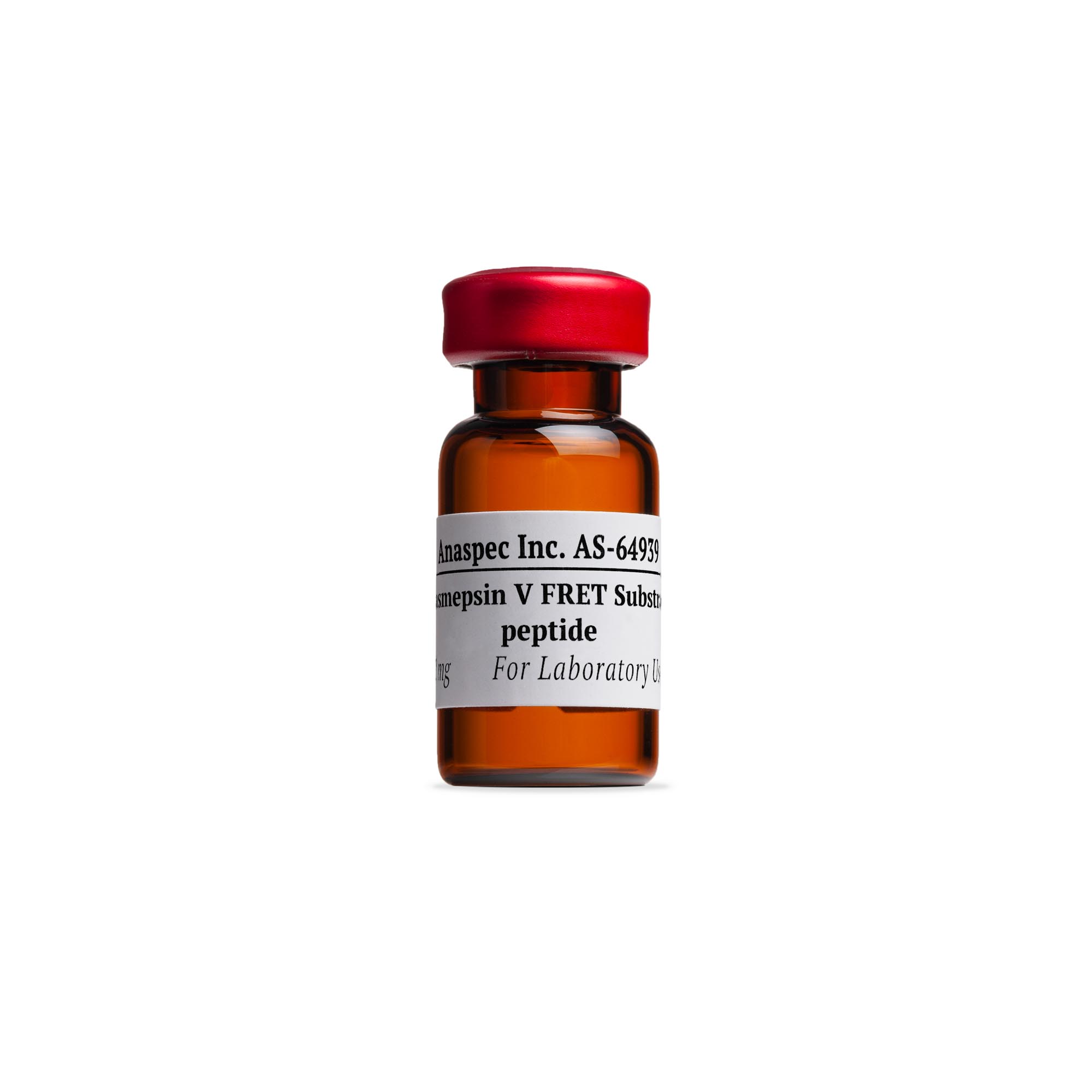
Plasmepsin V FRET Substrate – 1 mg
$261.00
Plasmepsin V FRET Substrate for Plasmepsin V (PMV) is derived from conserved Plasmodium Export Element (PEXEL) motif of Histidine-Rich Protein II (HRPII).
Overview
The Plasmepsin V FRET Substrate – 1 mg is specifically designed for research involving Plasmepsin V (PMV), an essential aspartic protease from the malaria parasite Plasmodium falciparum. This substrate peptide is derived from the conserved Plasmodium Export Element (PEXEL) motif of Histidine-Rich Protein II (HRPII). PMV plays a critical role in the translocation of proteins into host erythrocytes, as it cleaves the RXL sequence within the PEXEL motif. This unique property makes the substrate invaluable for studies related to malaria and its pathology.
Key Features
- Derived from the PEXEL motif of HRPII, facilitating specific cleavage by PMV
- Supports high-throughput screening for malaria research
- Fluorescence resonance energy transfer (FRET) capabilities for sensitive detection
- Ideal for studies on protein export mechanisms in Plasmodium falciparum
- Available for sale in a convenient 1 mg quantity
Specifications
| Property | Details |
|---|---|
| Product Name | Plasmepsin V FRET Substrate |
| Concentration | 1 mg |
| Category | Peptides |
| Purpose | Research on Plasmodium falciparum |
FAQ
What is the role of Plasmepsin V in malaria?
Plasmepsin V is vital for the malaria parasite because it facilitates the cleavage of proteins that are transported to the host’s erythrocytes, contributing to the parasite’s survival and virulence.
How can I use the Plasmepsin V FRET Substrate in my research?
This substrate can be utilized in assays to monitor protein cleavage by PMV, allowing researchers to investigate the mechanisms of protein export in malaria.
Are there other related products for studying malaria?
Yes, you can explore related products like Autocamtide-2 and our other peptides for comprehensive studies.
This product is a must-have for any research involving Plasmodium falciparum and PMV. Whether you’re performing basic research or developing new therapeutic strategies against malaria, the Plasmepsin V FRET Substrate can enhance your understanding of protein export mechanisms and contribute to vital discoveries in the field.
Related Products
Be the first to review “Plasmepsin V FRET Substrate – 1 mg”
Related products
Peptides
Peptides
Peptides
Peptides
Reviews
There are no reviews yet.