
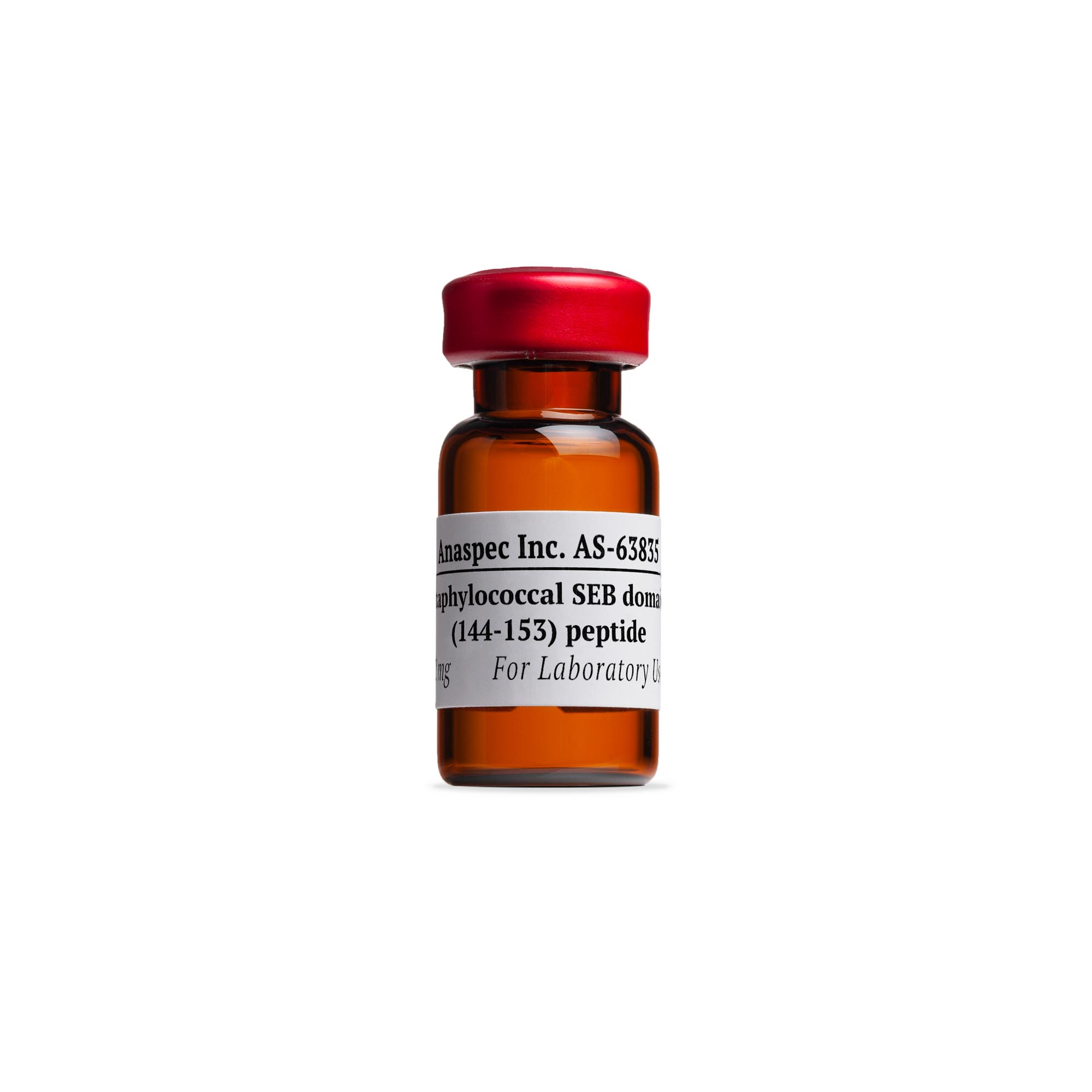
Staphylococcal Enterotoxin B Domain (SEB) (144-153) – 1 mg
$113.00
Staphylococcal Enterotoxin B Domain (SEB) (144-153) inhibits transcytosis of multiple staphylococcal enterotoxins, SEA, SEE, and TSST-1.
Overview
The Staphylococcal Enterotoxin B Domain (SEB) peptide, specifically the sequence spanning amino acid residues 144 to 153, is a vital tool for researchers studying staphylococcal toxins. This peptide demonstrates significant efficacy in inhibiting the transcytosis processes associated with various staphylococcal enterotoxins, including SEA, SEE, and TSST-1. The highly conserved nature of this sequence makes it an essential component for assays targeting the interactions and effects of these toxins.
Key Features
- Inhibits transcytosis of multiple staphylococcal enterotoxins.
- Highly conserved amino acid sequence for accurate assays.
- Available in a convenient 1 mg dosage, ideal for experimental use.
- Supports research in immunology and toxicology.
- Compatible with various labeling techniques for enhanced detection.
Specifications
| Product Name | Staphylococcal Enterotoxin B Domain (SEB) (144-153) |
| Category | Peptides |
| Quantity | 1 mg |
| Application | Research, Diagnostic |
FAQ
What is the significance of the Staphylococcal Enterotoxin B Domain?
This peptide is crucial for studying the mechanisms of action of various staphylococcal enterotoxins, helping researchers develop better therapeutic strategies.
How is this peptide used in assays?
Researchers use this peptide to inhibit transcytosis in cell models, allowing them to assess the role of staphylococcal toxins in disease processes.
Can I use this peptide with other labeling methods?
Yes, the SEB peptide can be combined with various labeling techniques, such as fluorescent dyes, to facilitate detection and analysis in assays. For example, you can find several options in our peptide catalog.
For those looking for other applications, explore related products like PKG Substrate or Autocamtide-2. Enhancing your research capabilities is essential, and this peptide is a reliable choice to support your scientific endeavors.
Related Products
Browse more in Peptides.
Be the first to review “Staphylococcal Enterotoxin B Domain (SEB) (144-153) – 1 mg”
Related products
Peptides
Peptides
Reviews
There are no reviews yet.