
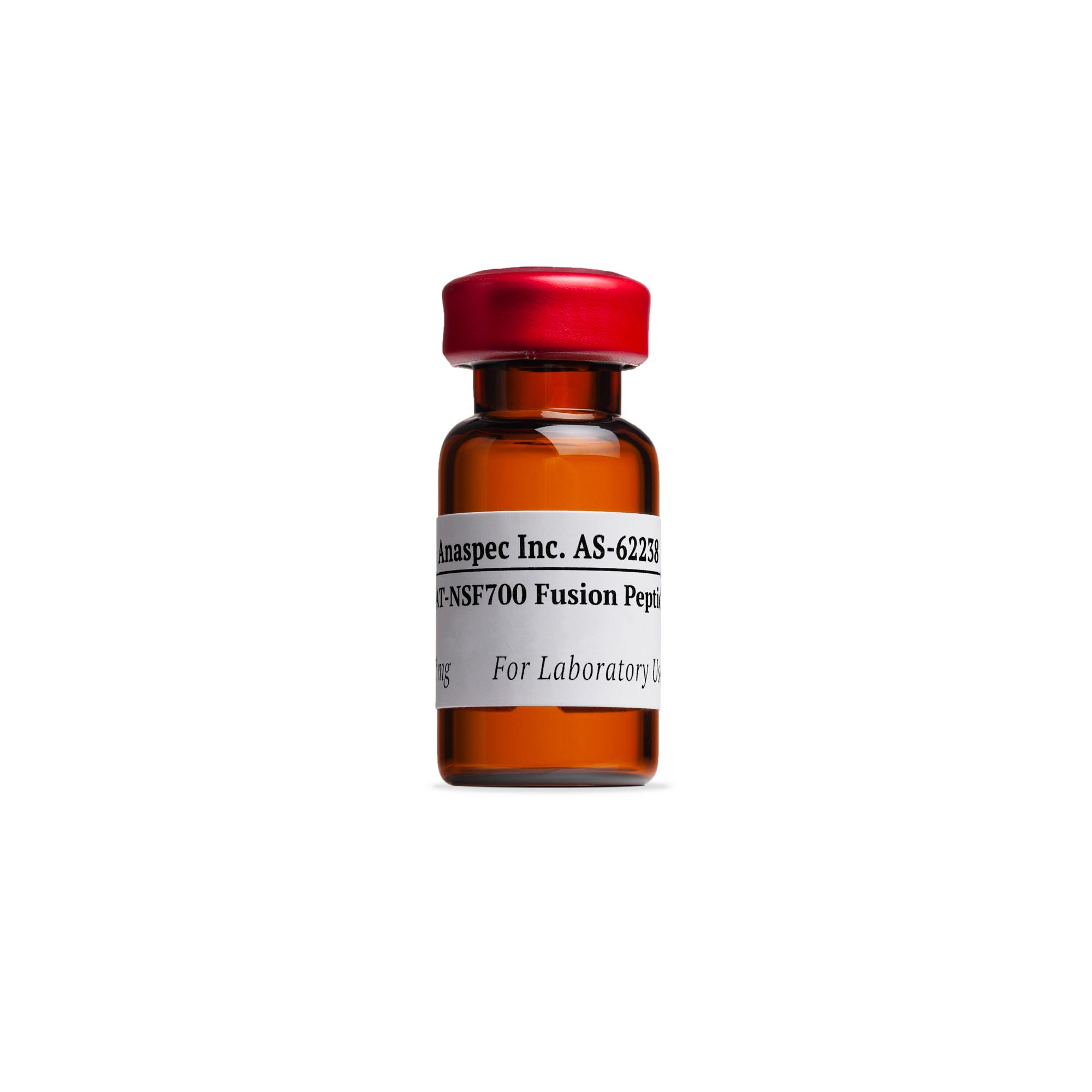
TAT-NSF700 Fusion Peptide – 1 mg
$440.00
TAT-NSF700 Fusion Peptide inhibits thrombin-induced exocytosis of endothelial cells in a dose-responsive manner.
Overview
The TAT-NSF700 Fusion Peptide is a powerful tool designed for research focused on thrombin-induced exocytosis of endothelial cells. This peptide combines the 11-amino acid HIV transactivating regulatory protein (TAT) domain with a 22-amino acid N-Ethyl-maleimide-sensitive factor (NSF) domain, creating a highly effective inhibitor. Scientists and researchers will appreciate its capability to inhibit exocytosis in a dose-responsive manner, making it an essential asset for various experimental applications.
Key Features
- Dual functionality as a TAT domain fused with an NSF domain
- Effectively inhibits thrombin-induced exocytosis of endothelial cells
- Utilizes a dose-responsive mechanism for precise research outcomes
- Cell permeable for easier application in research settings
- Compatible with various assays and experimental protocols
Specifications
| Product Name | TAT-NSF700 Fusion Peptide |
|---|---|
| Concentration | 1 mg |
| Category | Peptides |
| Application | Inhibition of thrombin-induced exocytosis |
FAQ
What is the mechanism of action for TAT-NSF700?
The TAT-NSF700 Fusion Peptide inhibits thrombin-induced exocytosis by targeting the NSF pathway, effectively preventing the release of cellular contents in response to thrombin.
Can TAT-NSF700 be used in different types of assays?
Yes, this peptide is versatile and can be utilized in various experimental setups, including assays focused on cellular signaling and exocytosis.
How should I store TAT-NSF700 Fusion Peptide?
It is recommended to store the TAT-NSF700 Fusion Peptide at -20°C to maintain stability and activity. Always follow best practices for peptide storage.
For those exploring the world of peptides, our TAT-NSF700 Fusion Peptide is a worthy addition to your toolkit. With its proven effectiveness, why not shop our peptide selection today and discover how it can enhance your research? Don’t miss out on the chance to integrate this powerful peptide into your studies.
Related Products
Be the first to review “TAT-NSF700 Fusion Peptide – 1 mg”
Related products
Peptides
Reviews
There are no reviews yet.