
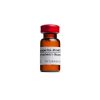
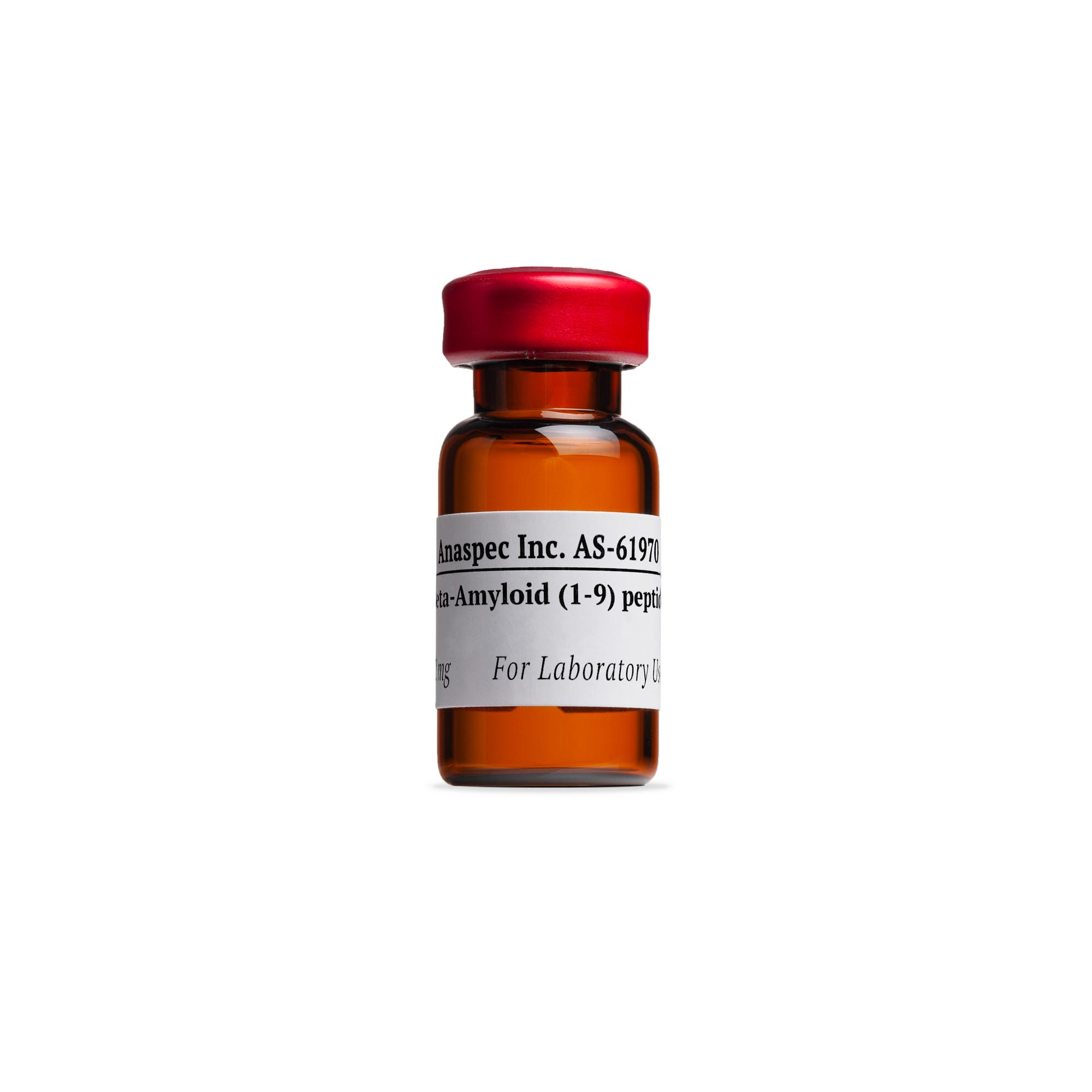
Beta-Amyloid (1-9) – 1 mg
$105.00
Beta-Amyloid (1-9). Omission of residues 1 to 9 from the full-length Alzheimer's Aß peptide 1 to 40 doesn't prevent peptide from forming amyloid fibrils.
Overview
The Beta-Amyloid (1-9) peptide, available in 1 mg vials, represents a crucial N-terminal fragment of the full-length Alzheimer’s beta-Amyloid peptide. While it lacks the first nine residues found in the peptide sequence from amino acids 1 to 40, it still exhibits the ability to form amyloid fibrils, maintaining its relevance in Alzheimer’s research. This fragment is particularly significant because it contains a functional B cell epitope while lacking known T cell epitopes, making it a promising candidate for the development of beta-Amyloid vaccines that minimize the risk of triggering autoimmune encephalitis.
Key Features
- Derived from the full-length Alzheimer’s beta-Amyloid peptide.
- Retains amyloid fibril formation capabilities.
- Contains a functional B cell epitope.
- Excludes known T cell epitopes.
- Potential use in beta-Amyloid vaccine development.
Specifications
| Product Name | Beta-Amyloid (1-9) |
| Peptide Length | 9 amino acids |
| Size | 1 mg |
| Categorization | Peptides |
FAQ
What is Beta-Amyloid (1-9) used for?
This peptide is primarily used in Alzheimer’s disease research, particularly in the study of amyloid plaque formation and vaccine development.
How does Beta-Amyloid (1-9) differ from the full-length peptide?
The Beta-Amyloid (1-9) peptide omits the first nine amino acids of the full-length peptide but still retains the ability to form fibrils, crucial for its functionality in research.
Can I order other related peptides?
Yes, we offer a variety of peptides suitable for different research needs. Check out our range of peptides, including PKG Substrate and Autocamtide-2, for your specific applications.
When you choose Beta-Amyloid (1-9), you’re opting for a peptide that plays a key role in understanding Alzheimer’s pathology and vaccine development. Enhance your research with our selection of peptides that are designed for specificity and efficacy.
Related Products
- PKG Substrate [RKRSRAE], Glasstide
- Autocamtide-2 [KKALRRQETVDAL]
- CREBtide [KRREILSRRPSYR], 5-FAM labeled
Browse more in Peptides.
Be the first to review “Beta-Amyloid (1-9) – 1 mg”
Related products
Peptides
Peptides
Peptides
Reviews
There are no reviews yet.