
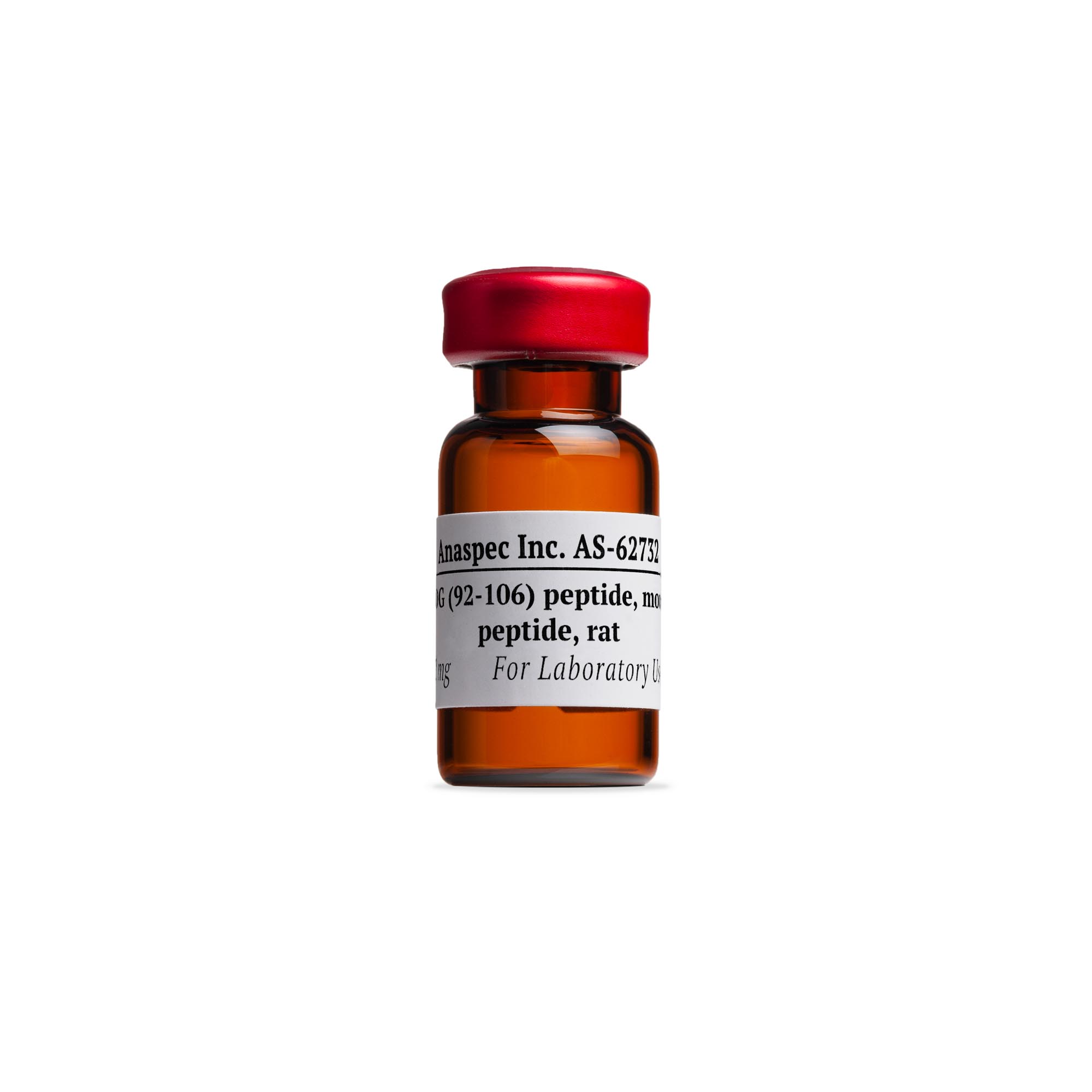
MOG (92–106), mouse, rat – 1 mg
$131.00
This is amino acids 92 to 106 fragment of the myelin oligodendrocyte glycoprotein (MOG) from mouse/rat. Encephalitogenic in SJL mice.
Overview
Our MOG (92, 106), mouse, rat – 1 mg is a crucial peptide fragment that consists of amino acids 92 to 106 from the myelin oligodendrocyte glycoprotein (MOG). This specific peptide plays a significant role in immunological research, particularly in understanding experimental autoimmune encephalomyelitis (EAE). Mice injected with MOG (92, 106) experience notable B cell reactivity against secondary myelin antigens, showcasing its relevance in autoimmunity studies.
Key Features
- Derived from mouse and rat sources for accurate biochemical modeling.
- Critical in studying autoimmune responses related to multiple sclerosis.
- Induces severe autoimmune responses despite weak T cell activation.
- Utilized in experimental setups involving SJL mice, DA rats, and even rhesus monkeys.
Specifications
| Parameter | Details |
|---|---|
| Peptide Sequence | MOG (92, 106) – Mouse/Rat |
| Weight | 1 mg |
| Storage Conditions | -20°C |
FAQ
What is the significance of MOG (92-106) in autoimmune studies?
The MOG (92-106) peptide is vital for understanding immune responses in conditions like multiple sclerosis, allowing researchers to examine B cell reactivity and T cell involvement.
How should I store the MOG (92-106) peptide?
Store the peptide at -20°C to maintain its stability and activity.
Can this peptide be used in various animal models?
Yes, MOG (92, 106) is effective in models such as SJL mice, DA rats, and rhesus monkeys, making it versatile for various research applications.
Don’t miss out on acquiring this valuable peptide for your research. Shop now and enhance your understanding of autoimmune mechanisms with MOG (92, 106). You can also explore our collection of peptidesincluding other specialized options like PKG Substrate and Autocamtide-2to support your ongoing research efforts.
Related Products
Be the first to review “MOG (92–106), mouse, rat – 1 mg”
Related products
Peptides
Peptides
Reviews
There are no reviews yet.