
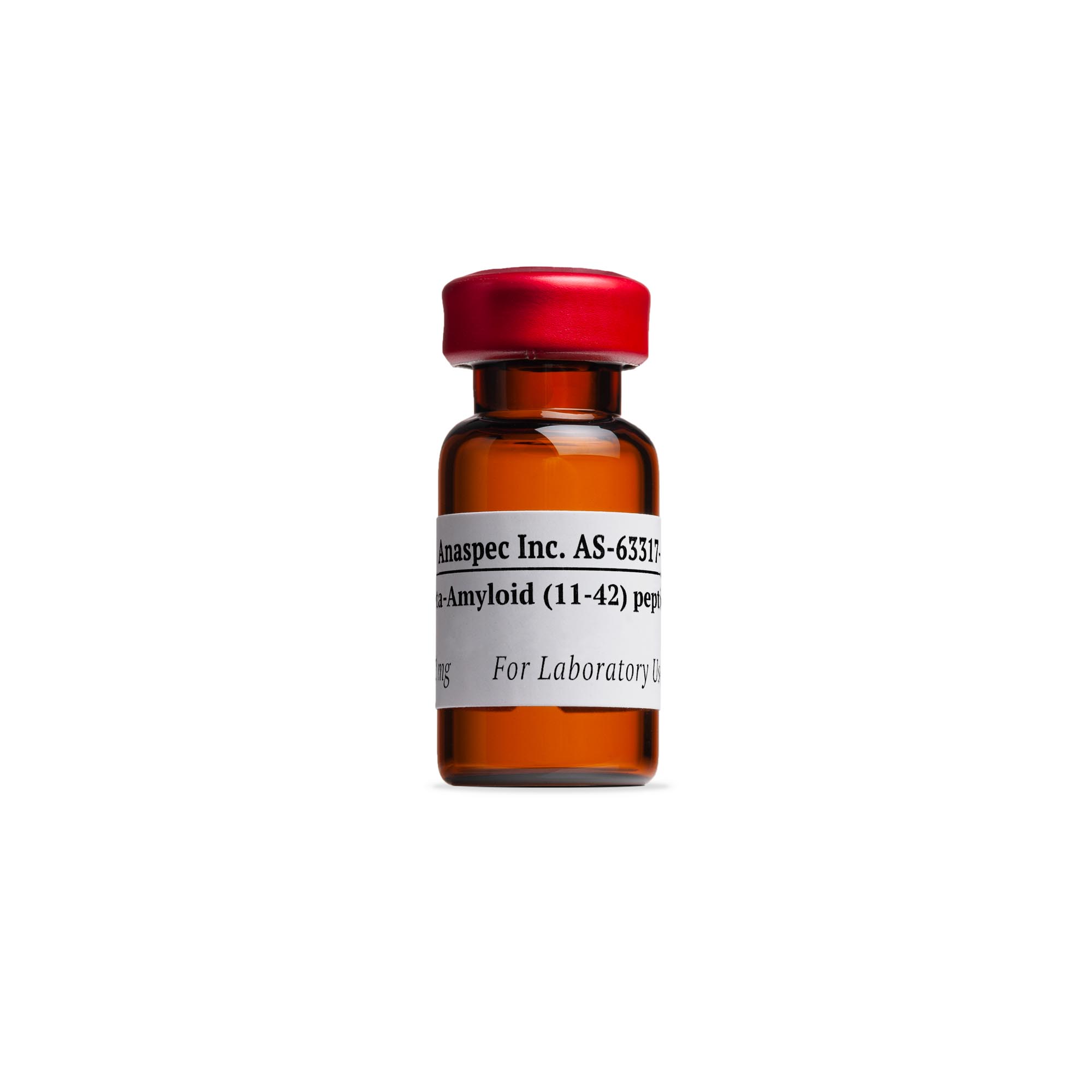
Beta-Amyloid (11-42) – 1 mg
$411.00
Beta-Amyloid (11-42). This peptide was detected in Alzheimer disease brains within several principal beta-amyloid variants.
Overview
Beta-Amyloid (11-42) is a critical peptide fragment that plays a significant role in Alzheimer’s disease research. Comprised of amino acids 11 to 42, this peptide has been identified in the brains of individuals affected by Alzheimer’s, highlighting its relevance in understanding the disease’s underlying mechanisms. As you explore therapeutic options or delve into the nuances of neurodegenerative research, consider adding this potent peptide to your toolkit.
Key Features
- Identified in Alzheimer’s disease brains
- Important fragment for neurodegenerative studies
- Potential for use in developing diagnostic assays
- High purity and quality for reliable experimental results
- Available in 1 mg quantities for flexibility in usage
Specifications
| Product Name | Beta-Amyloid (11-42) |
|---|---|
| Quantity | 1 mg |
| Category | Peptides |
FAQ
What is Beta-Amyloid (11-42)?
Beta-Amyloid (11-42) is a peptide fragment linked to the development of Alzheimer’s disease, serving as a vital component in understanding the pathology of neurodegenerative conditions.
How can I use this peptide?
This peptide can be utilized in various research applications, including assays focused on Alzheimer’s disease and studies examining protein interactions.
Is this peptide pure?
Yes, our Beta-Amyloid (11-42) is produced with high purity standards, ensuring reliable performance in your research endeavors.
Don’t miss the chance to enhance your lab’s capabilities with our Beta-Amyloid (11-42). Explore our selection of peptides today to discover additional tools that can complement your research. Shop now and make sure you have the resources you need to investigate the complexities of neurodegeneration.
Related Products
Be the first to review “Beta-Amyloid (11-42) – 1 mg”
Related products
Peptides
Peptides
Peptides
Reviews
There are no reviews yet.